Quarry Chain Saw Machine for Marble and Sandstone Cutting
LBJ-3200 / LBJ-4500 / LBJ-5600
DINOSAW
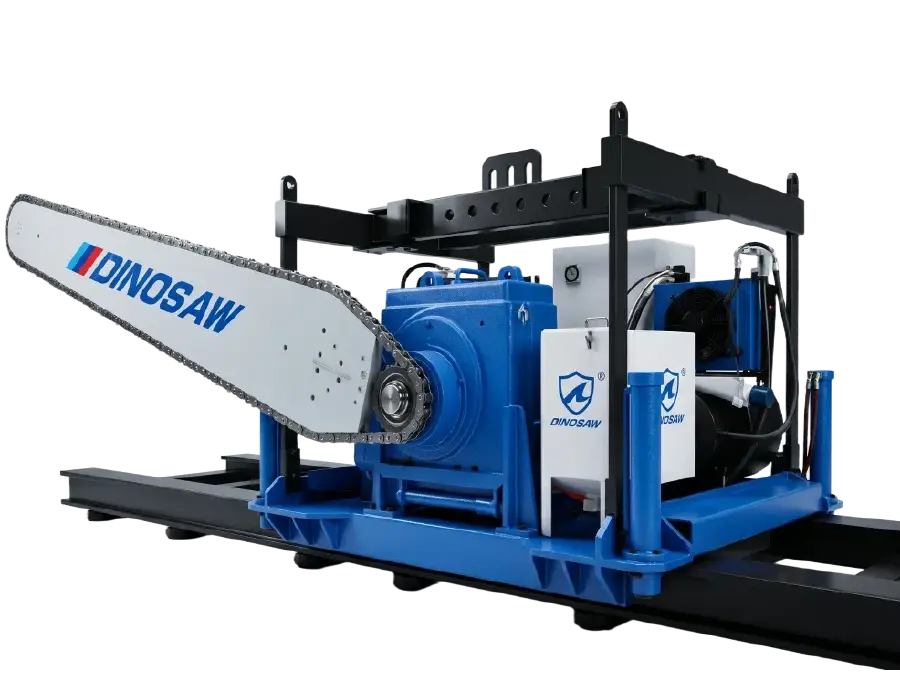
The DINOSAW LBJ series is a quarry chain saw machine for mechanized dry cutting of marble, sandstone and other soft to medium-hard stratified stone. A diamond chain cuts straight, deep faces in both horizontal and vertical directions without process water, with three depth classes at 3,200, 4,500 and 5,600 mm. PLC control manages the cutting cycle, while the hydraulic system automatically adjusts cutting parameters with stone hardness. An IoT remote data collection module and a wireless remote control are available as factory options for quarries running multiple machines or high benches. The LBJ fits quarries where diamond wire sawing is uneconomical on soft stone, and it works alongside the KSSJ wire saw rather than replacing it: in the high-bench extraction method, the chain saw separates one connecting face while the wire saw cuts the other two.
3200–5600 mmThree maximum cut-depth classes matched to low, medium and high marble and sandstone benches.
Dry CuttingStraight deep cuts in both horizontal and vertical directions without process water or slurry handling.
3–7 m²/hCatalog cutting efficiency range on soft to medium-hard stratified stone such as marble and sandstone.
Applicable Materials
Marble, sandstone, limestone, travertine, tuff and similar soft to medium-hard stratified stone for dry cutting; granite suitability requires chain and configuration confirmation
Certifications & Credentials
CE Certified · ISO 9001:2015 · Industry Standard Drafting Participant · 120+ Countries & Regions Served
Quarry Chain Saw Applications in Marble & Sandstone Quarries
The LBJ series serves dimension-stone quarries dominated by long straight faces in soft to medium-hard stratified stone, where dry mechanized cutting avoids water logistics and makes wire sawing uneconomical.
Marble Quarry Vertical Face Cutting
The LBJ opens straight vertical separation faces in marble benches to depths of 3,200 to 5,600 mm depending on model. PLC-controlled cycles keep cut consistency on the long repeated faces that dominate marble quarry programs.
Sandstone Block Separation
In stratified sandstone, the chain saw follows the natural bedding plane for horizontal cuts and slices vertical faces between them, releasing blocks with far less secondary breakage than blasting. Dry cutting suits sandstone sites where water is scarce.
High-Bench Chain Saw + Wire Saw Extraction
In the high-bench method, the LBJ dry-cuts one connecting face while a KSSJ diamond wire saw cuts the other two faces and completes block release. This split removes water supply and slurry handling from one full face of every extraction cycle.
Quarries Without Process Water
For quarries in arid regions or without settling ponds, dry chain saw cutting eliminates water logistics entirely. The trade-off is dust management at the face, which the site plan addresses with extraction, positioning and PPE.
Soft Stone Face Opening Before Wire Sawing
Where a wire saw would cut slowly through soft stone, the LBJ opens the first straight face quickly and economically, giving the wire saw a clean reference plane for the remaining cuts. The two machines are complementary, not interchangeable.
Soft to Medium-Hard Stratified Stone Programs
Limestone, travertine and tuff quarries with regular stratification benefit from the same straight deep cutting capability. The hydraulic hardness-adaptive system keeps the cut stable as the chain passes through harder bands in the face.
Real Cutting Performance & Key Metrics
The LBJ series is a quarry chain saw machine for mechanized dry cutting of soft to medium-hard stratified stone such as marble and sandstone. It opens straight, deep vertical and horizontal faces where diamond wire saws cut too slowly to be economical, and it separates one connecting face in the high-bench method while a wire saw finishes the block.
3200 / 4500 / 5600 mm
Maximum Cut Depth Classes
Three depth classes let the quarry size the machine to the tallest regular bench face instead of buying depth it never uses or running a shallow machine at its limit.
3–7 m²/h
Catalog Cutting Efficiency
The quoted 3–7 m²/h range covers the soft-to-medium-hard stone band; actual output depends on stone hardness, chain condition and depth per pass, and is confirmed against the quarry's stone.
53 / 65 / 65 kW
Total Installed Power
The LBJ-3200 runs on 53 kW for lower benches, while the LBJ-4500 and LBJ-5600 use 65 kW to hold chain speed through deeper, harder cuts.
6,800–9,900 kg
Frame Weight Range
Operating weight from 6,800 to 9,900 kg across the series anchors the machine at the face; the quarry pad and access route are planned around the selected model's weight.
Applicable materials: Marble, sandstone, limestone, travertine, tuff and similar soft to medium-hard stratified stone cut dry; granite suitability requires chain and configuration confirmation with DINOSAW.
Typical products: Dimension-stone quarry blocks released by straight vertical and horizontal separation cuts, feeding block squaring, slab cutting and architectural stone processing downstream.
Actual cutting efficiency, chain life and production output vary with stone hardness and abrasiveness, chain specification and condition, cutting depth per pass, face geometry and operator settings.
LBJ Models & Specifications
Choose the LBJ model by the maximum cut depth your bench geometry requires: LBJ-3200 for faces up to 3,200 mm, LBJ-4500 up to 4,500 mm and LBJ-5600 up to 5,600 mm. Total power is 53 kW on the LBJ-3200 and 65 kW on the two larger models, with operating weight rising from 6,800 kg to 9,900 kg. Catalog dimensions are listed as 3100×1970×1880 mm and 4000×2100×1880 mm depending on frame configuration, so confirm the exact footprint of the selected model before preparing the quarry pad. All three share the dry-cutting chain system, PLC control and the hydraulic hardness-adaptive system.
Model
LBJ-3200
LBJ-4500
LBJ-5600
Maximum cut depth (mm)
3200
4500
5600
Total power (kW)
53
65
65
Cutting efficiency (m²/h)
3–7
3–7
3–7
Dimensions L×W×H (mm)
3100×1970×1880 / 4000×2100×1880
3100×1970×1880 / 4000×2100×1880
3100×1970×1880 / 4000×2100×1880
Weight (kg)
6800
9200
9900
Control system
PLC with hydraulic hardness-adaptive cutting parameters
PLC with hydraulic hardness-adaptive cutting parameters
PLC with hydraulic hardness-adaptive cutting parameters
Core Technology & Machine Structure
Six engineering decisions behind the LBJ quarry chain saw platform. The numbered points on the machine diagram correspond to the systems below.
LBJ Quarry Chain Saw Cutting Workflow
1 · Survey the face: confirm stone type and hardness variation, mark the vertical and horizontal cut lines, and position the machine on a prepared pad. 2 · Set the cycle: select chain, depth per pass and PLC cutting parameters; the hydraulic system adapts feed to stone hardness during the cut. 3 · Run dry cuts: execute the vertical separation face, then the horizontal connecting cuts, with dust management active at the face. 4 · Separate and continue: complete block release with the planned wire saw cuts or splitting, then reposition the LBJ for the next face.
01
Dual-Direction Dry Cutting Chain System
The diamond chain cuts straight faces in both horizontal and vertical directions without process water. Dry cutting removes water logistics and slurry handling from the bench, which is decisive in arid quarries or sites without settling ponds.
02
PLC-Controlled Cutting Cycle
The PLC manages the cutting sequence, travel and positioning parameters, replacing manual judgment on repetitive long cuts. Operators run consistent cycles shift after shift, and parameter recall speeds up repositioning between faces.
03
Hydraulic Hardness-Adaptive System
The hydraulic system automatically adjusts cutting parameters as stone hardness changes along the face. A chain cutting from soft into harder bands keeps stable load instead of stalling or over-feeding, protecting both chain and drive components.
04
Depth-Graded Frame Program
Three frame classes carry 3,200, 4,500 and 5,600 mm depth capability at 6,800 to 9,900 kg operating weight. The quarry buys the depth class its benches actually require, keeping machine weight and pad preparation proportional to the job.
05
Optional IoT Remote Data Collection
The optional IoT module reports run hours, cutting parameters and alarm history to a remote dashboard. Multi-machine quarries use it to plan chain replacement and maintenance from data instead of from breakdowns.
06
Optional Wireless Remote Control
The optional wireless remote lets the operator position and run the cut from a safe vantage point away from the face. On high benches, standing clear of falling fragments and the dust plume is a practical safety gain.
Quarry Chain Saw vs. Diamond Wire Saw on Soft Stone
Choose by stone type and cut geometry: the chain saw opens straight deep faces dry in soft stone, while the wire saw covers hard stone and flexible contours.
Quarry Chain Saw vs. Diamond Wire Saw on Soft Stone
Quarry Diamond Wire Saw (KSSJ)
VS
LBJ Quarry Chain Saw
Flexible wire path for contours, curves and undercutting
Cutting geometry
✓Straight deep vertical and horizontal cuts
Water-cooled cutting with slurry handling at the bench
Cutting mode
✓Dry cutting, no process water on site
Hard stone: granite, hard marble and similar
Best stone range
✓Soft to medium-hard stratified stone: sandstone, soft marble
Depends on wire length and pulley layout
Cut depth on soft stone
✓Fixed depth classes: 3,200 / 4,500 / 5,600 mm
Slow and uneconomical on long soft-stone faces
Straight-face productivity
✓Catalog efficiency of 3–7 m²/h in the intended stone band
Strong advantage
Irregular faces / undercutting
✓Not the intended application
Hard stone, irregular geometry and contour cutting
Best for
✓Mechanized straight deep dry cuts in soft stone where wire sawing is uneconomical
Note: configurations vary by brand and model; actual performance depends on the specific machine, material and working conditions.
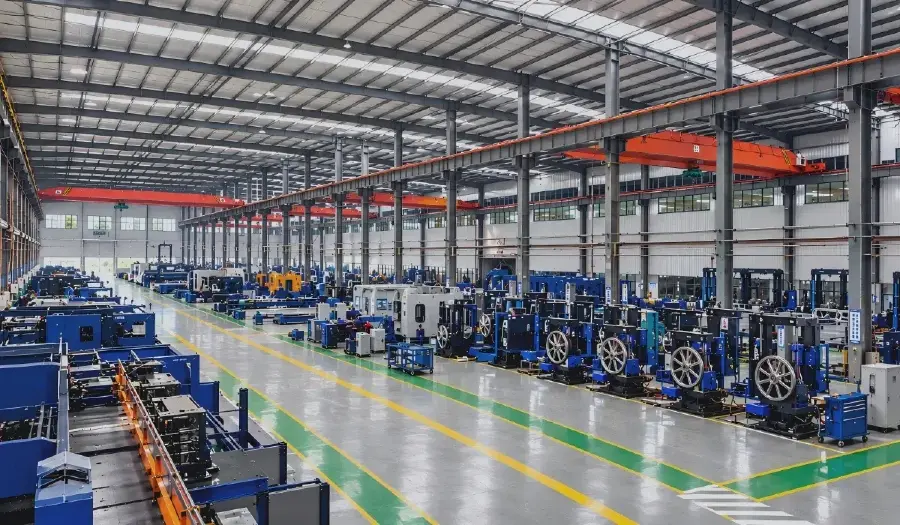
The Manufacturer Behind the LBJ Series
DINOSAW is a manufacturer of CNC stone processing machinery, specializing in diamond wire saw machines and CNC stone cutting equipment. With more than 20 years of R&D and manufacturing experience, DINOSAW contributes to industry standards including T/CMES 41001-2025 for CNC wire saw machines, holds 100+ technical patents, and supplies equipment and technical support to customers in 120+ countries and regions. Its manufacturing and management systems are certified to ISO 9001, ISO 14001 and ISO 45001, with CE-compliant machinery for international markets.
DINOSAW R&D & ManufacturingMechanical Design · CNC Control Development · Assembly · Testing · Commissioning · Global Delivery
Industry Standard Drafting
DINOSAW contributes to industry standards for stone machinery, including T/CMES 41001-2025 for CNC wire saw machines, as well as standards covering multi-wire saws, combined wire saw machines and five-axis bridge cutting equipment. This work reflects the company’s long-term involvement in machine design, manufacturing, testing and quality control.
20+Years of Stone Machinery R&D & Manufacturing Experience
100+Technical Patents — Covering machine structures, CNC control, cutting systems and stone processing technologies
120+Countries & Regions Served — Equipment, installation and technical support worldwide
CE Compliance & ISO Management Systems
CE: Stone cutting machinery assessed against Machinery Directive 2006/42/EC and relevant EN standards. ISO: Management systems certified to ISO 9001, ISO 14001 and ISO 45001.
LBJ Quarry Installation Requirements & After-Sales Support
DINOSAW provides installation guidance, operator training, remote diagnosis and spare-parts coordination for every machine.
Foundation & Positioning6,800–9,900 kg operating weight
Pad and access planning depend on model; confirm the selected model's footprint and ground bearing before shipment.
Power Supply53 / 65 / 65 kW total, configured per destination
Total power is 53 kW on the LBJ-3200 and 65 kW on the LBJ-4500 and LBJ-5600; destination voltage and frequency are confirmed before production.
Dust & VentilationDry cutting, no process water
Plan face ventilation and dust extraction at the cutting head; operator PPE and air monitoring follow local quarry regulations.
01 · Pre-Shipment & DeliveryMachine configuration, packaging and transport requirements confirmed before dispatch, with factory inspection and documents verified.
02 · Installation & CommissioningOn-site utilities and foundation check, machine positioning, commissioning and acceptance.
03 · Operator TrainingHands-on training covering routine CNC operation and daily checks of blades, spindles, cooling and lubrication.
04 · After-Sales SupportRemote technical assistance, maintenance support and spare parts coordination throughout the machine's service life.
Answers to the main buying questions around LBJ model selection, granite applicability, dry-cutting dust control, remote options and quotation preparation.
Select by the maximum cut depth your bench geometry requires, then confirm power, weight and handling on site. The LBJ-3200 cuts to 3,200 mm with 53 kW total power and a 6,800 kg operating weight — the lightest frame, suited to lower benches and easier relocation. The LBJ-4500 extends depth to 4,500 mm with 65 kW and 9,200 kg, covering medium and high benches. The LBJ-5600 reaches 5,600 mm on the same 65 kW with a 9,900 kg frame for the tallest faces. All three share the dry-cutting chain system, PLC control and the hydraulic system that adjusts cutting parameters with stone hardness. Cutting efficiency is quoted at 3–7 m²/h across the series, with the actual figure depending on stone hardness, chain condition and depth per pass. When comparing models, measure the tallest regular face in the quarry plan, add the block-release geometry you intend to use, and check that the quarry floor accepts the machine weight and working position. If benches vary widely, size the machine for the tallest recurring face and handle outliers with a wire saw rather than oversizing the chain saw for rare exceptions.
The LBJ series is designed and quoted for marble, sandstone and soft to medium-hard stratified stone cut dry; granite is outside the standard application and requires confirmation before ordering. Whether an LBJ can work a given granite depends on the chain — diamond segment type, bond and segment spacing must match a much harder and more abrasive material — and on adjusted cutting parameters through the hydraulic hardness-adaptive system. Even with the correct chain, expect efficiency below the 3–7 m²/h catalog range quoted for soft stone, and higher chain consumption per square metre cut. For systematic granite quarrying, DINOSAW normally recommends the KSSJ diamond wire saw platform, which is built for hard stone and flexible contour cutting. The practical test is straightforward: send the stone name, a hardness description or sample, and the target depth. DINOSAW will confirm chain availability and configuration, or advise honestly that a wire saw is the right machine. A chain saw pushed beyond its stone range costs more in segments and downtime than it saves in purchase price, so this check belongs before the order, not after installation at the quarry.
Dry cutting removes slurry but not dust: the face produces stone dust continuously, and the site plan must treat dust as a primary operating condition, not an afterthought. Practical measures start with machine positioning — work downwind of the operator station and keep bystanders clear of the dust plume at the face. Local dust extraction at the cutting head, where fitted, captures dust at the source, while quarry ventilation and periodic air monitoring verify that exposure stays within local limits. Operators need respirators and eye protection as minimum PPE, and maintenance intervals should account for dust loading on guides, chains and electrical cabinets. The electrical and hydraulic components on the LBJ are arranged for dusty quarry duty, but filters and seals still need scheduled cleaning to hold that rating. Finally, keep the chain correctly tensioned and in good cutting condition: a worn or poorly tensioned chain cuts slower, stays in the kerf longer and generates more dust per square metre than a healthy one. Dry cutting is a real advantage where water is scarce or slurry disposal is difficult, but the dust plan is part of running the machine, and it should be budgeted alongside the chain saw itself.
The IoT remote data collection module and the wireless remote control are factory options, and each solves a different problem. The IoT module collects operating data — run hours, cutting parameters, alarm history and production-relevant counters — and sends it to a remote monitoring dashboard. For a quarry running several machines or shifts without constant supervision, this turns maintenance from reactive to planned: chain wear trends, hydraulic behavior and alarm patterns become visible before they stop production, and owners get a factual utilization record when reviewing site performance. The wireless remote control addresses safety and ergonomics instead: the operator positions and runs the cut from a clear vantage point away from the face, which matters on high benches where falling fragments and dust concentrate near the cutting line. Remote operation also lets one operator monitor the cut from the best viewing position rather than standing beside the machine. Neither option changes the cutting capability of the LBJ; both change how economically and safely the machine runs day to day. Specify them at ordering, and tell DINOSAW how many machines you plan to connect and which monitoring arrangement the site uses.
Do not buy an LBJ chain saw as a universal quarry cutter — it is a specialized machine for straight, deep vertical and horizontal cuts in soft to medium-hard stone, and the wrong application wastes both capital and consumables. Choose a diamond wire saw instead when the stone is hard granite or similar, when faces are irregular or curved, or when you need undercutting and contour flexibility; the KSSJ wire saw platform covers those jobs. Consider the chain saw only when the quarry runs stratified marble, sandstone or comparable soft stone and the program is dominated by long straight faces. Within the right quarries, the two machines are complementary rather than competitors: in the high-bench extraction method, the chain saw dry-cuts one connecting face — typically the vertical separation — while the wire saw cuts the other two faces, and no water is needed at the chain saw station. That combination removes water logistics and slurry handling from one full face of every cycle. The rule of thumb: the wire saw answers what shape the block takes, the chain saw answers how fast straight faces can be opened in soft stone. If most blocks need contour work, buy the wire saw first.
For an accurate LBJ quotation, send eight items: stone type with hardness or a sample, required maximum cut depth, bench height and face geometry, production target, local voltage and frequency, site photos, the options you need, and your port of destination. The stone determines whether the chain saw is suitable at all and which chain configuration DINOSAW will quote. Depth selects the model: 3,200 mm points to the LBJ-3200, 4,500 mm to the LBJ-4500, and 5,600 mm to the LBJ-5600, with total power at 53 kW on the first model and 65 kW on the two larger ones. The production target lets DINOSAW check the 3–7 m²/h efficiency range against your actual stone and face conditions. Voltage and frequency configure the electrical system before production, so they cannot be left open. Site photos reveal bench access, dust conditions and where the machine will stand. State the options explicitly: IoT remote data collection, wireless remote control, and spare chains or segments for the first operating period. With these inputs, the reply covers machine configuration, options, spares, transport and commissioning support instead of a budget figure that changes later.
Are you looking for the perfect cutting machines or processing solutions for hard and brittle materials?
Facing challenges in stone quarrying, countertop cutting, concrete and underwater pipeline cutting, stainless steel rust removal and grinding, luxury thin slab cutting, agate and gemstone cutting, graphite cutting, or even building demolition?
Leave your inquiry, and you can expect a reply within 12 hours with tailored solutions!











 English
 中文