


Circular Column Slab Polishing
Polish the visible curved face of circular column slabs before assembly — the finishing stage that defines the column's appearance.


Open Hours:8:30am-20:30pm

WhatsApp: +86 198-5901-3937
Applicable Materials
Marble, granite and circular stone slabs for column cladding
Certifications & Credentials
CE Certified · ISO 9001:2015 · Industry Standard Drafting Participant · 120+ Countries & Regions Served
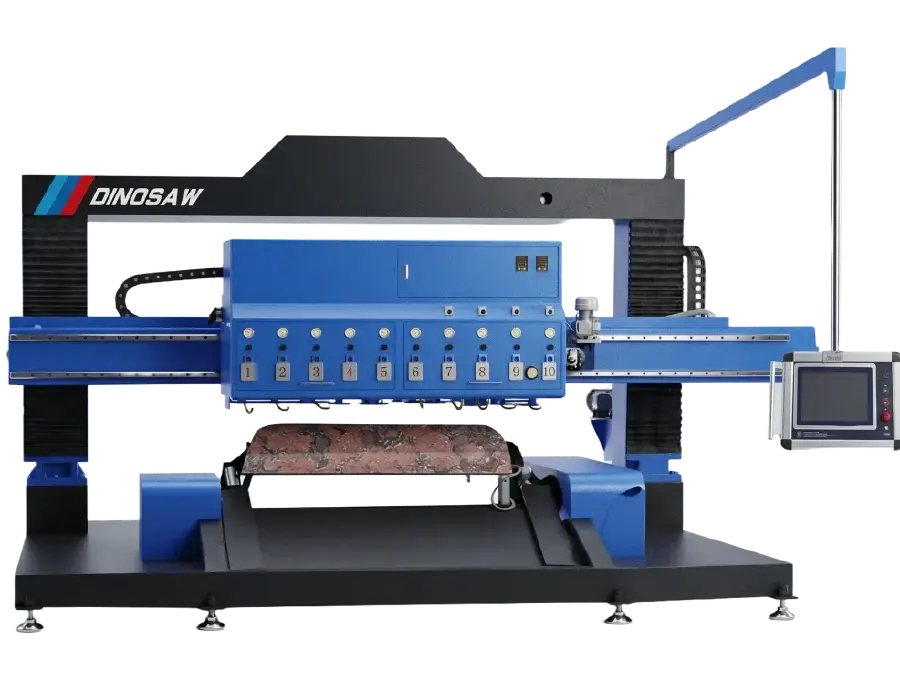
Circular column slabs are polished after edge trimming and before assembly into columns — the stage where the visible curved surface takes its finish.
Polish the visible curved face of circular column slabs before assembly — the finishing stage that defines the column's appearance.
Finish curved cladding segments for commercial facades and interior columns where the polished face carries the design.
Run marble column cladding at production pace: the vacuum table protects soft marble edges while the multi-head sequence builds the gloss.
Polish granite arc slabs with the 32 kW YHMP-12 holding head speed through hard stone at the catalog efficiency.
Pair with the YHQJ arc-slab trimming machine: trimming prepares the edges for assembly, the YHMP finishes the face — the complete column-slab workflow.
The YHMP-10/12 polishes circular column slabs with vacuum fixation and 10–12 PLC-controlled heads — solving the holding problem that makes arc slabs difficult to finish without breaking edges.
Ten or twelve heads sequence the abrasive stages across the slab in one cycle — more heads mean a finer gloss progression on the visible curved face.
Vacuum fixing holds the circular slab flat and true, avoiding the verticality and inclination errors that two-side gripping introduces on curved pieces.
Total power of 27.5 kW (YHMP-10) or 32 kW (YHMP-12) keeps all heads cutting at production speed through granite.
Reference line efficiency of 7 mm/m² (YHMP-10) and 8 mm/m² (YHMP-12) per the catalog specification, with actual output varying by stone and setup.
Applicable materials: Marble, granite and circular stone slabs for column cladding.
Typical products: Polished circular column slabs, curved cladding segments and finished arc-slab surfaces for architectural columns.
Actual efficiency and finish vary with stone hardness, abrasive sequence, slab geometry and setup conditions.
Two configurations cover the arc-slab range: the YHMP-10 (10 heads, 27.5 kW, 5 t) for standard column cladding production, and the YHMP-12 (12 heads, 32 kW, 6 t) for higher gloss progression and output. Both machine arcs from 350 to 2,000 mm long on a 1,300 mm processing length.
| Model | YHMP-10 | YHMP-12 |
| Machinable length (mm) | 350–2000 | 350–2000 |
| Processing length (mm) | 1300 | 1300 |
| Polishing heads (pc) | 10 | 12 |
| Total power (kW) | 27.5 | 32 |
| Efficiency (mm/m²) | 7 | 8 |
| Overall dimensions L×W×H (mm) | 5200×1700×2900 | 5800×1700×2900 |
| Water consumption (m³/h) | 6 | 7 |
| Gross weight (t) | 5 | 6 |
Four engineering decisions behind the YHMP arc-slab polishing platform. The numbered points on the machine diagram correspond to the systems below.
A polishing run follows four steps: fix the trimmed circular slab on the vacuum table and verify seating, load the stored program for the stone and finish target, run the automatic multi-head cycle, then release and inspect the polished arc surface before assembly.
The circular slab is fixed by vacuum rather than gripped from two sides: the curved face seats against the full support surface, so verticality and inclination errors after trimming disappear — and thin slab edges are not broken by clamping pressure.
Ten or twelve heads carry the abrasive sequence in one cycle: coarse heads open the surface, later heads refine it, and the slab leaves the machine finished instead of cycling back through stations.
PLC control sequences head pressure, traverse and abrasive stages automatically: repeat column orders run from stored programs, and operator-dependent finish variation drops out of the process.
Linear guides carry the polishing gantry across the arc slab: straight, repeatable traverse is what keeps the polish uniform along the curved surface instead of showing travel marks.
The 350–2,000 mm machinable length covers the arc segments that column cladding actually uses, and the 1,300 mm processing length takes the segment in one setup.
The YHMP is the finishing stage of the curved-column cell: the YHQJ trims the arc-slab edges for assembly, the YHMP polishes the visible face — two machines covering the column-slab program end to end.
The holding-method comparison behind the YHMP's design.
DINOSAW is a manufacturer of CNC stone processing machinery, specializing in diamond wire saw machines and CNC stone cutting equipment. With more than 20 years of R&D and manufacturing experience, DINOSAW contributes to industry standards including T/CMES 41001-2025 for CNC wire saw machines, holds 100+ technical patents, and supplies equipment and technical support to customers in 120+ countries and regions. Its manufacturing and management systems are certified to ISO 9001, ISO 14001 and ISO 45001, with CE-compliant machinery for international markets.
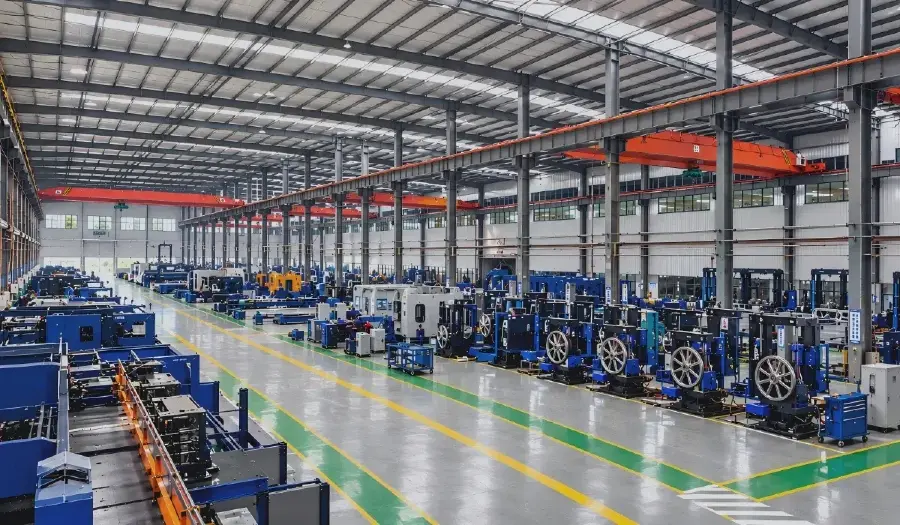
DINOSAW provides installation guidance, operator training, remote diagnosis and spare-parts coordination for every machine.
Gantry layout; allow slab loading access at the vacuum table.
Voltage and frequency confirmed against local standards before shipment.
Polishing water; recycling recommended.
Vacuum vs. gripping, model selection between the YHMP-10 and YHMP-12, and the trimming-polishing workflow for column slabs.
Because circular slabs are hard to hold truthfully by their edges. Two-side gripping presses on the slab sides, which pushes curved pieces out of verticality and introduces inclination errors — the polished face ends up subtly out of true, and thin slab edges can break under clamping pressure. The YHMP fixes the slab by vacuum over its support surface instead: the full curved face seats flat, the piece stays vertical through the whole cycle, and edges survive handling. For column cladding, where every segment must align with its neighbors around the column form, that truthfulness is the difference between a column that assembles cleanly and one that fights the installer at every joint. For production planning, the practical consequence is fewer rejected segments at assembly and a polish that matches from the first segment to the hundredth. For export programs, that consistency is usually the difference between passing and failing the buyer's inspection.
Both machines cover the same 350–2,000 mm arc length on the same vacuum-table platform — the difference is the polishing program. The YHMP-10 runs ten heads at 27.5 kW with a catalog efficiency of 7 mm/m², suiting standard column cladding production where a commercial finish meets the specification. The YHMP-12 adds two heads and 32 kW, raising the catalog efficiency to 8 mm/m² and stretching the abrasive sequence further toward premium gloss — the choice for granite columns and export programs where the finish is inspected closely. If your orders quote a gloss level or your stone is hard granite, choose the 12; if the specification is a standard polished face on marble, the 10 covers it at lower investment. Both machines polish the same 350–2,000 mm arc length, so the decision is purely about the finish program, not the work envelope. Send your finish specification and DINOSAW will map it to the head count.
As the finishing stage of a two-machine cell. The workflow runs in sequence: arc slabs are shaped to the column radius, the YHQJ-2400/2800 trims their edges for assembly fit at 10–20 times manual efficiency, and the YHMP-10/12 then polishes the visible curved face under vacuum fixation and PLC control. Trimming comes before polishing so edges are prepared while the piece is still easy to fixture, and polishing comes last so the finished face is never re-handled by a cutting operation. Factories quoting complete column programs buy the pair together; factories receiving pre-trimmed slabs can start with the YHMP alone and add the trimming stage when volume justifies it. Plants that run the cell typically quote it as a system, because the trimming stage's output defines what the polishing stage can finish. Layout planning places trimming first and polishing last, so the finished face is never re-handled. The cell's combined capacity, not either machine alone, defines the column program.
The catalog lists 7 mm/m² for the YHMP-10 and 8 mm/m² for the YHMP-12 as reference efficiencies, and the real number in your shop will move with four variables: stone hardness sets how aggressively each head can cut; the abrasive sequence — how many heads carry coarse versus fine stages — trades speed against target gloss; slab geometry, including how much of the machinable length is actually used per piece, changes utilization; and setup conditions such as water flow and head pressure keep the sequence in its working window. Track efficiency per stone class after commissioning and treat that as your baseline: the catalog number tells you the machine class, your baseline tells you your production plan. Send your stone and target finish for a configuration review before ordering. Water consumption runs 6–7 m³/h by model, so the utility plan should include recycling where water supply is constrained. The 5–6 t frame anchors the gantry so the heads track the same arc geometry shift after shift.
Contact Dinosaw
Discuss YHMP Arc Slab Polishing ConfigurationAre you looking for the perfect cutting machines or processing solutions for hard and brittle materials?
Facing challenges in stone quarrying, countertop cutting, concrete and underwater pipeline cutting, stainless steel rust removal and grinding, luxury thin slab cutting, agate and gemstone cutting, graphite cutting, or even building demolition?
Leave your inquiry, and you can expect a reply within 12 hours with tailored solutions!






What materials will you be working with? *
Your Name / Company Name? *
Phone Number / Email Address? *
What specific requirements do you have?
Selection guides and related equipment for circular column slab finishing and column production.

The upstream trimming stage of the column cell - edges are prepared on the YHQJ before this machine finishes the face.

Column shafts and rotational elements beyond the arc-slab program turn on the LGFX stone lathe.
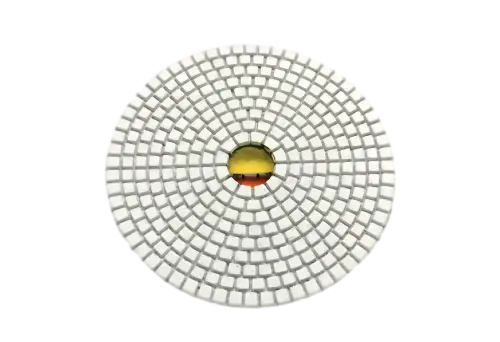
Edge and detail polishing around the column program runs on the flexible pad system.
 English

Get A Easy Solution
Chat Online
Hi, this is Lizzy from Dinosaw ( Not a Robot ). Which Machine ( model ) do you want? Please WhatsApp us now
Hello 👋 How can we help?


 中文
