Inside a CNC Multi-Wire Saw: Technology & Core Components
lizzy·Nov 25, 2025·7 MIN READ
lizzy·Nov 25, 2025·7 MIN READ
Explore the architecture of CNC multi-wire saw technology. Learn about the servo tension control, adaptive cutting system, and why it outperforms traditional saws for precision stone cutting.
TL;DR: The Engineering Behind the Cut
What makes it better? It combines a closed-loop servo tensioning system with adaptive CNC controls to deliver superior precision, surface quality, and material yield that traditional saws can't match.
How does it work? Multiple diamond wires run through a system of guide rollers, driven by powerful motors. Sensors constantly monitor cutting forces and wire tension, allowing the CNC to make real-time adjustments for a perfect cut.
What's the next step? Understand the core components and their parameter ranges to see how this technology can integrate into your production line and enhance your capabilities.
CNC Diamond Thin Multi‑Wire Saw advantages for precision stone cutting
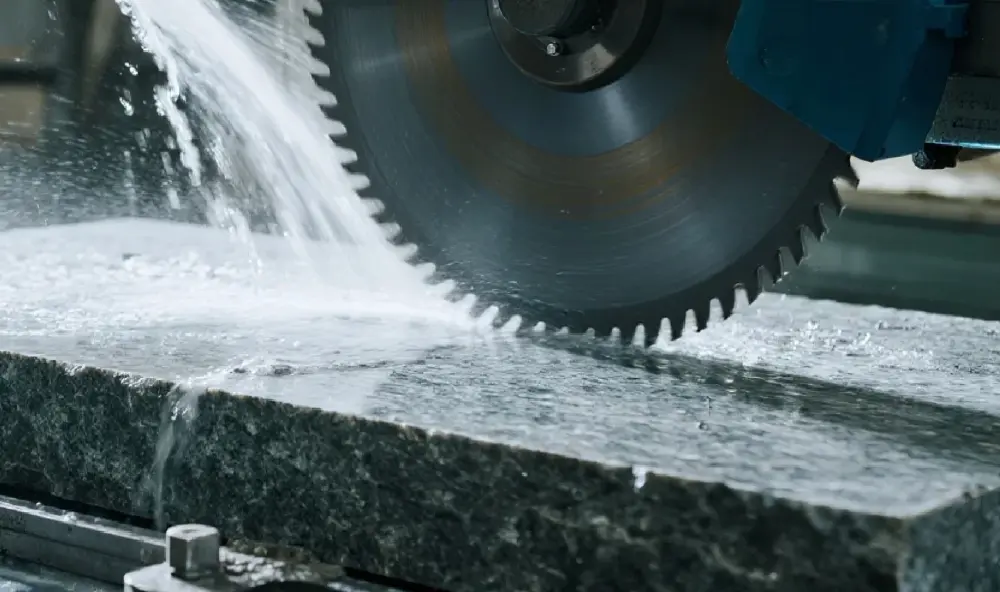
If you're an engineer or maintenance manager, you know that traditional gang saws have their limits. They are noisy, create significant material waste, and struggle to deliver the fine surface quality (often around Ra 2.2) required for high-end applications without extensive secondary processing. The CNC Multi-Wire Saw addresses these bottlenecks directly. Its superiority lies in its precision automated control system, which achieves an exceptional surface finish of Ra ≈ 2.0, minimizes kerf loss to just 0.5mm, and operates at a much lower noise level, all while being fully automated.
System Architecture of a multi‑wire cutting machine
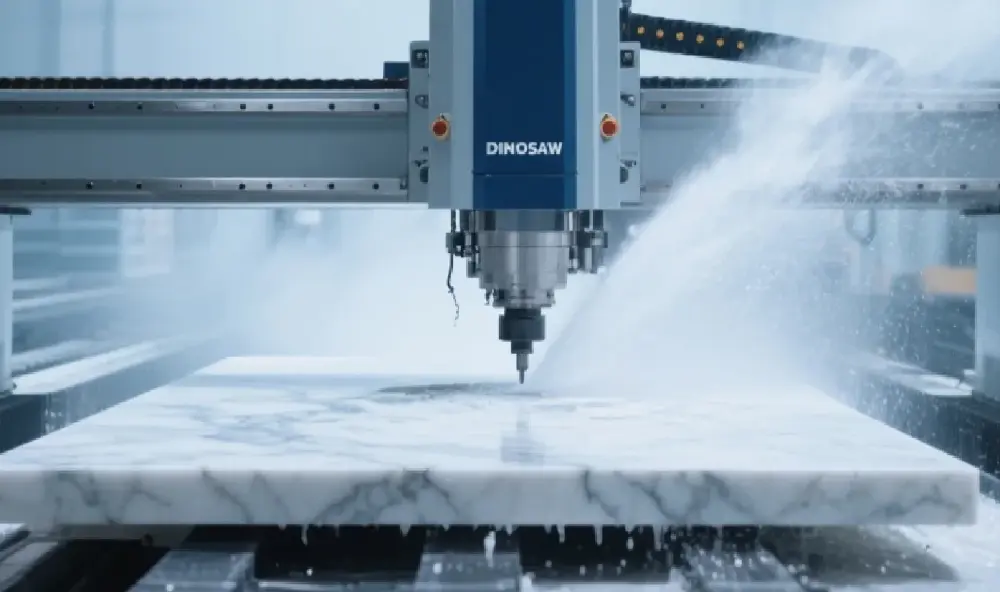
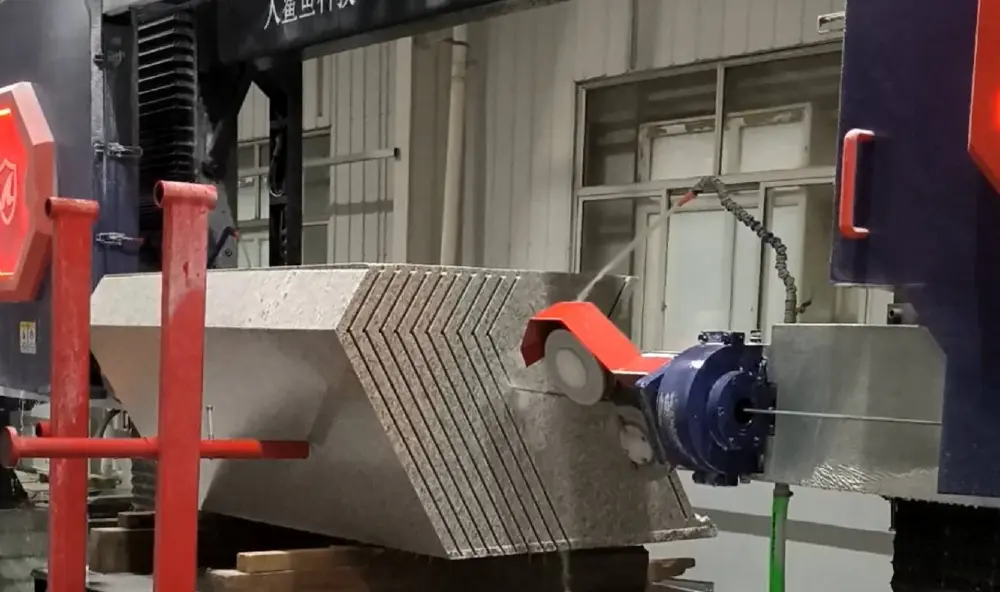
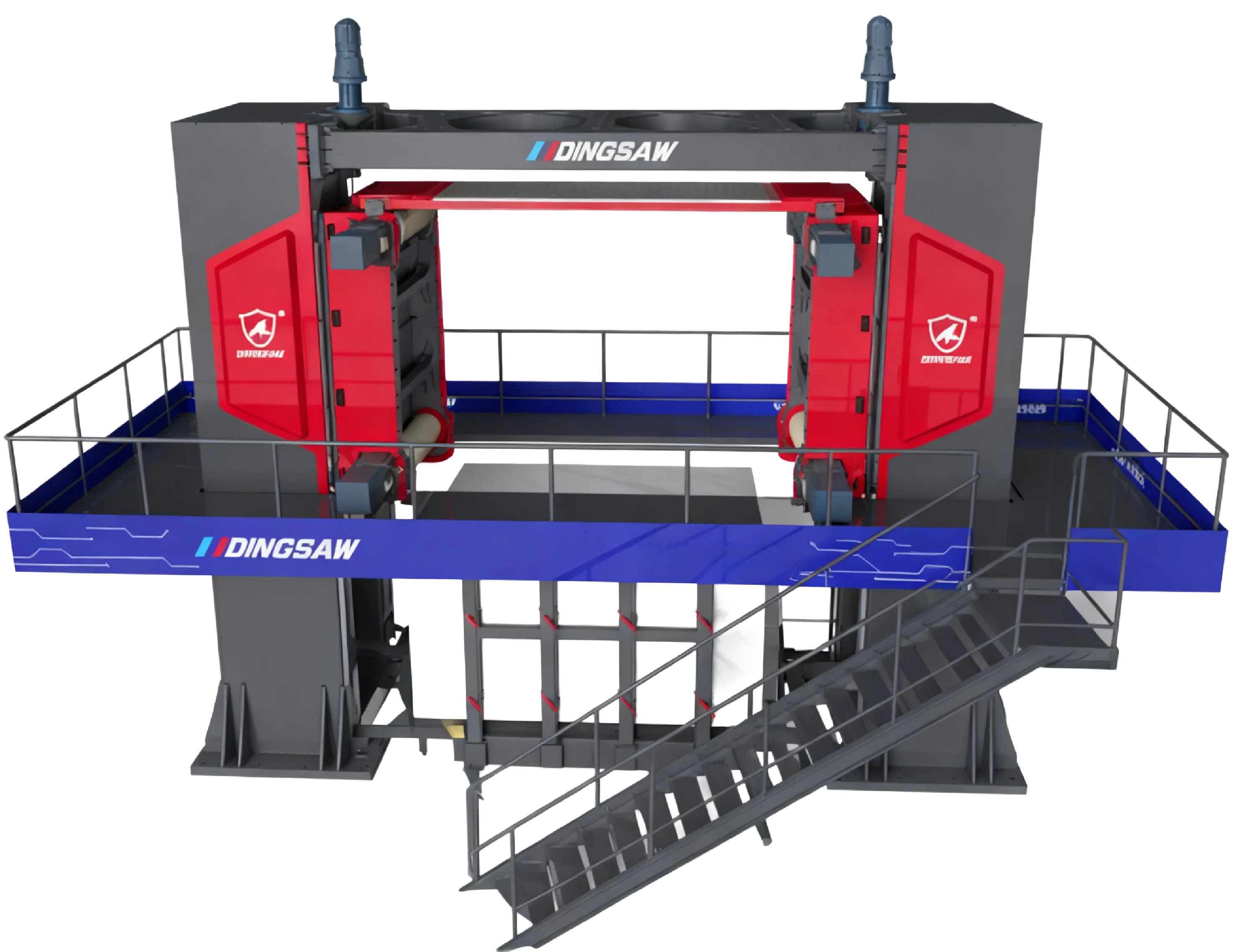
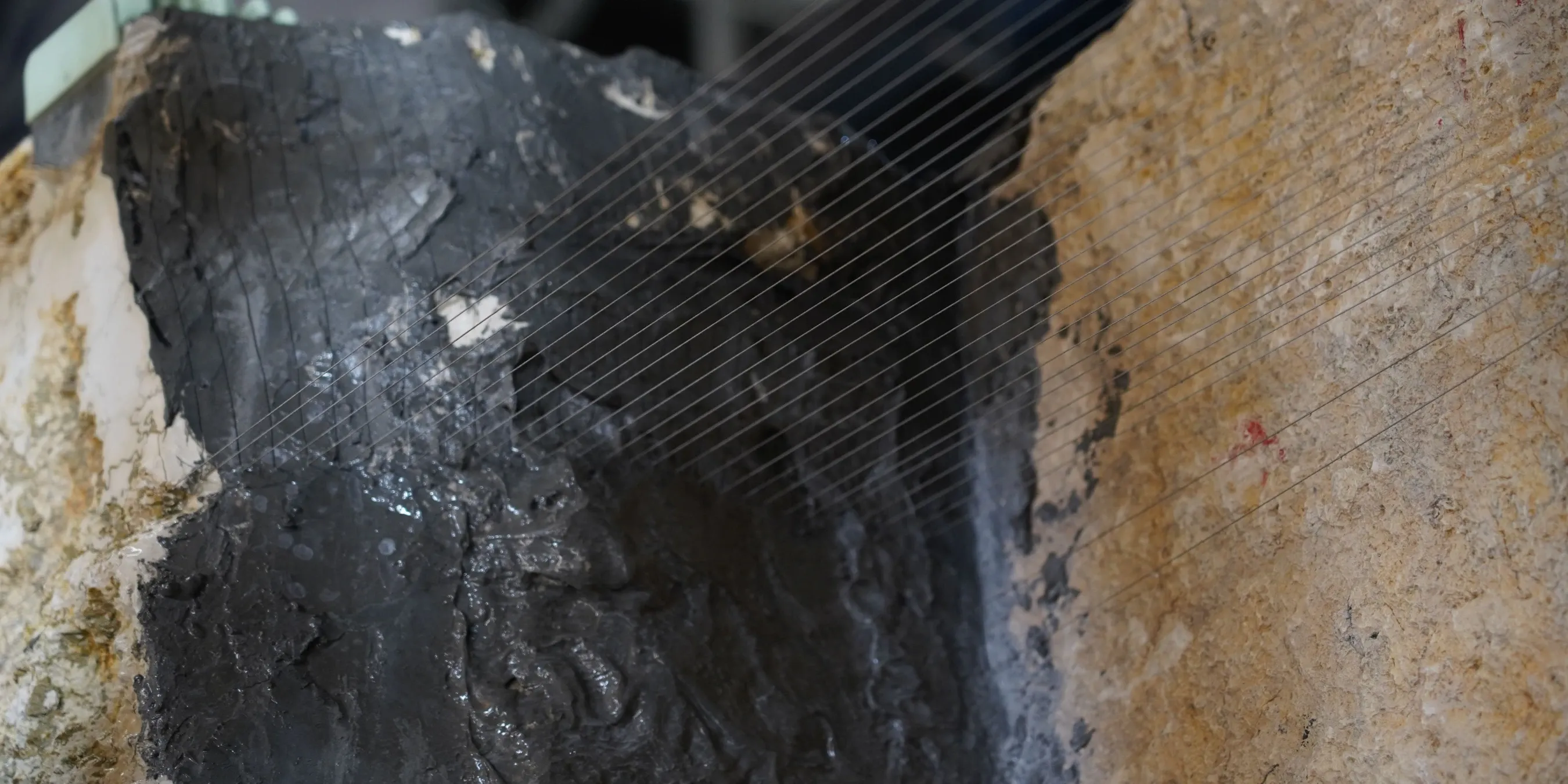
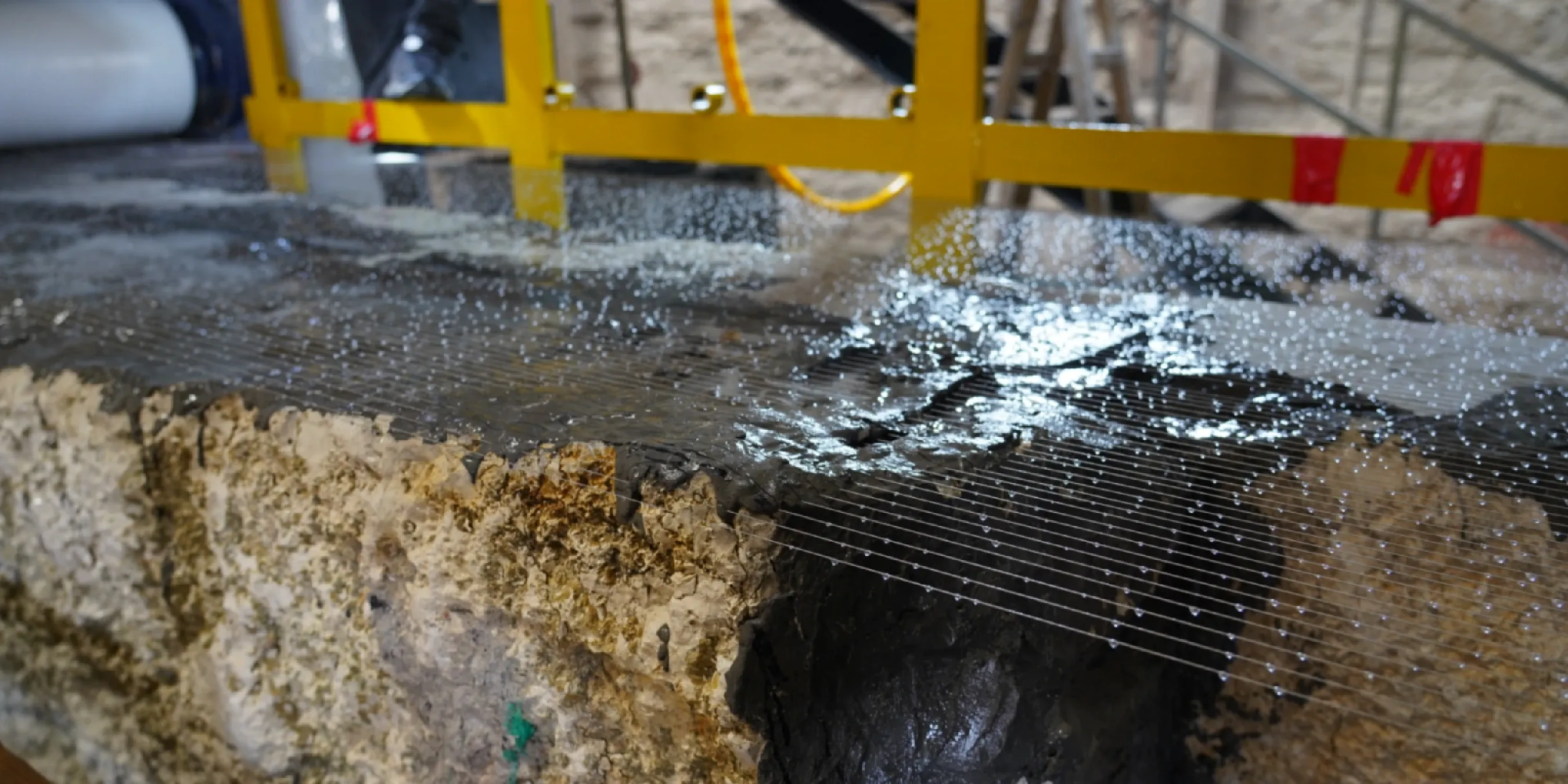
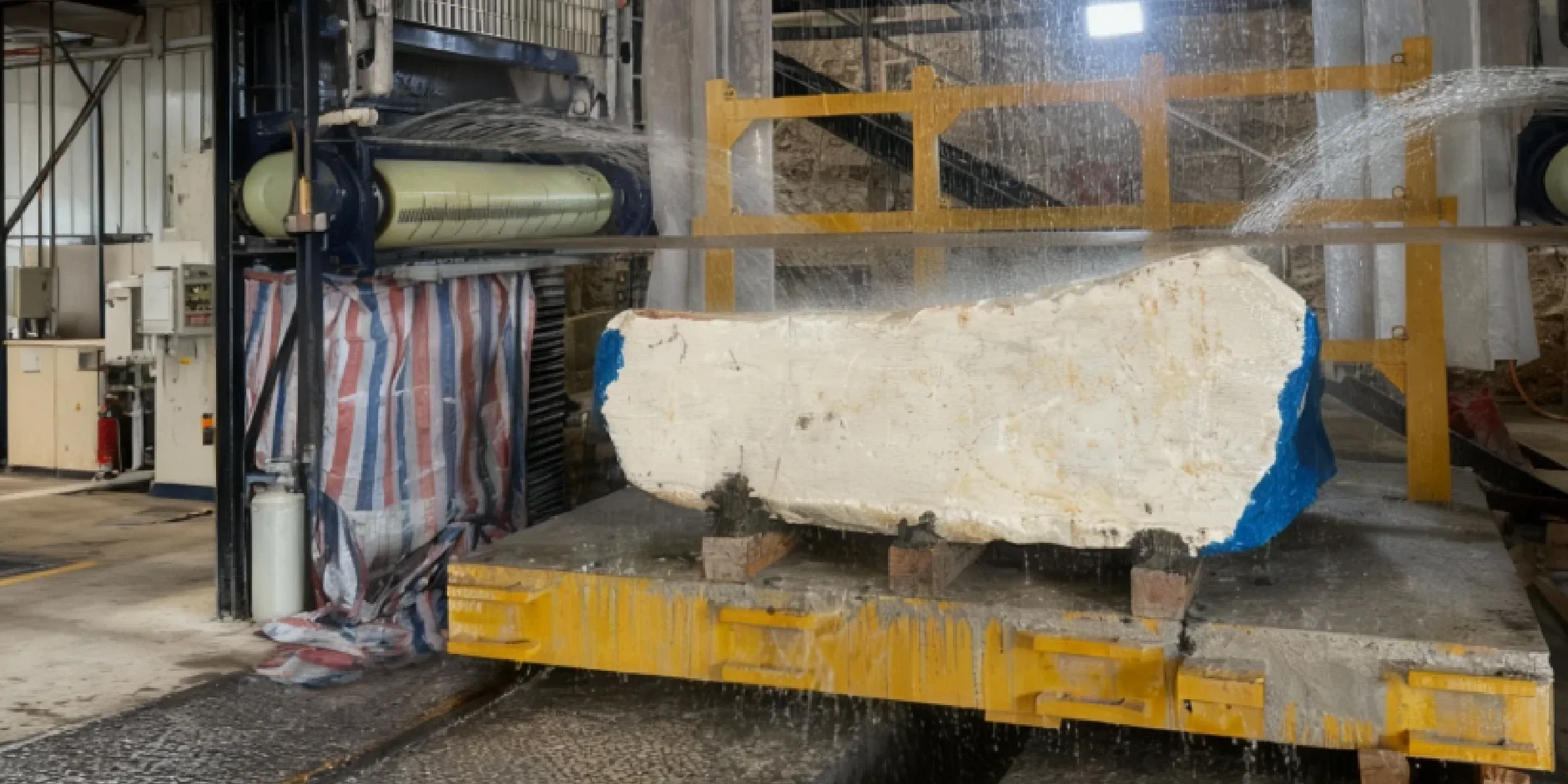
At its core, a CNC multi-wire saw is an automated system that uses multiple diamond-impregnated wires to slice through a stone block simultaneously. The system's architecture is a closed-loop of mechanical precision and intelligent control. It starts with the wire tensioning system, which maintains constant force on each wire. These wires are guided by a series of large, precision-engineered rollers (320-450mm) and powered by high-output main motors (60x4 kW). Throughout the cut, a network of sensors provides real-time data on force, vibration, and wire wear back to the CNC controller. This allows the system to make micro-adjustments instantly, creating an adaptive feedback loop that ensures a perfect, consistent cut from start to finish.
Core Technical Advantages: Precision, Automation, and Control
The machine’s performance is built on three technological pillars that work in concert.
Precision Servo Tensioning:Unlike static systems, the closed-loop servo control maintains constant, optimal tension on every wire. This is critical for preventing micro-fractures, eliminating thickness variations, and ensuring a flawless surface, especially when cutting delicate or internally varied stone.
Adaptive Cutting Automation:The CNC system isn’t just executing a pre-programmed path. It actively manages the cut by adjusting parameters like wire speed, feed rate, and tension in response to real-time feedback. When it encounters a denser section or a natural void in the stone, it adapts instantly to maintain quality and prevent wire breakage.
Real-Time Feedback Control:A suite of sensors for force, vibration, and wire wear provides a continuous stream of data. This information allows the machine to achieve exceptional repeatability and surface quality, ensuring that the last slab cut is identical to the first. For more details on the machine's capabilities, review the Multi-Wire Saw specs.
Why a CNC Diamond Thin Multi‑Wire Saw outperforms gang saws
The move from traditional methods to CNC multi-wire technology is an upgrade in every measurable category.
Performance Metric
CNC Multi-Wire Saw
Traditional Gang Saw
Material Utilization (Kerf Loss)
0.5 mm (Maximizes slab yield)
2–5 mm (Significant material waste)
Surface Quality (Roughness)
Ra ≈ 2.0 (Reduces polishing)
Ra ≈ 2.2 (Requires heavy secondary processing)
Noise Level
~60–80 dB (Safer work environment)
~110–130 dB (Occupational hazard)
Anatomy of the Machine: Key Components & Parameters
Understanding the core components is key to mastering the machine's capabilities.
Tension System:The heart of the machine's precision. It starts in a mid-to-high tension range (e.g., 100–200 N for marble, moderately higher for harder stone) and then the closed-loop servo system automatically maintains consistent tension.
Guide Rollers:With a diameter of approximately 320–450mm, these precision-machined rollers ensure the diamond wires run on a stable, low-vibration path, which is crucial for maintaining thickness tolerance.
Main Motors:A powerful 60x4 kW motor array provides the stable wire speed and responsive start-stop control needed for high-quality cutting.
Diamond Wire:Typically using a 0.35mm diameter wire to achieve the signature 0.5mm kerf, though it can accommodate wires up to 0.8mm for different applications. A high-quality Quarry wire saw is essential for extracting blocks without internal fractures, ensuring the multi-wire saw can perform optimally.
Wire Storage Capacity:Approximately 30,000 meters of wire storage allows for long, uninterrupted cutting cycles and efficient multi-wire operation.
Cutting Feed Rate:With a range of 0–200 mm/h, operators should start conservatively and incrementally increase the rate to find the perfect balance between speed and surface quality for each material.
PLC/Interface:The machine can be integrated with factory-wide systems (supporting protocols like OPC UA/Profinet where applicable) for centralized production monitoring, data logging, and recipe management.
Mitigating Failures on a multi‑wire saw
Even the most advanced machinery can face issues. Here’s how to address them:
Wire Breakage
Causes:Excessive tension, insufficient cooling, or sudden changes in stone density.
Mitigation:Rely on the closed-loop tensioning, ensure ample cooling water flow, and reduce the feed rate when cutting stone with known inconsistencies.
Thickness Variation
Causes:Machine vibration, improper block clamping, or inconsistent wire tension.
Mitigation:Utilize the machine's low-vibration frame, ensure the block is securely fixtured, and perform a brief test cut to allow the adaptive system to calibrate.
Edge Chipping
Causes:Worn diamond wire, inadequate cooling, or excessive wire speed.
Mitigation:Adhere to wire replacement schedules, maintain a stable water film on the cutting surface, and operate within the recommended wire speed range.
System Compatibility Up Lifting vs Downward Pressing
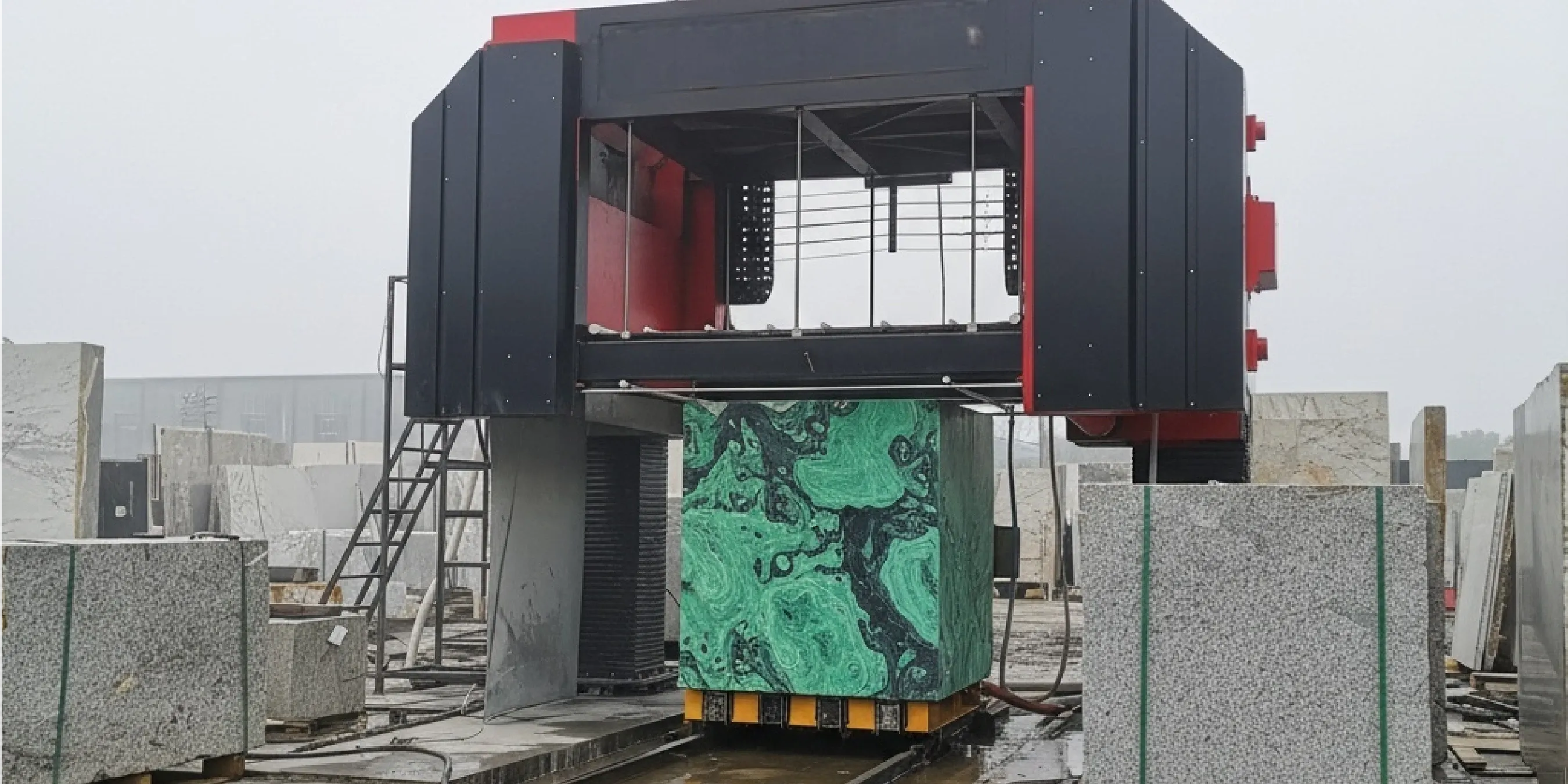
The machine comes in two main configurations: Up Lifting (JS series) and Downward Pressing (XY series). While both are fully integrable with CNC/PLC systems for recipe management, the mechanical design impacts performance. The Up Lifting system, where the block moves into fixed cutting components, offers superior stability, resulting in better precision and a longer machine lifespan. The Downward Pressing system is a more cost-effective initial investment but is generally suited for applications where ultimate precision is less critical.
Where to Start: Initial Parameters for 3 Common Materials
These starting points should be used to calibrate the machine before full production.
Marble (Soft to Medium Hard):Start with a medium wire speed, a feed rate in the lower half of the 0–200 mm/h range, and a mid-to-high tension. Incrementally increase the feed rate until you find the sweet spot between surface quality and productivity.
Travertine/Onyx (Brittle/Crystalline):Prioritize stability. Use a medium-low wire speed, a more conservative feed rate, and a stable, slightly higher tension to prevent vibration. Ample cooling is critical. Always perform a test cut on a corner first.
Granite (Hard):Requires more power. Use a medium-high wire speed, a conservative but steady feed rate, and a higher tension setting. Closely monitor wire wear and guide roller condition, and let the machine's feedback system make fine adjustments.
After cutting, the slabs are ready for a high-quality finish on an automated Stone polishing line to complete the production cycle.
Frequently Asked Questions (FAQ)
How does the servo tensioning system actually work?
This system is the brain behind the machine's precision, ensuring each wire maintains the perfect tension throughout the cut.
Context:It uses servo motors and sensors in a closed-loop feedback system. The sensors constantly measure the tension on each wire, and if any deviation is detected (e.g., from hitting a harder spot in the stone), the servo motor instantly adjusts to bring it back to the programmed setpoint.
Boundary:The system is designed to handle the normal variations found within a stone block. However, it cannot compensate for major pre-existing fractures or improperly secured blocks, which can still lead to issues.
Next Step:During setup, operators should select an appropriate baseline tension for the material. From there, trust the automated system to manage the micro-adjustments required for a flawless cut.
How do I identify and mitigate wire breakage risks?
Preventing wire breakage is key to maximizing uptime and reducing operational costs.
Context:The primary causes are excessive tension, insufficient cooling (leading to overheating), or sudden shocks from hitting voids or hard inclusions in the stone. The machine’s adaptive controls are designed to mitigate these by automatically adjusting feed rate and tension.
Boundary:The system's effectiveness depends on proper setup. Using a worn-out diamond wire or failing to provide adequate, consistent water flow for cooling can override the system's protective measures.
Next Step:Implement a regular preventive maintenance schedule that includes checking the cooling system nozzles and tracking the service life of your diamond wires.
Does cutting mixed thicknesses increase the risk of wire jumping?
Yes, it can, but this risk is manageable with the right approach and setup.
Context:Wire jumping or vibration can occur when there are large differences in tension profiles between adjacent wires cutting vastly different thicknesses. This creates an imbalance that can affect the stability of the entire wire set.
Boundary:The machine can handle moderate variations well. The risk becomes more pronounced when attempting to cut, for example, a 5mm slab right next to a 30mm slab. The system’s stability is best maintained with more gradual changes in thickness across the block.
Next Step:If a project requires cutting a wide range of thicknesses from a single block, it is best to group similar thicknesses together and consult with our technical team to optimize the wire layout and cutting parameters.
What can I achieve by integrating the machine with our PLC?
Integration unlocks a higher level of automation and data-driven management for your entire production line.
Context:Connecting the saw to your central PLC system (via standard protocols like OPC UA/Profinet, where applicable) allows you to store and manage cutting recipes, track production data for each block, and monitor the machine’s status remotely.
Boundary:The level of integration depends on your existing factory network and software. The machine provides the data and connectivity, but you will need the appropriate infrastructure to fully leverage it for plant-wide analytics.
Next Step:Discuss your factory automation goals with our engineering team to explore the specific data points and control features that can be integrated to streamline your workflow.
How does the machine's noise level affect compliance?
The reduced noise level is a significant benefit for both employee safety and regulatory compliance.
Context:Operating at 60-80 dB, the multi-wire saw is dramatically quieter than a gang saw (110-130 dB). This helps you comply with occupational health standards for noise exposure and reduces the need for extensive sound-dampening enclosures.
Boundary:Even at 80 dB, prolonged, direct exposure throughout an entire shift still requires operators to wear standard hearing protection (PPE) to meet most safety regulations.
Next Step:Use the manufacturer-reported noise levels in your facility's health and safety assessment to accurately plan for PPE requirements and demonstrate compliance.
How should I develop an initial cutting recipe for a new material?
Developing a new recipe should be a systematic and cautious process to ensure both quality and efficiency.
Context:Start by using the recommended parameters in this guide as your baseline. Begin with a conservative feed rate and medium wire speed, and perform a small test cut on a corner or non-critical part of the block.
Boundary:Do not try to find the maximum speed on the first run. The goal of the initial recipe is to establish a safe, high-quality baseline. Optimization for speed should come later, after you have a reliable set of parameters.
Next Step:Observe the surface quality, listen for any unusual sounds, and check the wire tension feedback from the CNC. Make small, incremental adjustments to one parameter at a time until you achieve the desired result, then save the settings as a new recipe.





 中文
中文 Italian






 Nov 25, 20257 MIN READ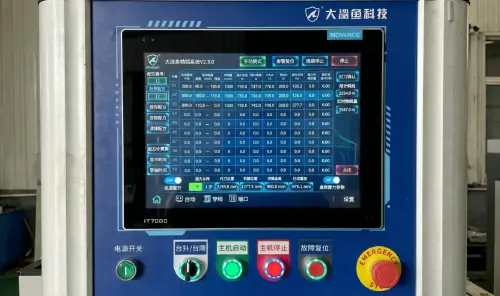
 English