





 中文


Ms.Lizzy
Hi, this is Lizzy from Dinosaw ( Not a Robot ). Which Machine ( model ) do you want? Please WhatsApp us now


Open Hours:8:30am-20:30pm

WhatsApp: +86 198-5901-3937

 Nov 6, 20268 MIN READ
 Nov 6, 20268 MIN READ
Compare industrial rock cutting machines and saws for quarrying, block processing and stone fabrication. See wire saws, chainsaws, block cutters, multi-wire saws and CNC systems with real selection data.
Choosing the right rock cutting machine starts with the production stage—not motor power alone. Quarry block extraction, block-to-slab cutting and finished stone fabrication require different machine structures, cutting tools and performance priorities. This guide compares the main rock cutting systems used from quarry to factory, using actual machine parameters, application data and selection criteria to help match the equipment to the stone, workpiece and target output.
Still unsure? Start with four inputs: stone → raw workpiece → final product → target output.
If you already know your requirements or want expert advice on the best stone cutting machine for your project:
These terms overlap, but they usually describe different levels of equipment:
For equipment selection, the terminology matters less than the process.
First identify whether you need:
Then compare machines within the correct process category.
Fast path: if you tell us your stone type (granite/marble/basalt/limestone), block size, and cutting goal (primary cutting / sizing / profiling), we can recommend the right setup quickly.
The best machine depends on the production stage, stone, cutting geometry and target output.
Use the table below as the first filter, then compare specifications within the correct equipment category.
| Application | Stone Type | Processing Need | Recommended Equipment |
|---|---|---|---|
| Quarrying | Marble | High-bench extraction | Diamond Wire Saw + Quarry Chainsaw + DTH |
| Quarrying | Granite | Low-bench extraction | Double-Blade Saw + Wire Saw (undercutting) |
| Quarrying | Sandstone | Soft stone extraction | Sandstone Cutting Machine |
| Fabrication | Granite | Block to slab conversion | Multi-Blade Stone Block Cutter |
| Fabrication | Marble & luxury stone | Block to slab conversion | Multi-Wire Saw (20% higher yield) |
| Fabrication | All stones | Complex shape cutting | CNC Mono-Wire Saw Machine |
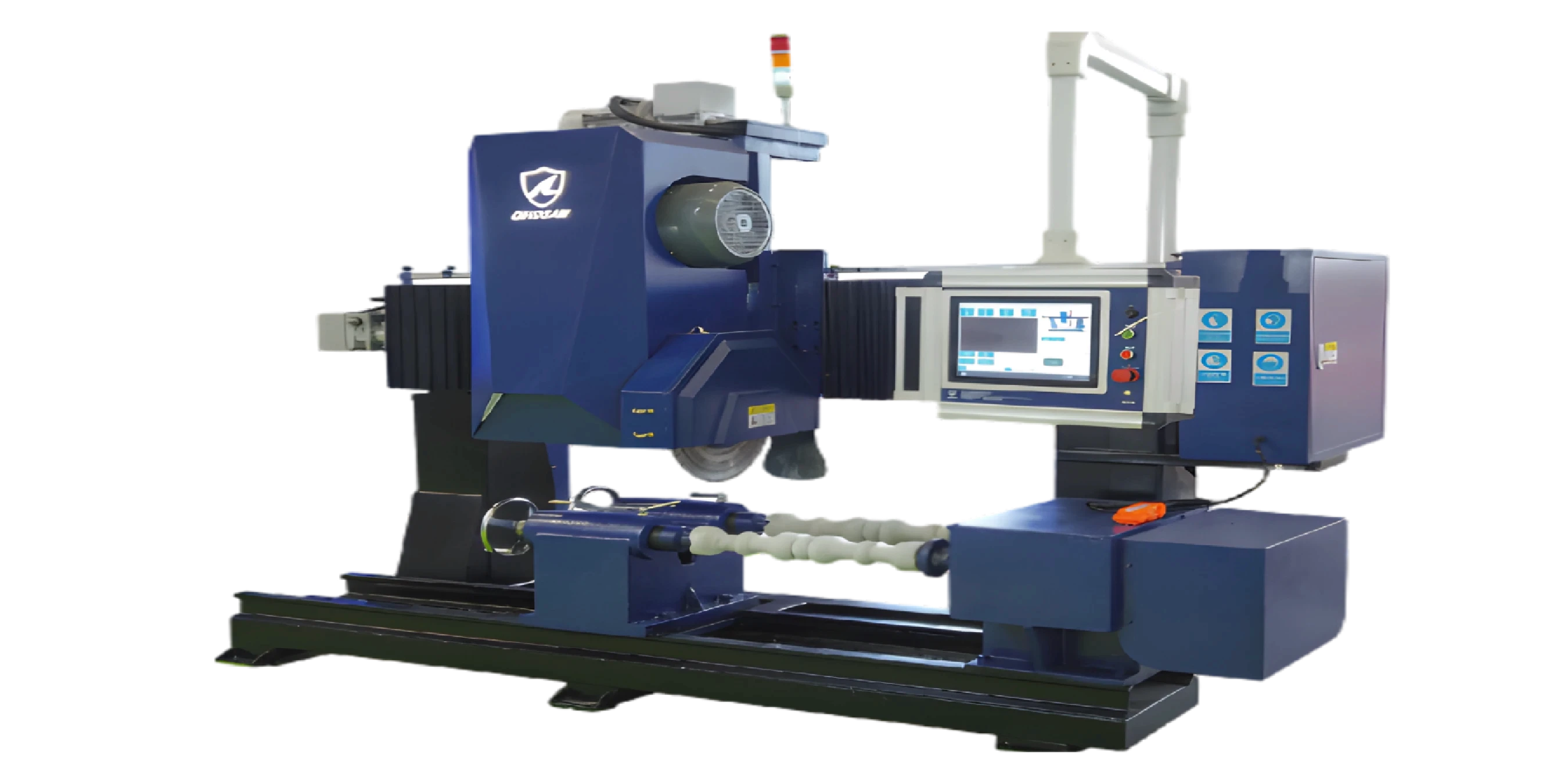
| Fabrication | All stones | Cylindrical/spherical objects | Stone Lathe |
| Fabrication | All stones | Finished products | CNC Bridge Saw |
| Fabrication | Marble & ceramics | Inlays & detailed patterns | Waterjet Cutting Machine |
For high-value marble extraction, plan bench height and block dimensions around the deposit, fissures, access and handling capacity. Where conditions support larger blocks, a high-bench extraction route can help preserve commercially useful dimensions; stone value alone does not determine bench height.
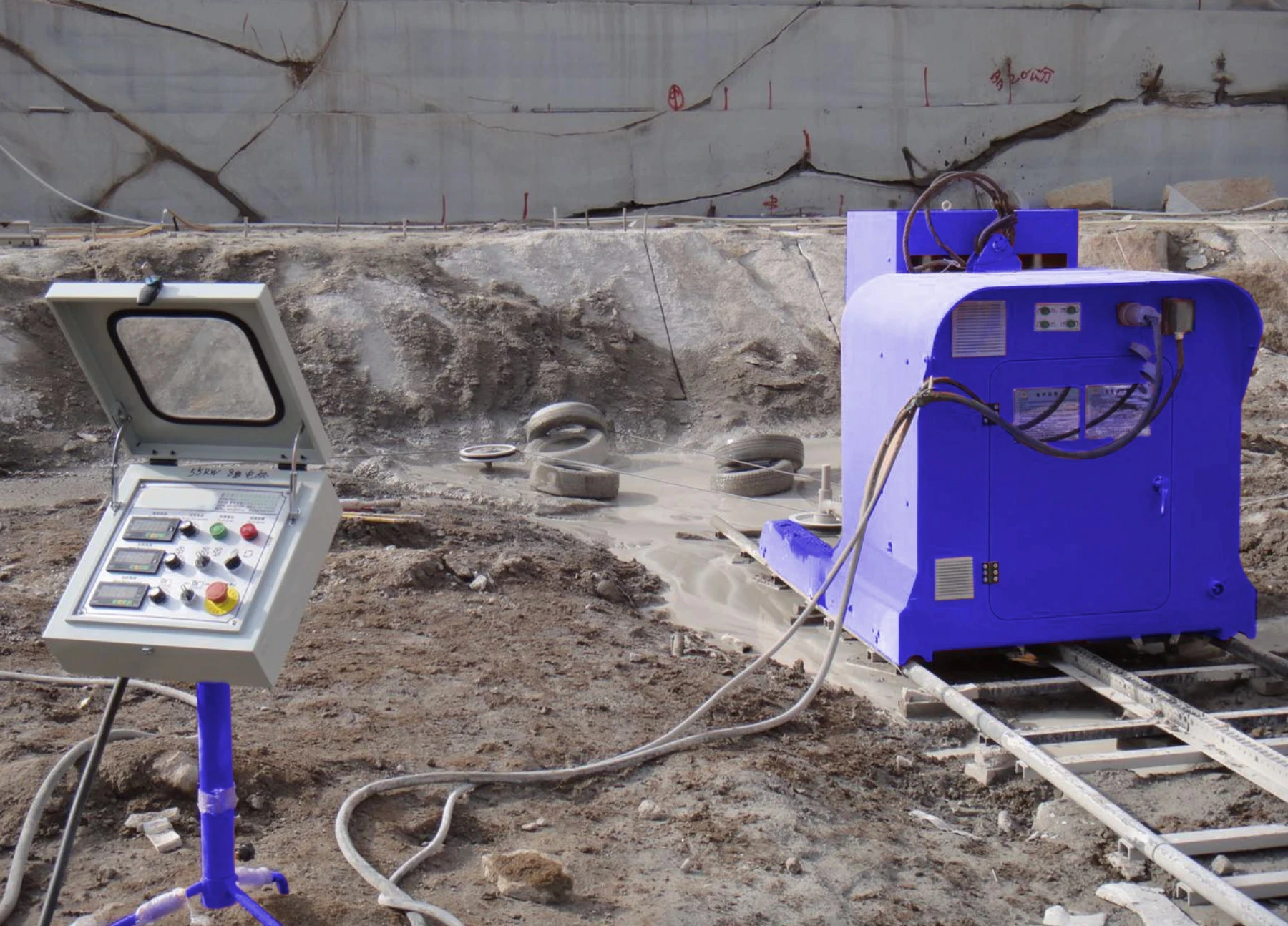
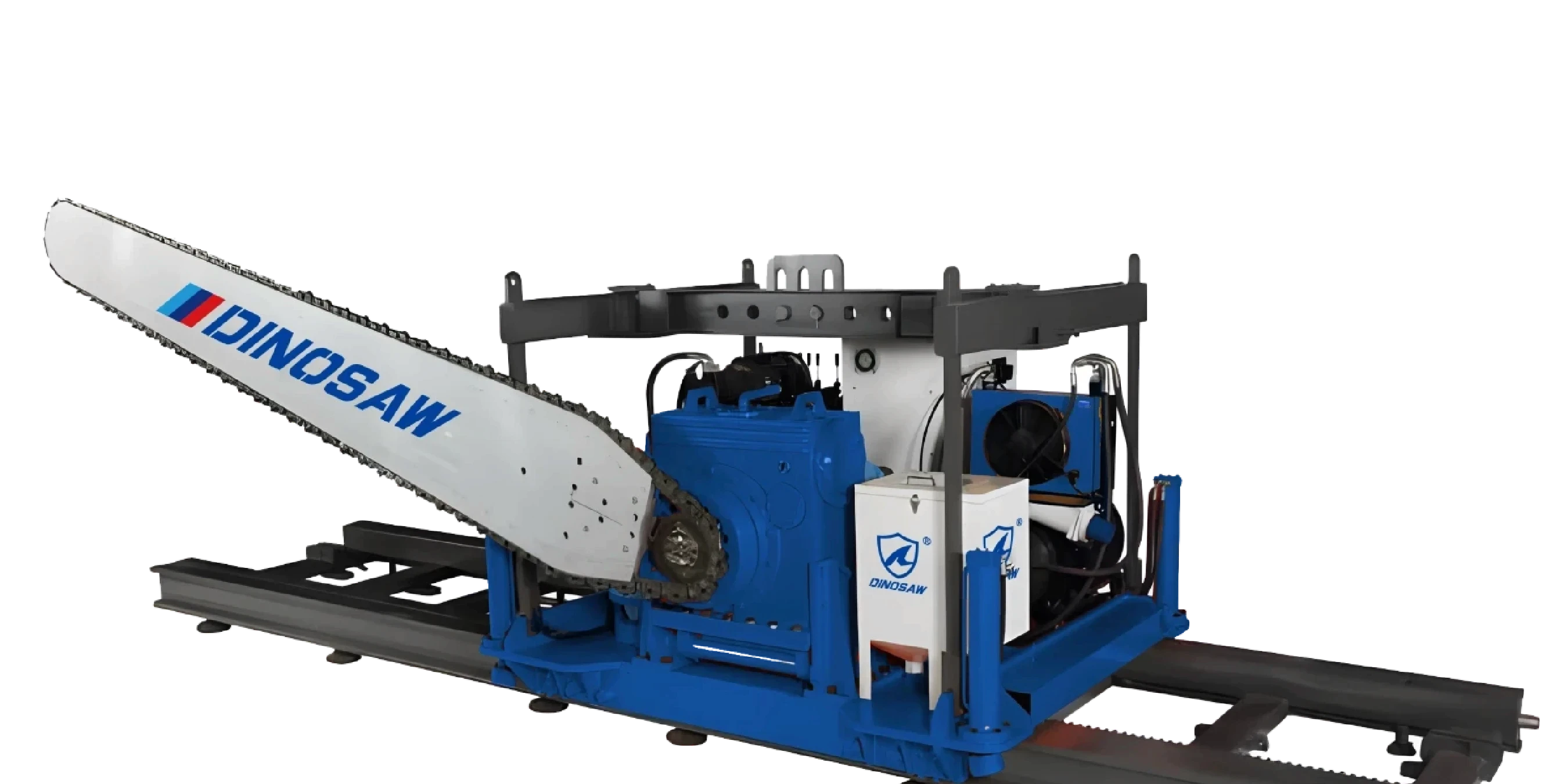
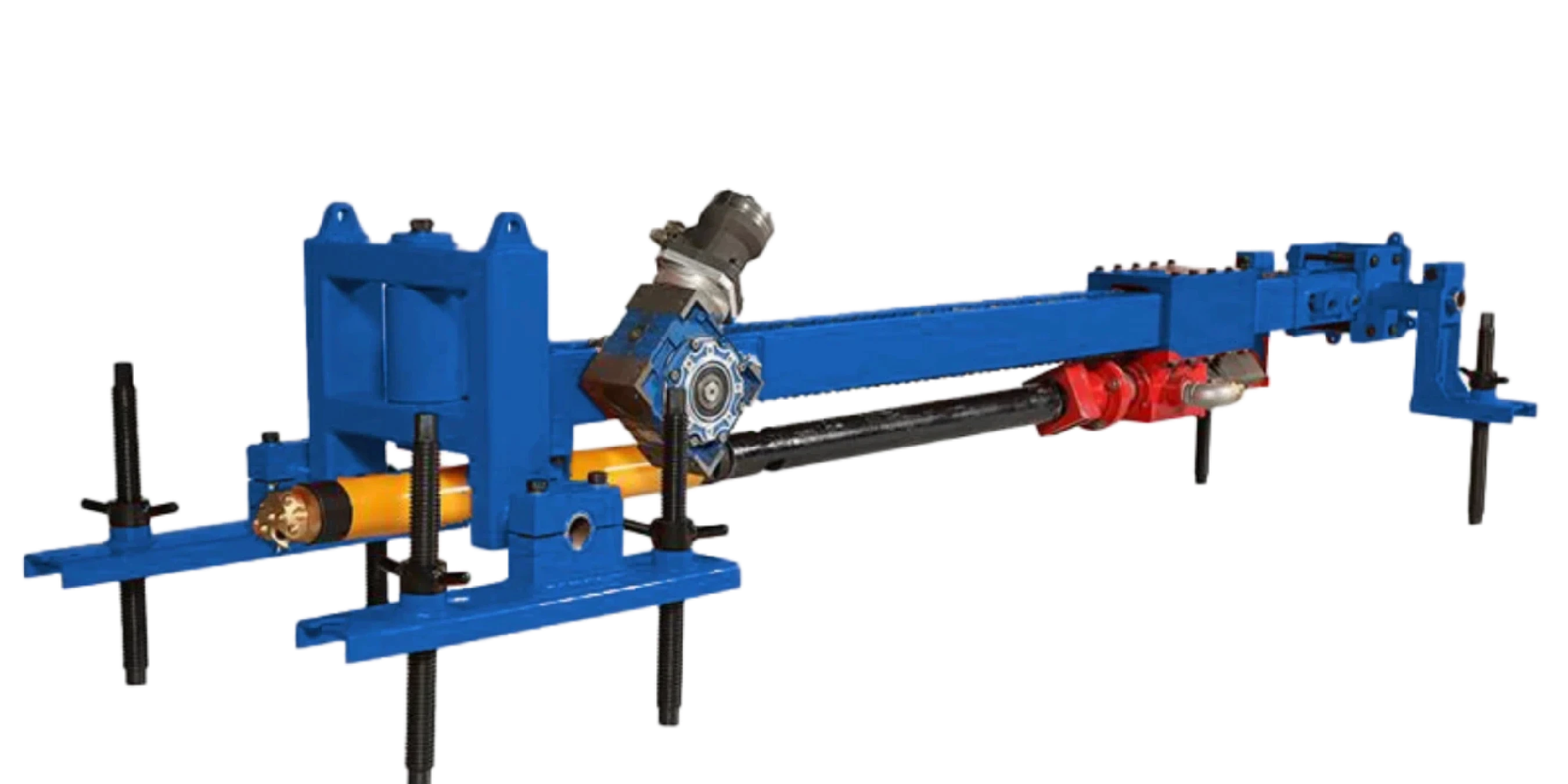
For granite extraction, compare bench geometry, desired block size, fracture pattern and handling capacity. A double-blade cutter can suit repeated straight face cuts on prepared rails, with wire sawing used where the release cut requires more flexible geometry.

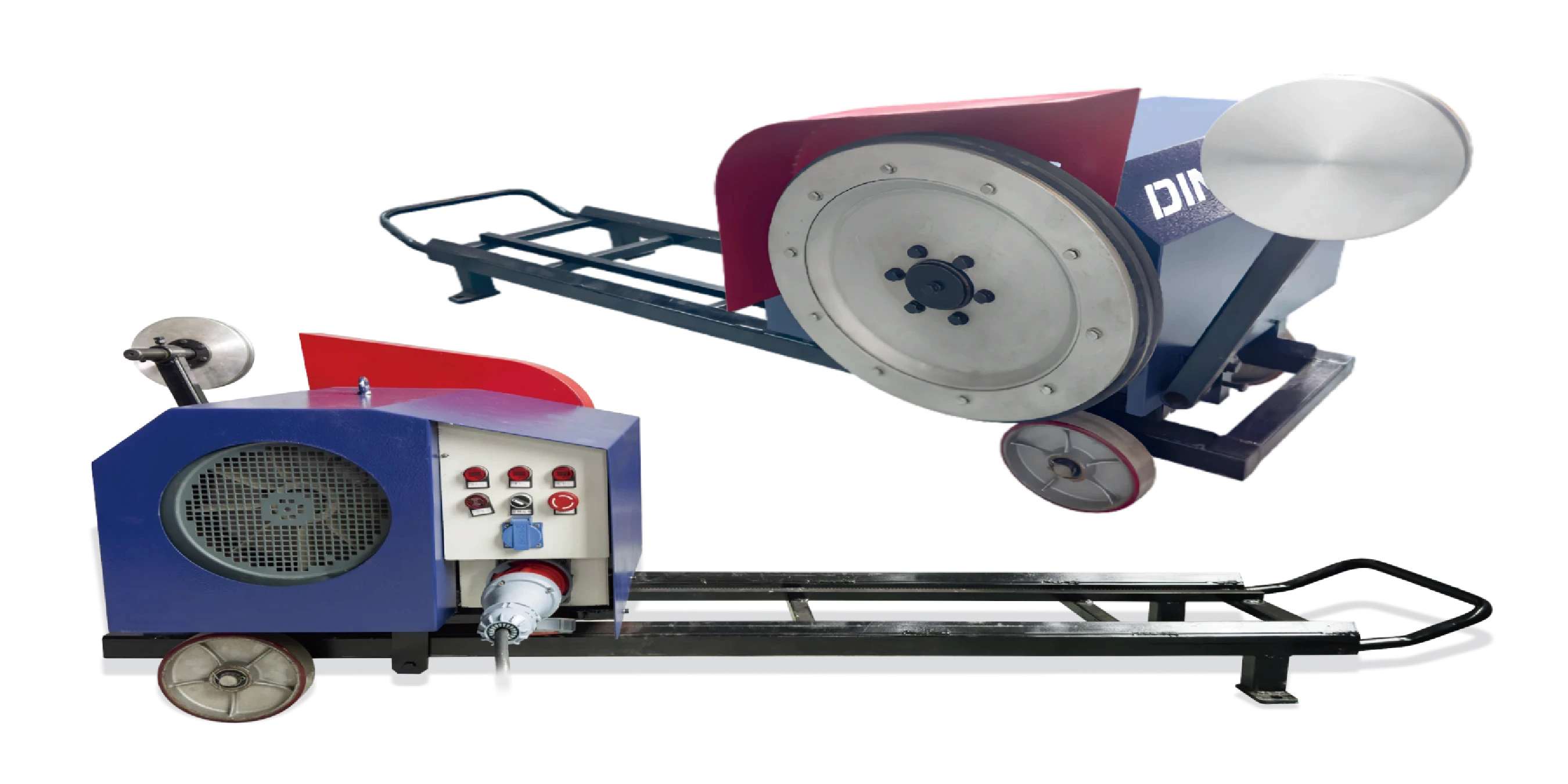
For softer stone varieties like sandstone, specialized dry-cutting systems offer the most efficient extraction solution.
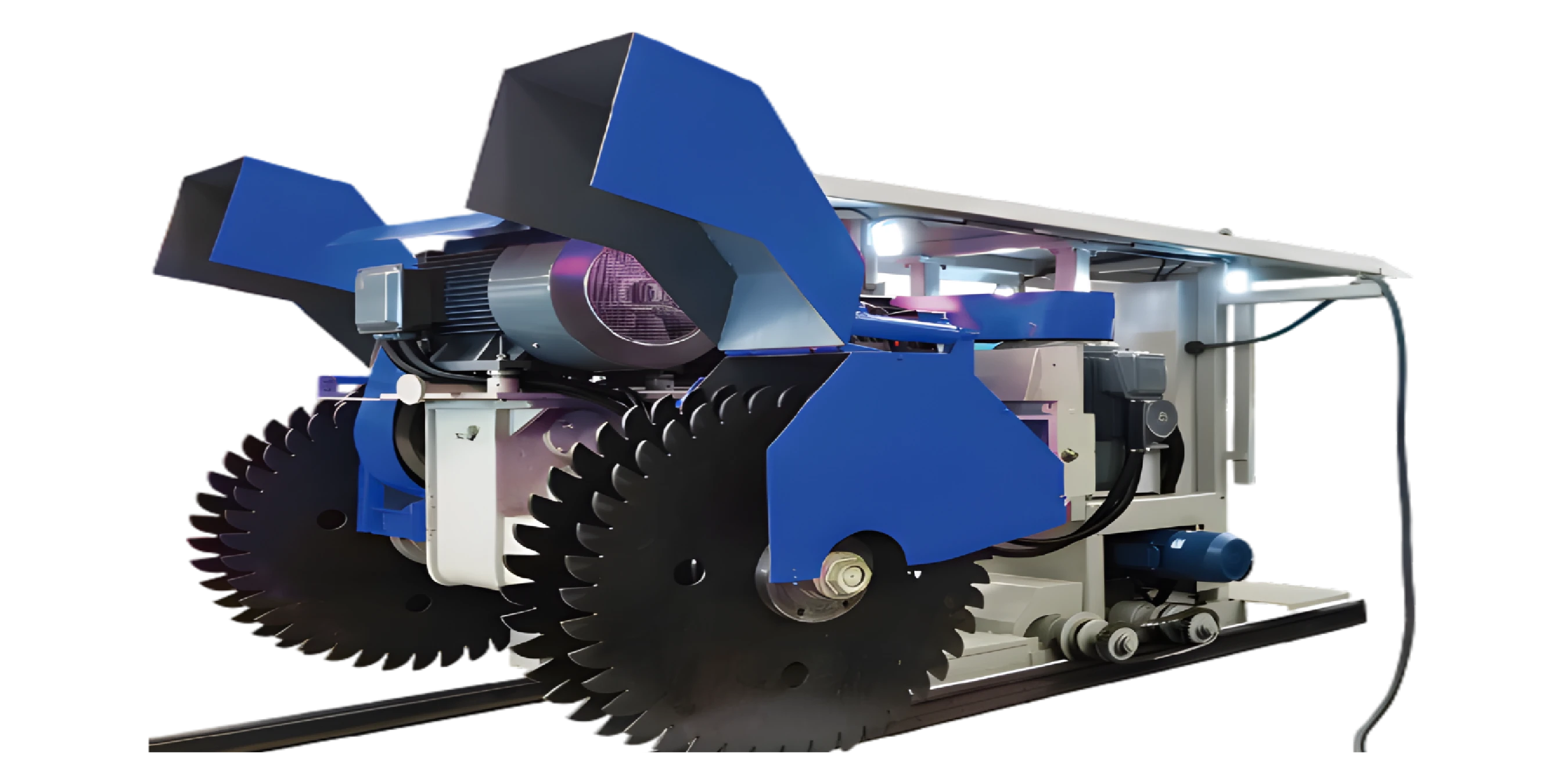
The transformation of raw blocks into marketable slabs requires specialized equipment based on material properties and desired output quality.

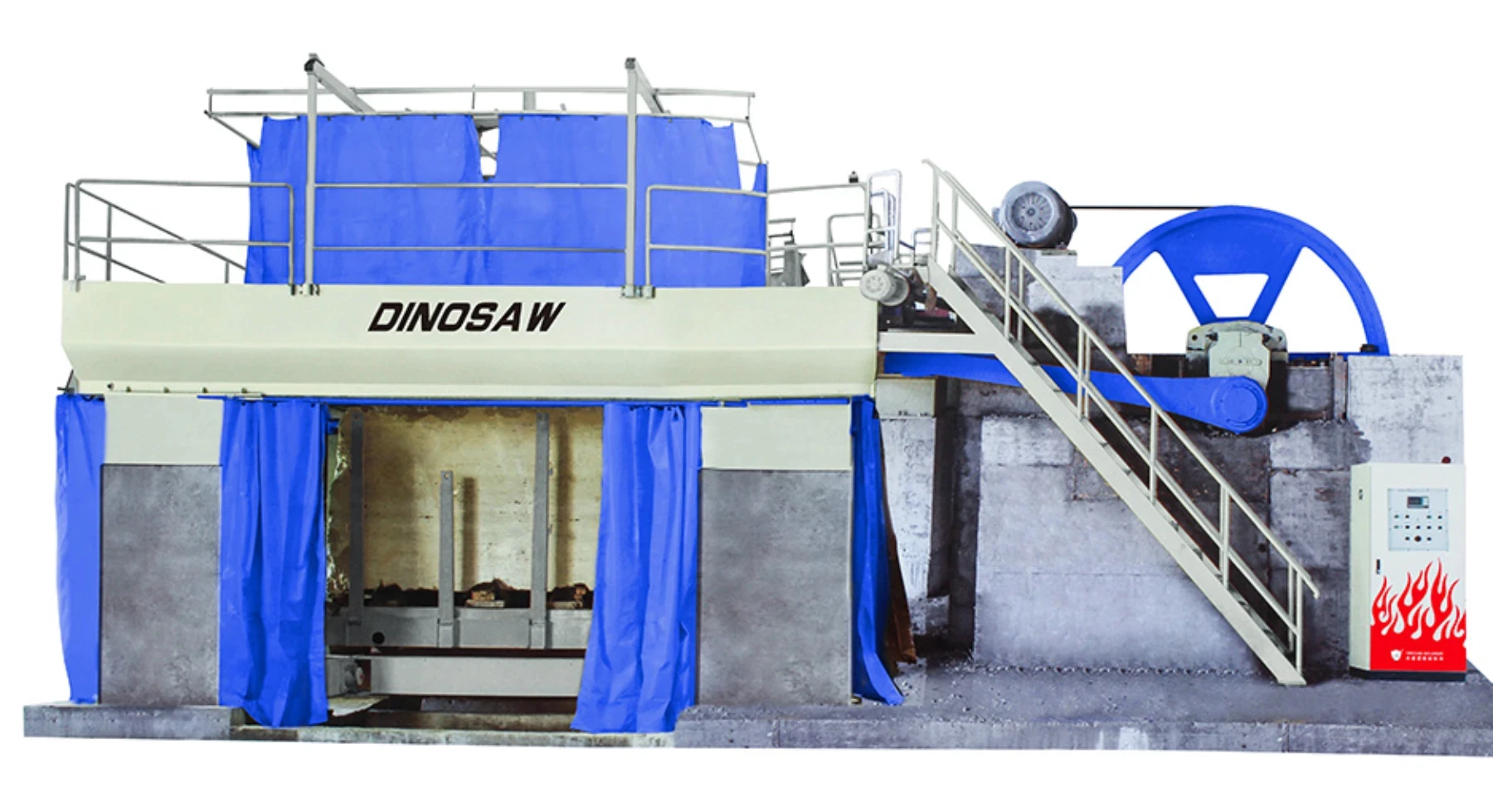

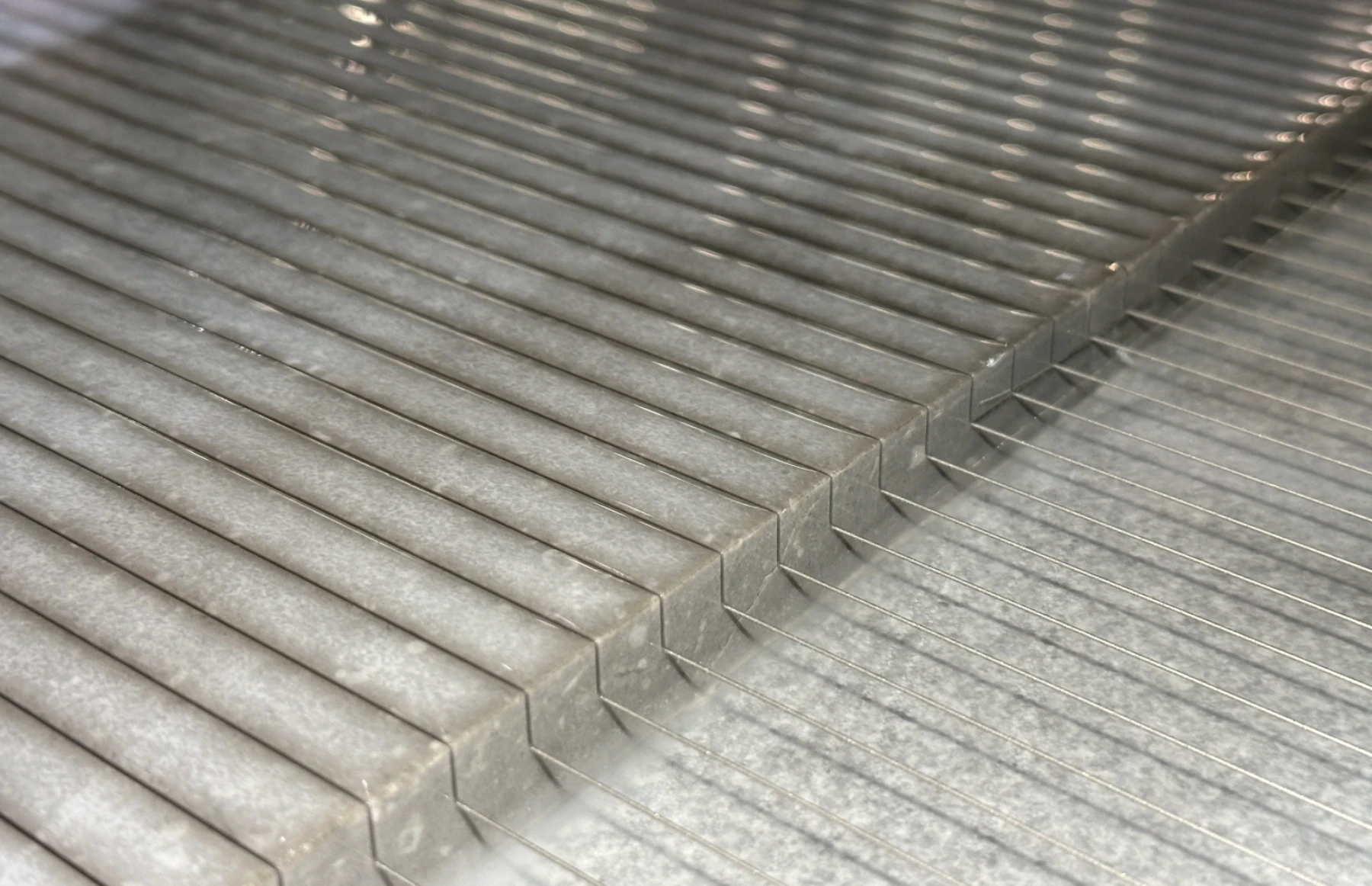
DINOSAW application data show more than 20% higher material yield compared with traditional gangsaw routes under matched high-value stone processing conditions.
This advantage becomes especially important for:
Rare marble
Onyx
Premium decorative stone
Thin-slab production
Blocks where material value is significantly higher than cutting cost
A small reduction in material removed by each cut accumulates across an entire block.
Why Wire Diameter and Kerf Matter
Every cutting path converts part of the block into waste.
Modern multi-wire technology demonstrates how much this can matter. Current other brand multi-wire systems are available with diamond wire diameters from 4.3 to 7.3 mm.
With its 4.3 mm wire configuration, nominal block yield up to 39.2 m² of 20 mm slab per cubic meter of block.
This figure should not be applied directly to every machine or stone, but it provides a useful industry benchmark for understanding why wire diameter, kerf and slab yield belong in the ROI calculation for valuable stone.
For specialized architectural elements and custom designs, precision-controlled systems offer unmatched versatility.

For railings, columns, spheres, fountains, and decorative moldings, specialized profiling equipment delivers the required dimensional accuracy.
For countertops, vanities, and finished consumer products, precision cutting and edge processing are essential.
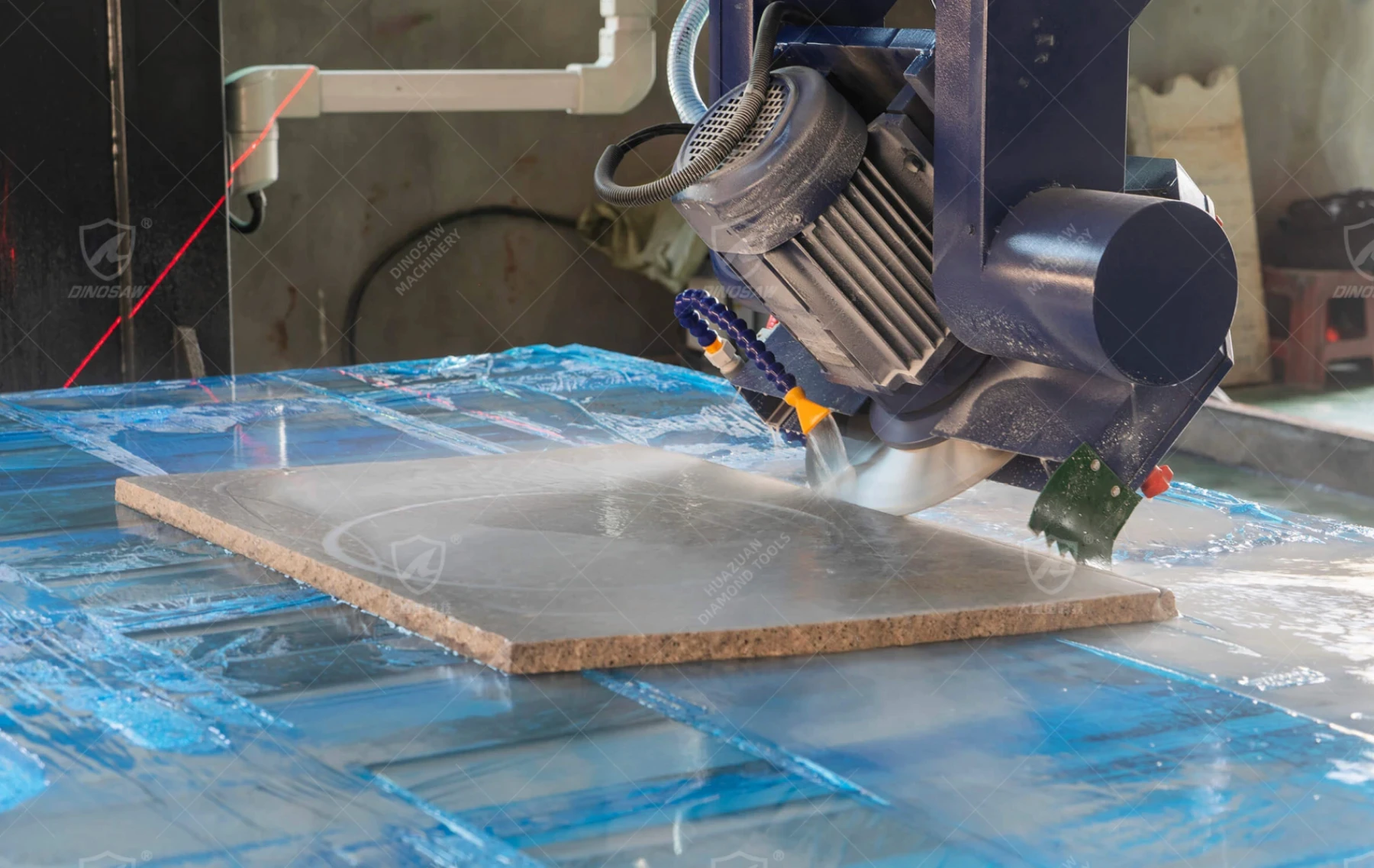
For detailed pattern cutting and intricate designs, waterjet technology offers unmatched precision.

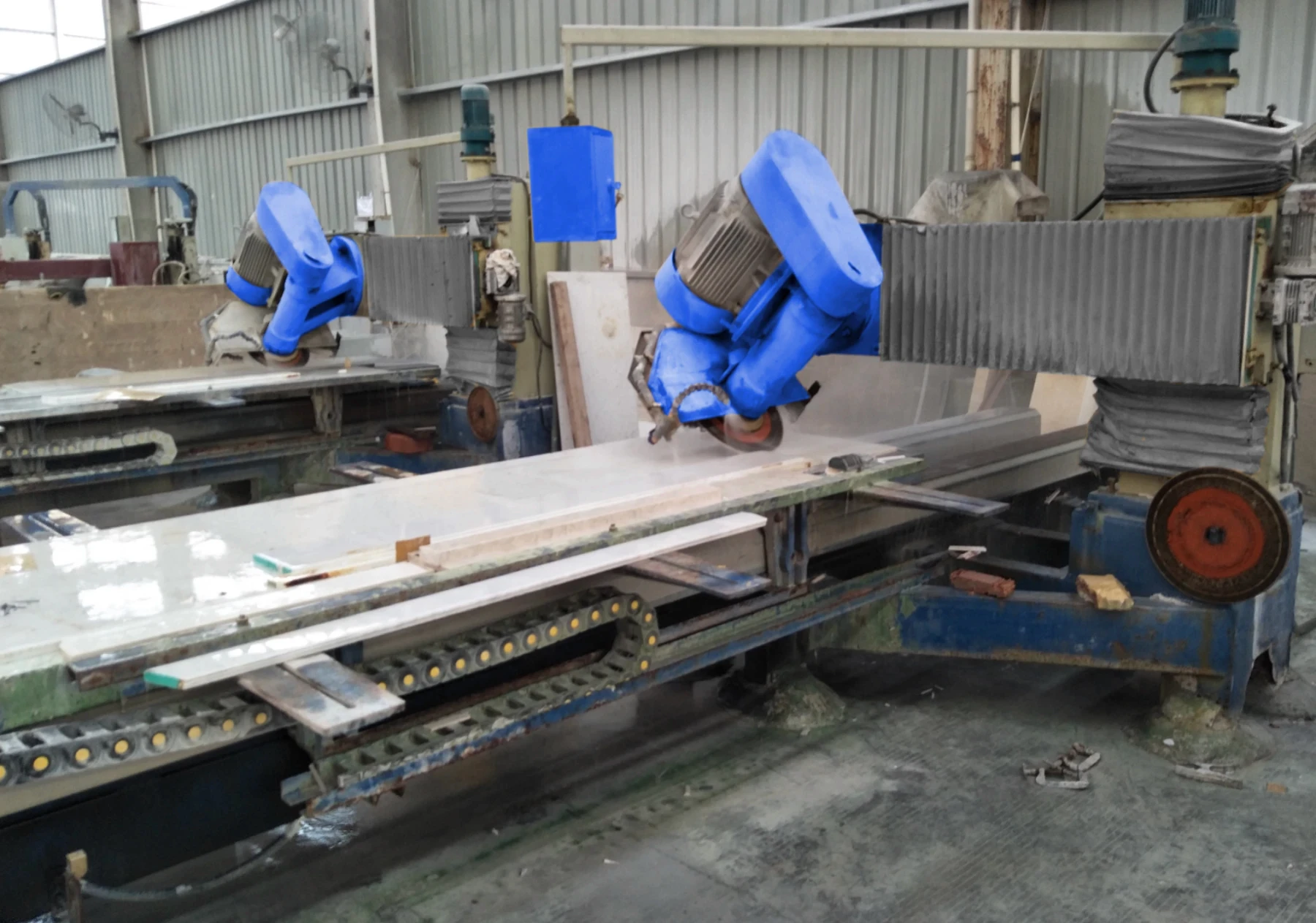
For budget-conscious small fabricators focusing on basic cutting and 45° edge processing, simplified solutions offer cost-effective performance.
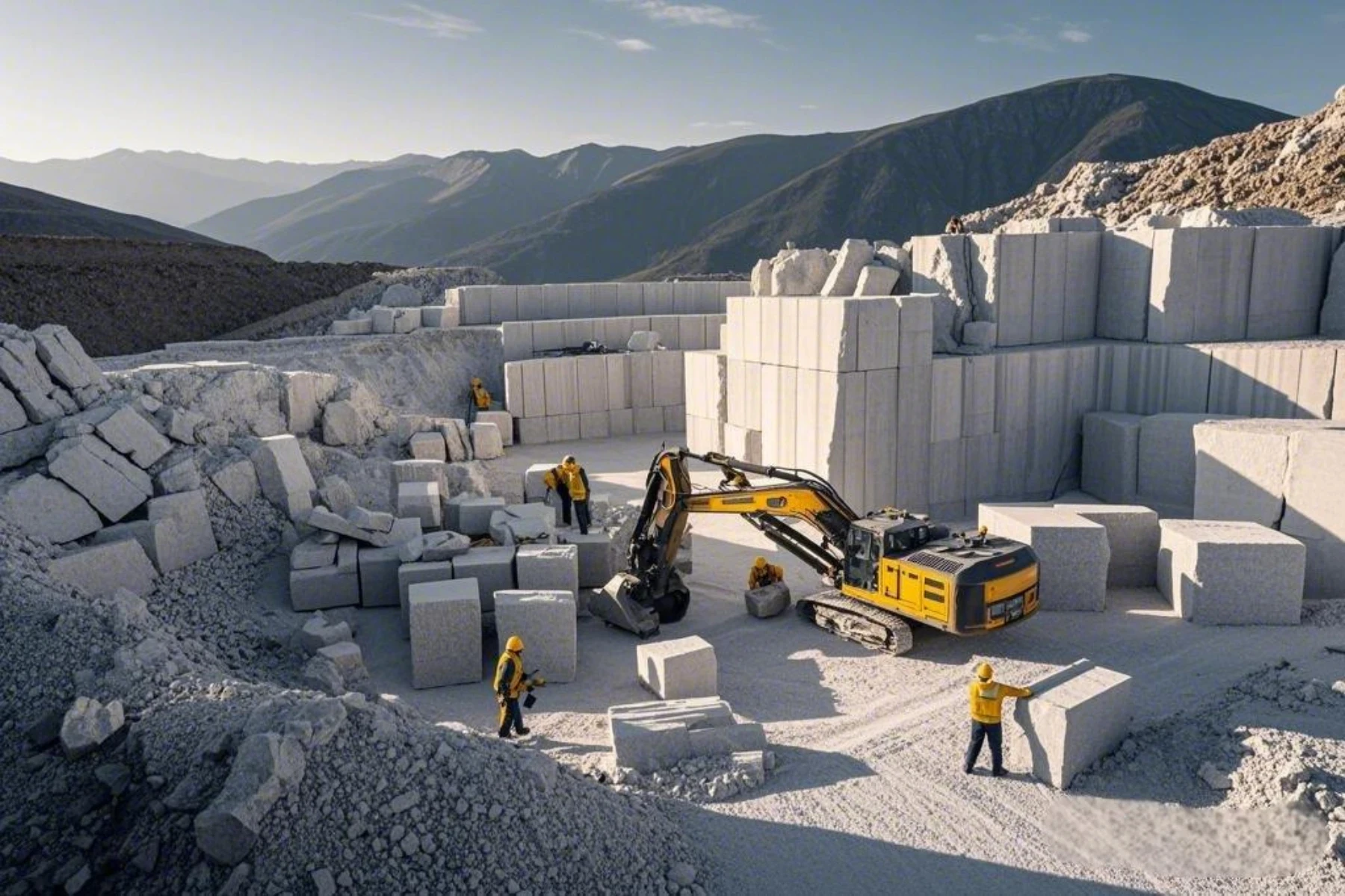
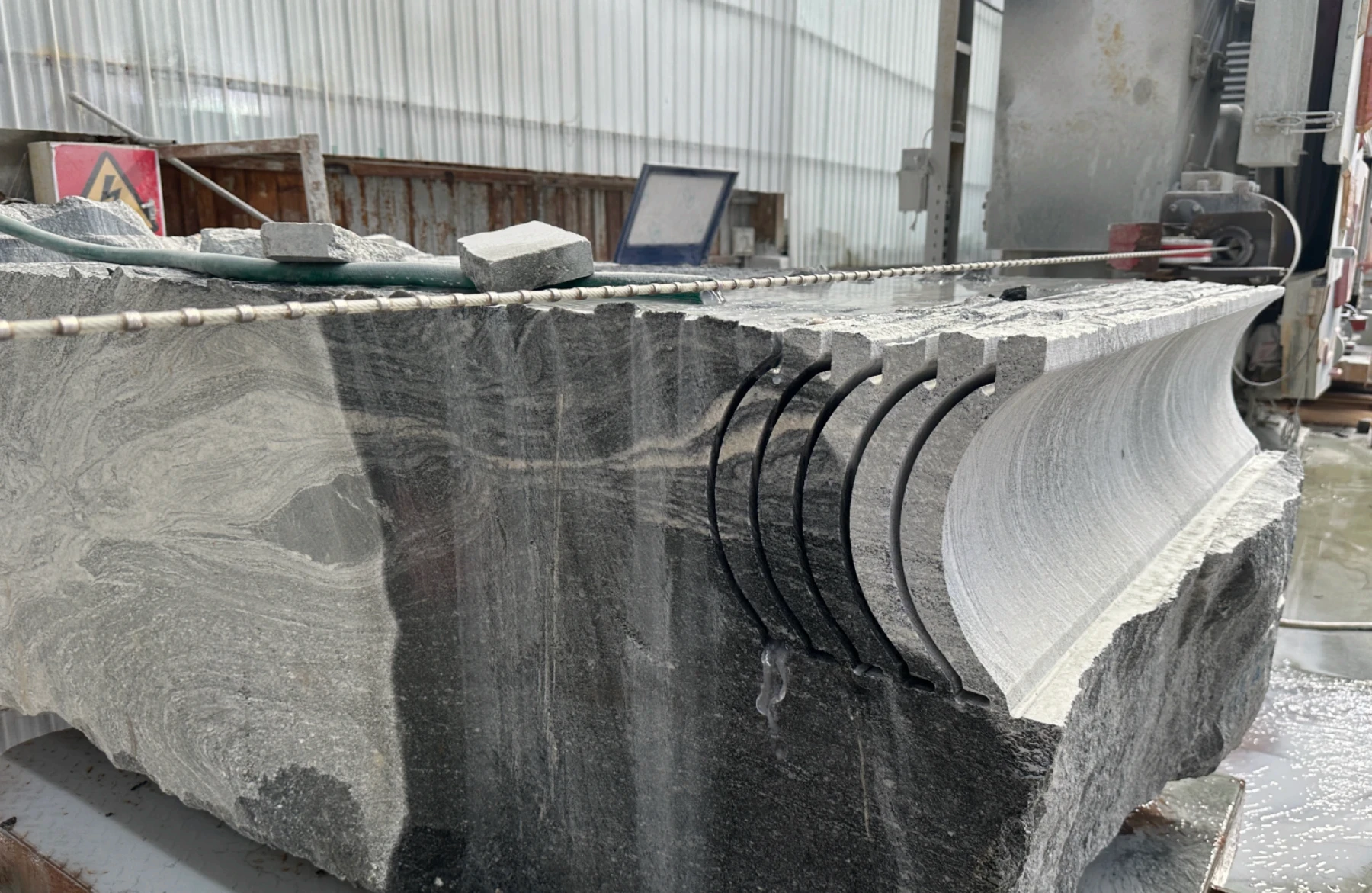
This section concerns dimension-stone quarrying: separating commercial blocks from the deposit and preparing them for handling and factory processing. Select equipment around stone properties, fracture patterns, cut orientation, bench access and utility supply. Tunneling, ore cutting and underwater work require separately specified equipment and operating arrangements.
High cutting strength, impact resistance, stability for continuous operation, and safety features.
| Equipment Type | Technical Features | Applicable Scenarios |
|---|---|---|
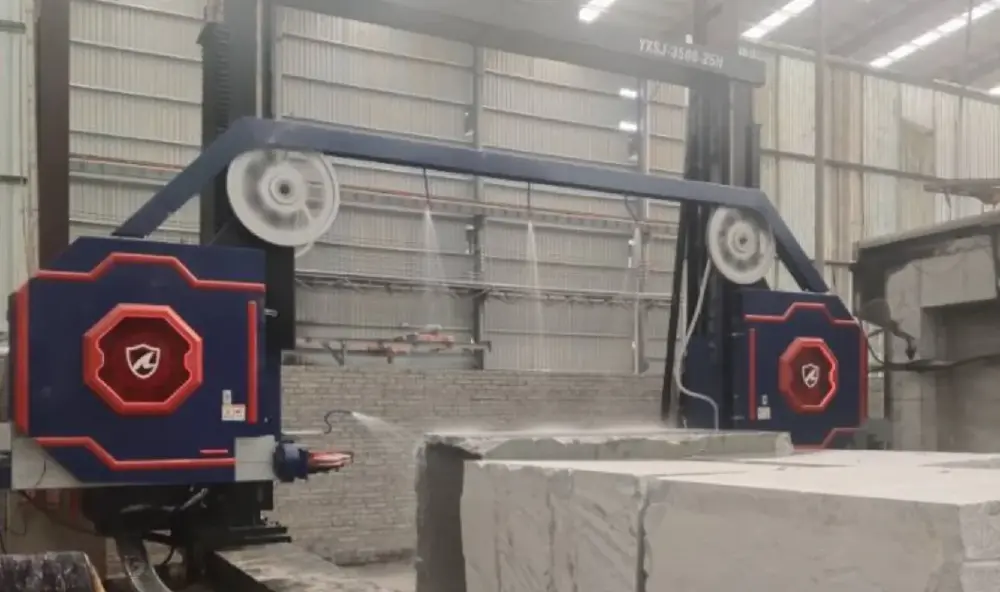
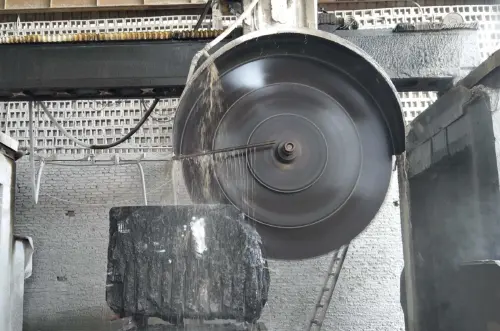
| Diamond Double-Blade Saw | Belt drive and chrome-plated guide pillars. DINOSAW DBM catalog: total installed power 118 or 138 kW; maximum cut depth 1,550 or 2,150 mm, depending on model. | Marble/granite block mining |
| Quarrying Diamond Wire Saw | Diamond bead wire with 360° rotation, suitable for irregular rock masses. Motor power: up to 110kW | Dimension-stone quarry face cutting, side cuts and undercutting where the wire route and site layout permit. |
| Quarry Chainsaw | Compact design, compatible with rails or excavators, efficient for medium-hardness stones. Cutting depth: up to 3400mm, power: 30-50kW, cutting speed: 0.5-4 m/h | Medium hardness stone quarrying (marble, limestone, sandstone), narrow spaces, auxiliary trimming |
| Sandstone Cutting Machine | Dual-blade synchronous cutting, high precision, dry-cutting system. Max. cutting depth: 520mm | Sandstone quarrying and block cutting |
| DTH Drilling Machine | Down-the-hole drilling technology, efficient for hard stone extraction, often used with wire saws for block separation. Drilling diameter: 90-120mm | Granite, marble and limestone quarrying, preparatory work for wire sawing, vertical and horizontal drilling applications |
Processing Stages: Block cutting, slab shaping, and sculpting. Requires precision, low material waste, dust control, and versatility (e.g., angled or curved cuts).
| Equipment Type | Technical Features | Applicable Scenarios |
|---|---|---|
| Multi-Blade Stone Block Cutter | High-efficiency multi-blade cutting for mass production. Max blade diameter: 3200mm. | Standard stone slab cutting from raw blocks (e.g., marble, granite). |
| Stone Block Multi-Wire Saw | Multiple wires cut a block into slabs in parallel. Compare actual kerf, configured wire system, cutting program and accepted output at the same slab thickness; recovery and productivity gains require comparable trials. | High-value stone block slabbing; thin-slab production where the quoted wire, guidance, support and handling configuration supports the required thickness. |
| Stone Squaring Wire Saw Machine | Processes blocks up to 5×2.4m with ±1mm precision. Features hydraulic tensioning system, PLC-controlled automatic cutting. | Block edge correction, vertical cutting and block splitting. Compare usable block dimensions and trimming loss before and after squaring. |
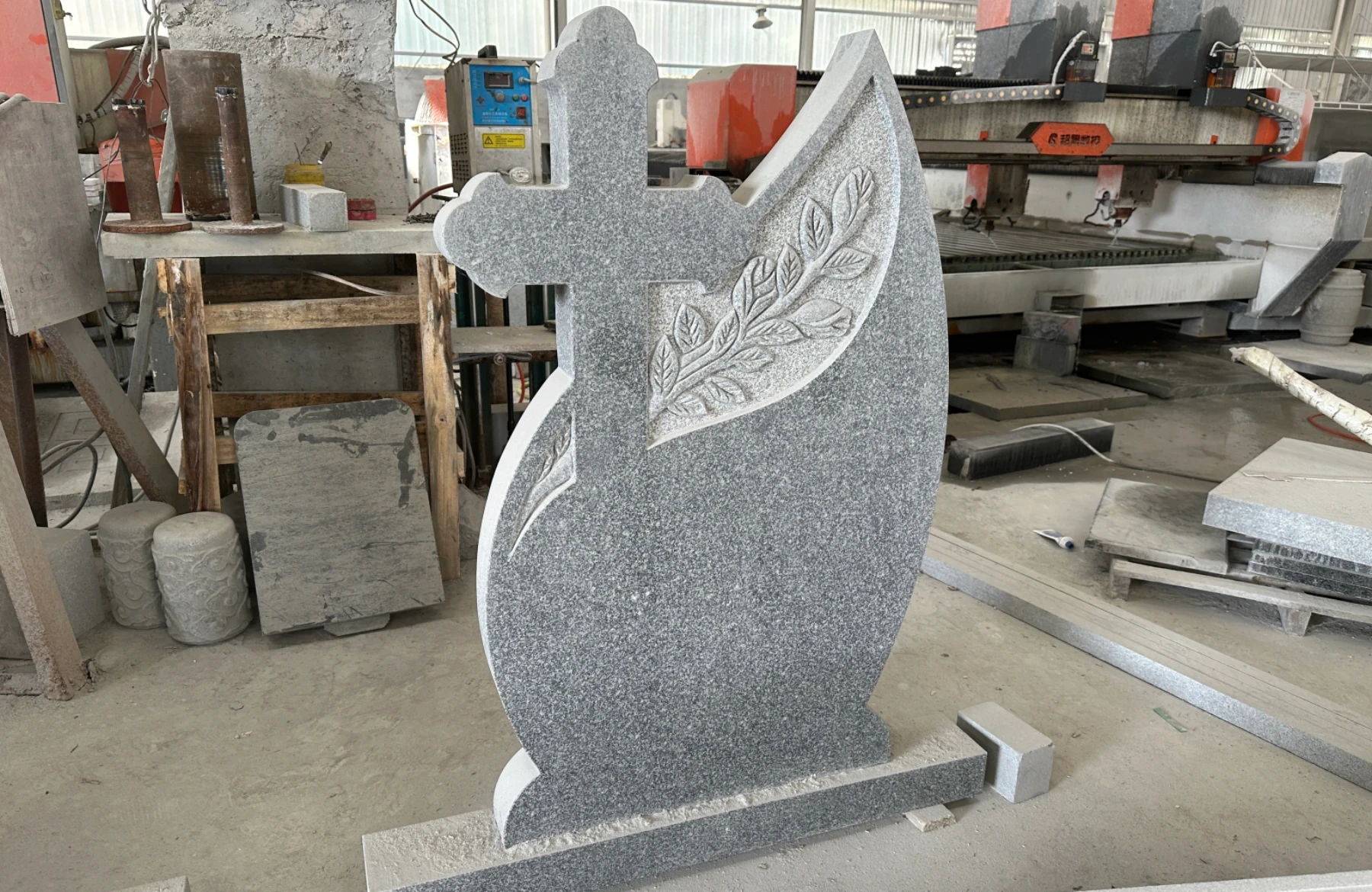
| CNC Mono-Wire Saw | CNC system for complex shapes. Cutting accuracy: ±1 mm, efficiency: 2.5 m²/h. Single wire system with flexible cutting trajectory. | Landscape stone, curbs, tombstones, and irregular sculptures. Ideal for custom-shaped architectural elements. |
| CNC Bridge Saw | Multi-axis slab cutting with model-specific blade clearance, worktable size and control system. Distinguish axis positioning or repeatability from finished-part tolerance; assess the quoted configuration against the drawing and inspection method. | Slabs, sinks, countertops, and custom architectural components. Ideal for fabrication shops producing finished stone products. |
| Waterjet Cutter | High-pressure water + abrasives, no thermal deformation. Precision: ±0.1 mm. 5-axis movement for complex 3D shapes. | Intricate engravings, thin slabs (≤10mm), and artistic designs. Ideal for detailed pattern cutting without heat effects. |
| Manual Stone Cutting Machine | Diamond blade + water cooling, 45° angle adjustment. Portable design for flexible on-site operations. | On-site installation adjustments, small repairs, and edge polishing. Ideal for custom modifications and quick fixes. |
Match machine accuracy to the process rather than buying the smallest tolerance on paper.
DINOSAW CNC bridge-saw configurations can reach approximately ±0.05 mm positioning/cutting accuracy, while CNC mono-wire systems used for large block profiling typically operate around ±1 mm.
Quarry extraction and block-squaring equipment have different tolerance requirements again.
The relevant question is not:
Which machine has the smallest accuracy number?
It is:
What level of precision creates value in this production step?
For stone factories using closed-loop slurry treatment and filtration systems, process-water recovery can reach 90% or more in suitable plant configurations.
Actual recovery depends on:
Filtration capacity
Slurry concentration
Evaporation
Cleaning cycles
Fresh-water make-up
Factory layout
For a production line, water recycling should therefore be evaluated as part of the complete plant system rather than as an isolated machine specification.
Selecting the right supplier for your stone cutting equipment is as crucial as choosing the equipment itself. A reliable partner ensures not just quality machinery, but also comprehensive support throughout the equipment's lifecycle. This guide will help you evaluate potential suppliers and understand why DINOSAW stands out in the industry.
Machine specifications are only one part of a long-term equipment purchase.
Check whether the supplier provides:
A professional supplier should provide:
Check:
Evaluate:
For an industrial stone machine expected to operate for many years, these factors can have a greater impact on total production cost than a small difference in the initial purchase price.
DINOSAW combines stone-processing equipment manufacturing with application engineering across quarrying, block processing and CNC fabrication.
Key capabilities include:
DINOSAW equipment covers the production chain from quarry block extraction to block processing, slab production and finished-stone fabrication.
Ready to Optimize Your Stone Cutting Operations? Inqury to Discover how DINOSAW's expertise can transform your productivity and material yield
Our technical experts have compiled answers to the most common questions specifically about rock cutting saws to help you make informed decisions for your particular application.
For quarry primary cutting, the “best” method depends on what you prioritize: yield, stability, speed, kerf (waste), and operating cost. A practical decision path:
Diamond wire saw (wire cutting) is typically chosen when you need:
Higher yield (less waste compared to wider kerf methods)
Stable cutting on large blocks
Flexible cutting direction and the ability to handle varying bench conditions
Wire saw solutions are widely used for primary cutting in granite and marble quarries, especially when blocks are large and yield matters.
Rock chainsaw (chain cutting) is typically chosen when you need:
Bench shaping, contouring, or controlled cutting in certain quarry setups
Situations where the quarry’s geometry favors chain access and controlled entry
It’s often used as a complementary method rather than the only primary cutting tool.
Blade saw systems (single/double blade) are typically chosen when you need:
Straight, repeatable cuts within the blade system’s size limits
A process that naturally fits blade cutting and the quarry/factory workflow supports it
If you tell us stone type, bench height/conditions, target block size, and desired cutting direction, we can recommend a specific configuration rather than a generic method.
For a small quarry, the best starting machine depends on the stone and bench layout.
A double-blade quarry saw can be an economical choice where straight, repeatable low- or medium-bench cuts dominate.
DINOSAW configurations provide approximately 400–600 mm cutting depth in relevant setups.
If the quarry needs:
a diamond wire saw may be the stronger option.
Many growing quarries therefore begin with the machine that matches their dominant cut, then add complementary wire- or blade-based equipment as production expands.
For high-value marble, prioritize material yield and block integrity, not cutting speed alone.
Key factors include:
Narrower cutting systems reduce cumulative material loss across the block.
Modern multi-wire equipment can use diamond wire down to approximately 4.3 mm, depending on machine and application.
For block-processing and profiling operations, CNC-guided systems around ±1 mm or better can be valuable where the downstream process requires it.
Stable traction and wire tension help reduce:
Adjustable wire speed allows the cutting condition to be matched to:
Stable water delivery helps maintain the diamond wire and remove slurry from the cutting zone.
DINOSAW multi-wire configurations for luxury stone use real-time tension control and are designed around high-value material recovery rather than maximum cutting speed alone.
Your main product and the cutting path should guide the choice. Keep these two equipment routes distinct:
Choose a CNC bridge saw if:
Evaluate a CNC mono-wire saw if:
A CNC bridge saw and a CNC mono-wire saw may serve complementary jobs in the same factory. Thin-slab production is a separate slabbing-system decision; it is not a generic capability of every profiling wire saw. Any combined or hybrid configuration should be confirmed against the quoted machine rather than assumed.
Maintenance and Operational Questions
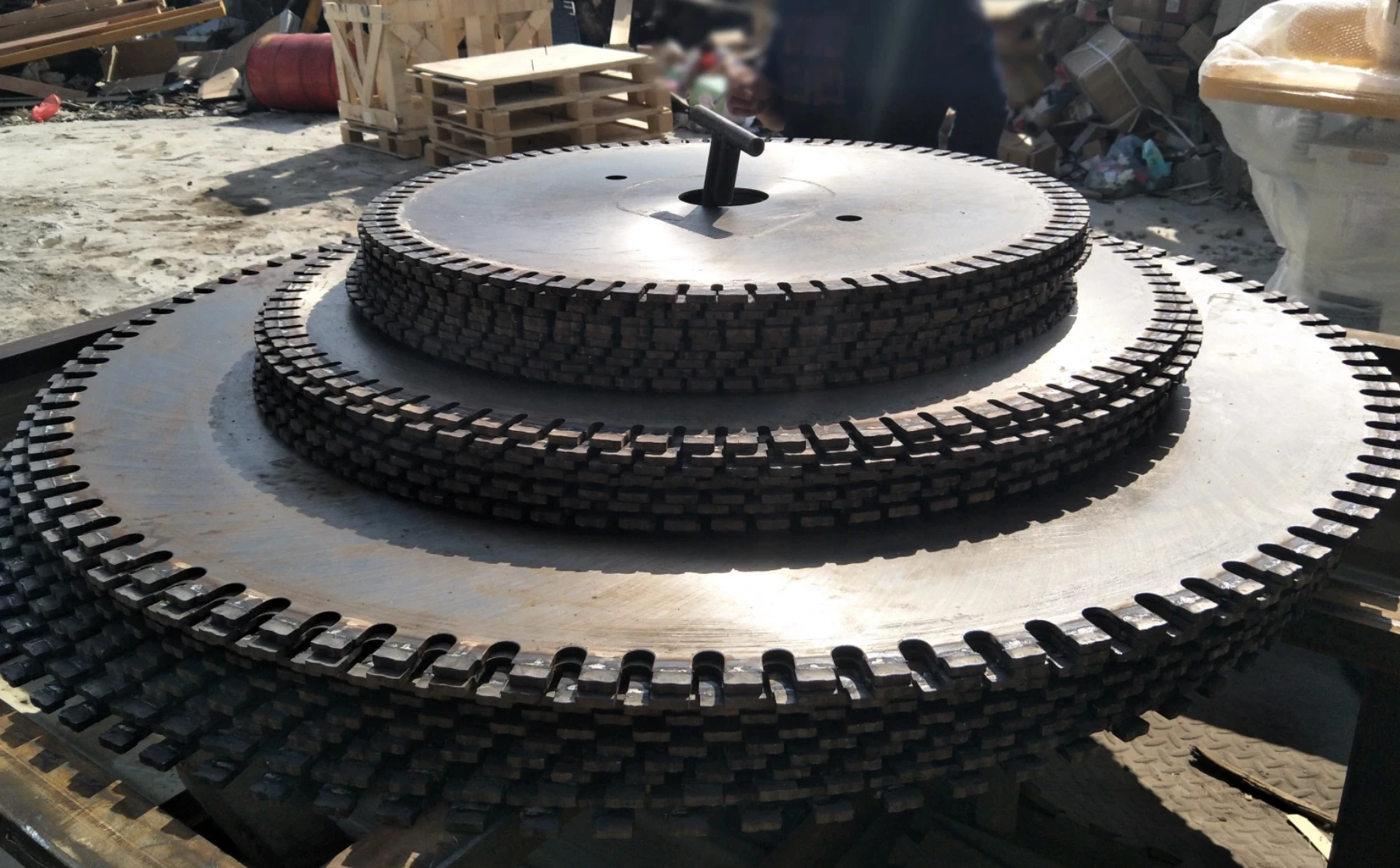
To improve diamond blade life on granite, retain a maintenance routine that checks the material, tool and machine together:
Compare tool life by recorded cut length or area, usable segment consumption, stone, blade specification and operating conditions. A longer-life percentage needs comparable test records; it should not replace this process.
For quarry and factory equipment, the most useful KPI is not maximum cutting speed but the cost of producing a saleable block, slab or finished component.
Tooling consumption (wire/blade/segments): often the largest ongoing cost
Cut stability: unstable cutting increases waste, rework, and downtime
Parameter matching: poor matching between stone type and parameters increases wear and reduces throughput
Cooling/water management: insufficient or unstable water can hurt tool life and surface quality
Maintenance discipline: neglected wear parts and misalignment silently reduce output and increase failure risk
A “fast” setup that burns tooling or causes breakage often produces higher total cost than a slightly slower but stable configuration.
Excessive noise or vibration can come from several parts of the cutting system. Stop cutting and follow the manufacturer's shutdown and isolation procedure before inspection. A qualified person should work through the following groups:
Photos, the machine model, tool specification and the circumstances in which the problem appeared can support remote assessment. A remote review may still need on-site inspection; resume cutting only after the cause and required corrective work have been addressed.
A useful machine recommendation starts with the production requirement rather than a catalog model.
Send DINOSAW four core inputs:
From there, we can compare the appropriate quarry, block-processing or fabrication route using real machine parameters, tooling requirements and production economics.
 English

Get A Easy Solution
Chat Online
Hi, this is Lizzy from Dinosaw ( Not a Robot ). Which Machine ( model ) do you want? Please WhatsApp us now
Hello 👋 How can we help?