


Quarry-Face Block Trimming
Trim blocks at the extraction face before transport, removing loose or irregular edges while the stone is still accessible.


Open Hours:8:30am-20:30pm

WhatsApp: +86 198-5901-3937
Applicable Materials
Granite, marble and dimension stone blocks
Certifications & Credentials
CE Certified · ISO 9001:2015 · Industry Standard Drafting Participant · 120+ Countries & Regions Served
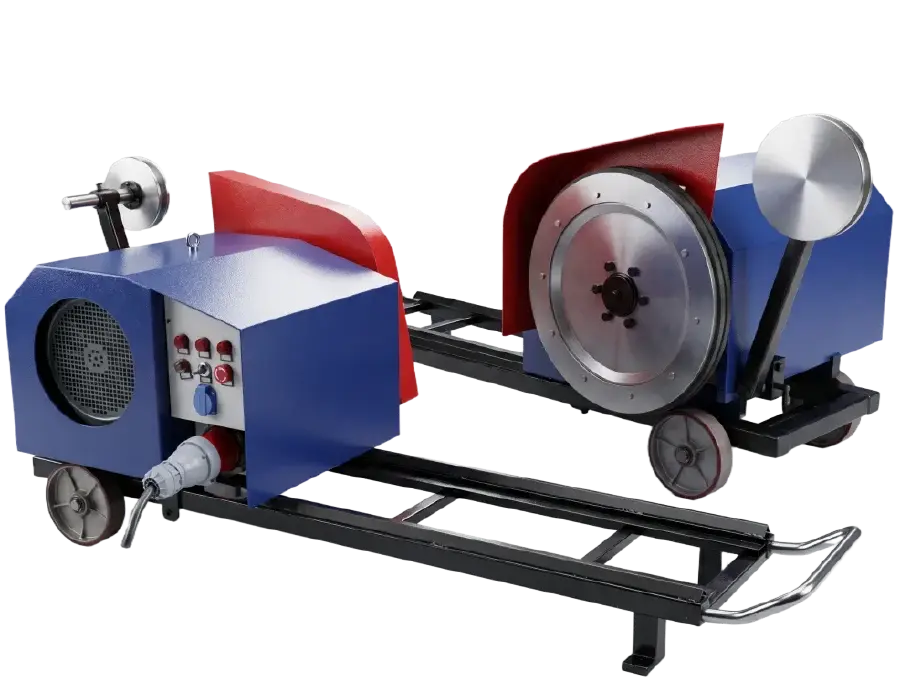
Block trimming removes irregular edges before squaring, sawing or shipment — the stage where a block's true dimensions and value are established.
Trim blocks at the extraction face before transport, removing loose or irregular edges while the stone is still accessible.
Dress blocks in the yard to true dimensions before squaring or sawing, establishing the reference faces downstream machines need.
Remove damaged edges and corner material from extracted blocks, recovering saleable volume from rough pieces.
Serve small quarries and buying stations where a fixed saw is uneconomical but trimmed blocks command better prices.
Trim blocks ahead of wire-saw squaring so the squaring machine starts from true faces and cuts less waste.
The BXSJ-22/22PM brings wire-saw trimming to the block itself: 22 kW of cutting power on a 0.4-tonne portable frame that rides a 2-metre rail between blocks, with double inverter control holding the wire at its best efficiency.
A 22 kW main motor drives the trimming cut through granite and marble blocks at the quarry face or in the yard.
At 0.4 tonnes machine weight plus a 0.365 t rail, the saw relocates between blocks on its light rail sections — no crane cycles or civil works for machine moves.
Linear wire speed from 0–30 m/s (BXSJ-22) to 0–40 m/s (BXSJ-22PM) matches the wire specification and stone hardness per cut.
The double inverter control system regulates wire speed and tension together, keeping the diamond wire in its best cutting-efficiency window through the cut.
Applicable materials: Granite, marble and dimension stone blocks.
Typical applications: Quarry-face block trimming, yard block dressing before squaring or sawing, edge removal and dimension cleanup on extracted blocks.
Actual cutting speed varies with stone hardness, wire specification and on-site conditions.
Two configurations share the 22 kW platform: the BXSJ-22 (0–30 m/s wire speed) for standard trimming duty, and the BXSJ-22PM (0–40 m/s) for higher-speed cutting with matched wire specifications. Both run on a 2-metre rail that anchors beside the block.
| Model | BXSJ-22 | BXSJ-22PM |
| Main motor power (kW) | 22 | 22 |
| Total power (kW) | 23 | 23 |
| Linear wire speed (m/s) | 0–30 | 0–40 |
| Machine dimensions L×W×H (mm) | 2200×830×1050 | 2200×830×940 |
| Machine weight (t) | 0.41 | 0.4 |
| Rail weight (t) | 0.365 | 0.365 |
| Rail length (m) | 2 | 2 |
Four engineering decisions behind the portable trimming platform. The numbered points on the machine diagram correspond to the systems below.
A trimming job follows four steps: anchor the rail beside the block and align the machine with the laser option, set wire speed and feed for the stone, run the trimming pass along the guided rail, then move the rail to the next face or block — re-anchoring takes minutes, not crane hours.
Two inverters regulate wire speed and feed together: the diamond wire stays in its best cutting-efficiency window instead of drifting out of condition as stone resistance changes — the mechanism behind both cut speed and wire life.
The machine rides a 2-metre rail that anchors beside the block: trimming geometry stays guided and straight, while the light rail sections and 0.4 t machine weight relocate between blocks without lifting equipment.
The optional laser alignment device positions the machine against the block fast: the cut line is referenced optically instead of by repeated manual measuring, which matters when trimming several faces per block.
The cutting head tilts manually up to +10 degrees, aligning the wire to sloped or uneven block surfaces so the trimmed face follows the intended plane rather than the ground.
An optional mid-rail guide wheel unit extends the effective rail length for longer trimming passes, stretching the standard 2-metre setup when blocks demand it.
The same machine trims at the quarry face, in the block yard and beside the saw: block trimming follows the stone instead of the stone being moved to a fixed saw — fewer crane cycles per block, less handling damage.
A handling-logic comparison for block dressing operations.
DINOSAW is a manufacturer of CNC stone processing machinery, specializing in diamond wire saw machines and CNC stone cutting equipment. With more than 20 years of R&D and manufacturing experience, DINOSAW contributes to industry standards including T/CMES 41001-2025 for CNC wire saw machines, holds 100+ technical patents, and supplies equipment and technical support to customers in 120+ countries and regions. Its manufacturing and management systems are certified to ISO 9001, ISO 14001 and ISO 45001, with CE-compliant machinery for international markets.
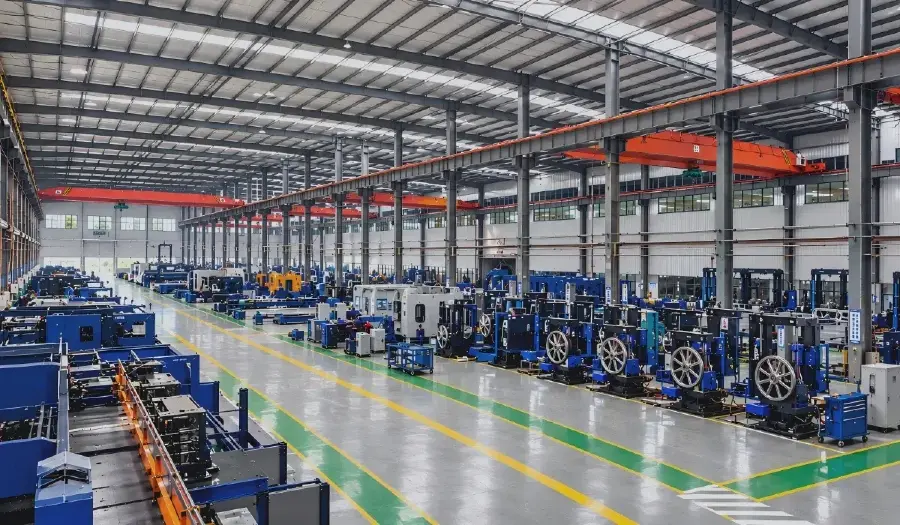
DINOSAW provides installation guidance, operator training, remote diagnosis and spare-parts coordination for every machine.
Anchor the rail on firm ground beside the block; mid-rail guide option extends pass length.
Generator or line power at the site; voltage confirmed per destination.
Wire cooling and slurry control at the quarry face or yard.
Portability vs. fixed saws, the double inverter advantage, and option selection for quarry trimming.
When the blocks outnumber the crane hours. Every move of a multi-tonne block costs a crane cycle, handling time, and risk of edge damage — and a fixed saw ties up that block, the crane, and the operator at one station. The BXSJ reverses the logic: the 0.4 t machine and its 2-metre rail go to the block, trims the face guided and straight, and moves to the next position in minutes. For quarry-face trimming, yard dressing and scattered small lots, the portable saw eliminates most block moves entirely. The fixed saw keeps its place when trimming volume justifies a permanent station with automatic feeding — many operations run both, with the portable saw handling the long tail of irregular jobs the fixed saw should never see. For small quarries, that difference decides whether trimmed blocks become a product line or remain a handling problem. The rail anchors in minutes on firm ground, so a small crew re-anchors the rail and rolls the machine to the next position.
It keeps the wire in its efficiency window as cutting resistance changes. Stone hardness, wire wear and cut depth all change the load on the wire through a pass: a single fixed setting either under-feeds and wastes time, or over-feeds and glazes, deviates or breaks the wire. The BXSJ's double inverter system regulates wire speed and feed together, matching the drive to the actual resistance in real time — the catalog describes this as ensuring the best cutting efficiency of the diamond wire, and in practice it shows up as steadier cut progress, longer wire life and fewer wire failures mid-pass. Operators still set the working range per stone class, but the system holds the wire inside that range instead of drifting out of it. The 22 kW drive gives the system torque headroom to hold the working range even as the wire dulls through a shift. Rail segments store flat on the service truck, which keeps the whole system genuinely portable.
Match the options to your work pattern. The laser alignment device pays for itself when trimming several faces per block or repositioning frequently: optical referencing replaces repeated manual measuring and speeds every setup. The mid-rail guide wheel unit extends pass length beyond the standard 2-metre rail — add it when your blocks regularly exceed one rail position. The +10° manual tilt aligns the cut to sloped quarry floors and uneven block faces; if your blocks come off irregular benches, this is the difference between following the intended plane and following the ground. The BXSJ-22PM's 0–40 m/s speed range suits higher-specification wires and harder stone — standard granite and marble trimming runs well on the base BXSJ-22 at 0–30 m/s. Tell DINOSAW your typical block sizes and stone classes and the configuration comes back matched. The base 0–30 m/s model covers most granite and marble trimming; the PM variant's wider speed range suits shops running multiple wire specifications.
Yes — the 22 kW main drive and inverter-controlled feed cover granite, marble and dimension stone blocks on the same machine, with per-stone parameters. Granite trims at controlled feed with wire specifications matched to hard, abrasive material; marble trims faster with finer wires that protect the surface. Two working rules transfer across stones: set the wire speed inside the manufacturer's range for the wire you are running — the 0–30 or 0–40 m/s range is a capability window, not a target — and keep water continuous at the cut, because dry or starved cutting shortens wire life sharply regardless of stone. Track meters per wire per stone class so the life baseline stays meaningful: granite will sit at a different number than marble, and both numbers are correct for their material. Track wire life per stone class: granite and marble will show different baselines, and both are correct for their material.
Contact Dinosaw
Discuss BXSJ Trimming Wire Saw ConfigurationAre you looking for the perfect cutting machines or processing solutions for hard and brittle materials?
Facing challenges in stone quarrying, countertop cutting, concrete and underwater pipeline cutting, stainless steel rust removal and grinding, luxury thin slab cutting, agate and gemstone cutting, graphite cutting, or even building demolition?
Leave your inquiry, and you can expect a reply within 12 hours with tailored solutions!






What materials will you be working with? *
Your Name / Company Name? *
Phone Number / Email Address? *
What specific requirements do you have?
Selection guides and related equipment for block trimming, quarry extraction and block dressing.

The KSSJ quarry wire saw for extraction cutting where trimming grows into full block programs.

The application-configured diamond wire family - bead, construction and joint matched to this machine and the stone.
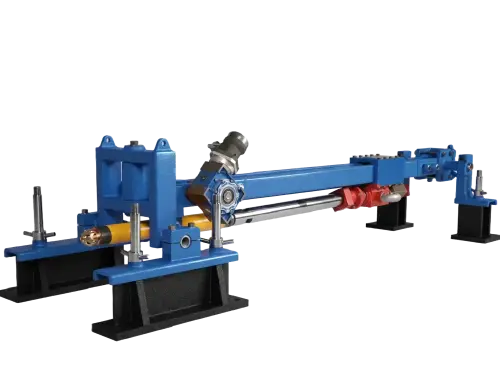
DTH drilling prepares release holes that complete the trimming workflow at the quarry face.
 English

Get A Easy Solution
Chat Online
Hi, this is Lizzy from Dinosaw ( Not a Robot ). Which Machine ( model ) do you want? Please WhatsApp us now
Hello 👋 How can we help?


 中文
