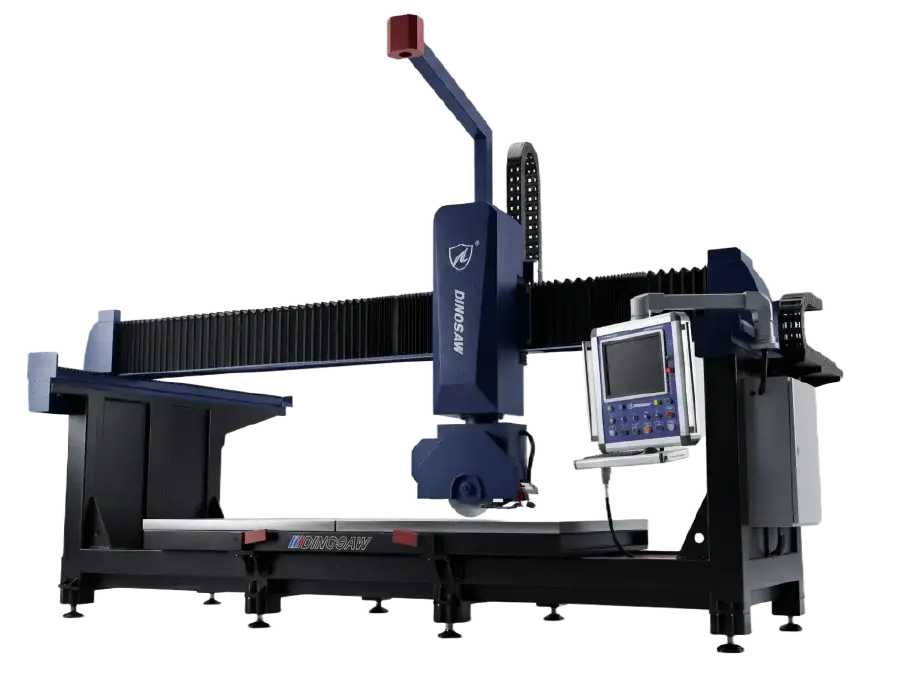

5-Axis CNC Bridge Saw

WZQJ-5N
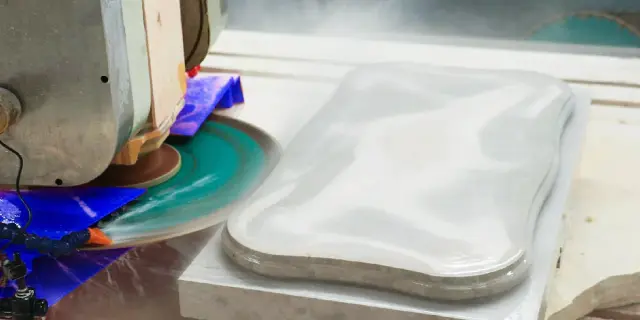
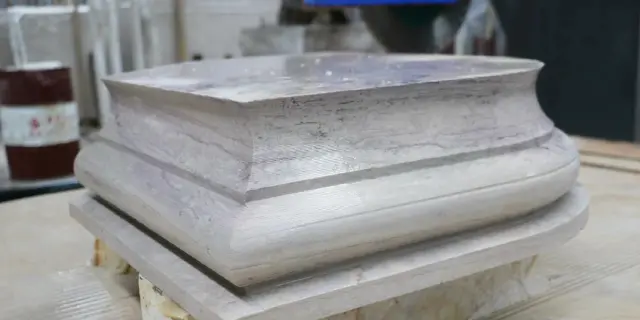
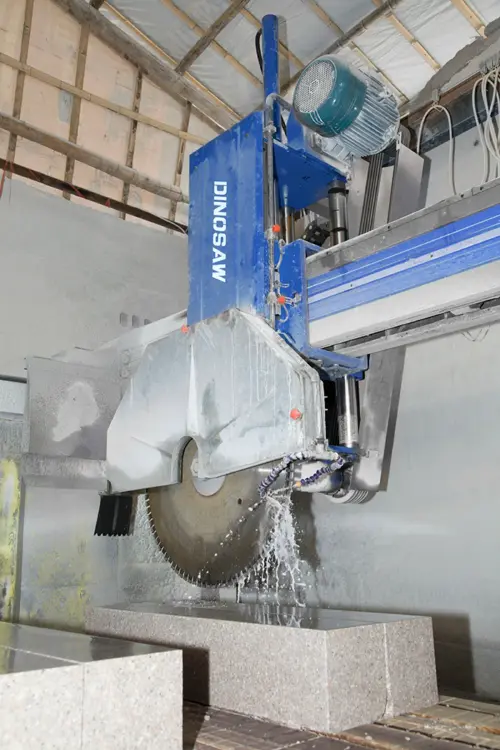
DINOSAW 5-Axis CNC Bridge Saw achieves ±0.05mm precision cutting with DDX control system. Features straight, angled, curved, and 3D cutting capabilities, plus drilling and edge polishing. Direct CAD file import supports DXF, DWG formats. Processes granite, marble, quartz, ceramic, porcelain, terrazzo, and sintered stone for vanity tops, basins, sculptures, countertops, and sinks. Integrated camera system reduces material waste by 30% through optimized nesting.
±0.05 mmDDX-controlled precision for sink cutouts, contours and complex stone profiles
15–20% LessDDX automatic nesting optimizes slab layout before cutting
5-Axis 3DSink cutouts, complex bevels, curved contours and 3D stone shaping

Applicable Materials

Granite, marble, quartz, ceramic, porcelain, terrazzo and sintered stone

Certifications & Credentials

CE Certified · ISO 9001:2015 · Industry Standard Drafting Participant · 120+ Countries & Regions Served

Compatible Materials & Products

Transform Any Stone Into Premium Products

Real Cutting Performance & Key Metrics

The WZQJ-5N is a high-end five-axis stone fabrication platform: ±0.05 mm path-optimized precision, DDX camera nesting that cuts slab waste by 15–20%, and a drawing-to-toolpath workflow from DXF import to Auto CAM — with vacuum handling and an independent milling spindle available as options.

±0.05 mm

Five-Axis Cutting Precision

DDX-controlled toolpath optimization holds ±0.05 mm on sink cutouts and complex contour profiles.

15–20% Less

Automatic Nesting

Camera capture and DDX nesting optimize part placement before cutting, improving slab utilization on countertop and shaped-part programs.

DXF + Auto CAM

Drawing-to-Toolpath Workflow

Import customer DXF files directly and let EasySTONE NC generate the machining path automatically, reducing manual programming between jobs.

600 / 800 mm

Blade Options

A 600 mm blade covers standard countertop and sink programs; the confirmed 800 mm option extends the machine into deeper 3D and sculptural stone work.

Applicable materials: Granite, marble, quartz, ceramic, porcelain, terrazzo and sintered stone.

Typical products: Vanity tops and integrated sinks, countertops, curved furniture components and 3D sculptures.

Actual cutting accuracy varies with material, blade condition and on-site calibration; the 800 mm blade and milling/vacuum options are configured per project.

Actual cutting speed and accuracy vary with material hardness, blade specification and on-site conditions.

Specs and options

The WZQJ-5N covers 3.2 × 2.0 m tables with a 0.45 m vertical stroke and an 18.5 kW spindle. The 600 mm blade handles standard countertop and sink programs; the confirmed 800 mm option serves deeper 3D and sculptural applications. Control system — DINOSAW in-house platform or DDX EasySTONE NC — plus the optional independent milling spindle and vacuum handling are selected with the machine.

ModelUnitWZQJ - 5N
Lateral X strokem3.2
Longitudinal Y strokem2.0
The Z axis saw blade vertical strokem0.45
Saw blade diameterm0.6
Spindle motor capacitykw18.5
Fixed tablem3.2x2.0

We can customize 5-axis bridge saws equipped with 800mm diameter blades, specifically designed for 3D sculpture cutting applications.


Core Technology & Machine Structure

Six core systems behind a five-axis fabrication platform. The numbered points on the machine diagram correspond to the systems below.

Dinosaw machine 5-Axis CNC Bridge Saw

Five-Axis Fabrication Workflow

A job follows four steps: capture the slab with the camera and confirm the DDX-optimized nest, import the customer DXF and generate the toolpath with simulation, vacuum-load the sheet, then run the automated five-axis cut — optional milling and edge work completes the part in the same cycle.

01

Five-Axis Stone Machining

X/Y/Z linear axes plus A/C rotary axes control the blade from multiple angles, covering sink cutouts, bevels, curved contours and complex 3D stone profiles in one machining platform.

02

Dual CNC System Options

Choose the control system around the production task: DINOSAW's in-house platform focuses on streamlined countertop workflows, parameter templates, production-line integration and customization, while DDX EasySTONE NC adds mature nesting, DXF/Auto CAM, simulation and complex 3D machining.

03

DDX Automatic Nesting & Camera Planning

The camera captures the slab and DDX optimizes part placement before cutting, typically reducing waste by around 15–20% on nesting-intensive jobs.

04

DXF + Auto CAM + Simulation

Customer drawings enter the system directly through DXF import; EasySTONE NC generates toolpaths automatically and simulates the machining process before cutting, reducing manual programming and setup errors.

05

Optional Milling Spindle & Vacuum Handling

The optional independent milling spindle adds grooving, profiling and edge milling, while the optional suction system moves heavy stone parts between operations with less manual handling.

06

DINOSAW Full-Stack Integration

Mechanical, electrical and software development are handled by DINOSAW's own teams, allowing control logic, machine functions, production-line integration and customer-specific workflows to be developed and supported as one system.

5-Axis Bridge Saw vs. 4+1-Axis Countertop Machine

A selection guide for shops deciding between the WZQJ-5N and the DSQJ-400.

5-Axis Bridge Saw vs. 4+1-Axis Countertop Machine
Single-Blade CuttingVSDS-U-G1212 Multi-Wire
Output per cycleOne slab face at a time✓ Multiple slabs in a single pass
Kerf & yieldWide blade kerf✓ Thin wire kerf, more slabs per block
LaborClose operator attention✓ One operator supervising the cycle
AccuracyCalibration-dependent✓ ±0.3 mm direct
FootprintCutting line✓ Compact platform, about 30% less floor space

Note: configurations vary by brand and model; actual performance depends on the specific machine, material and working conditions.

The Manufacturer Behind the WZQJ-5N

DINOSAW is a manufacturer of CNC stone processing machinery, specializing in diamond wire saw machines and CNC stone cutting equipment. With more than 20 years of R&D and manufacturing experience, DINOSAW contributes to industry standards including T/CMES 41001-2025 for CNC wire saw machines, holds 100+ technical patents, and supplies equipment and technical support to customers in 120+ countries and regions. Its manufacturing and management systems are certified to ISO 9001, ISO 14001 and ISO 45001, with CE-compliant machinery for international markets.

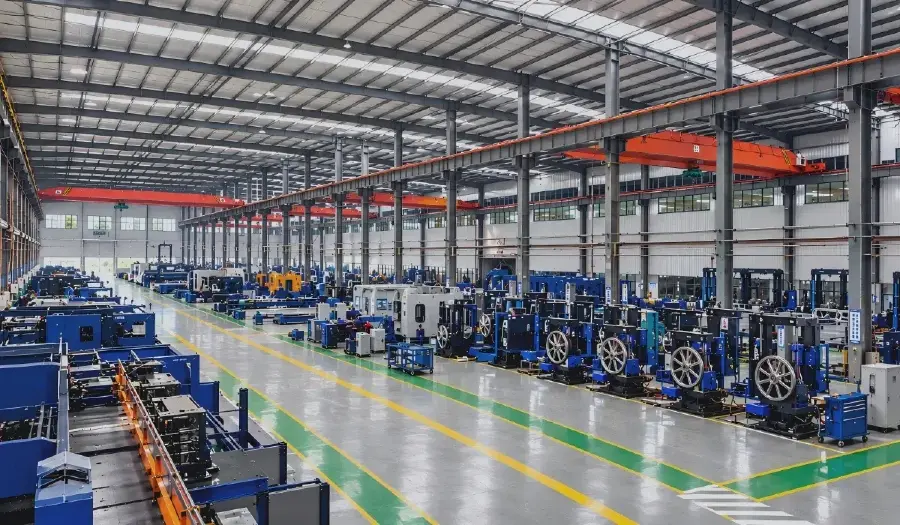
DINOSAW CNC stone machinery manufacturing workshop
DINOSAW R&D & ManufacturingMechanical Design · CNC Control Development · Assembly · Testing · Commissioning · Global Delivery
Industry Standard Drafting

DINOSAW contributes to industry standards for stone machinery, including T/CMES 41001-2025 for CNC wire saw machines, as well as standards covering multi-wire saws, combined wire saw machines and five-axis bridge cutting equipment. This work reflects the company’s long-term involvement in machine design, manufacturing, testing and quality control.

20+Years of Stone Machinery R&D & Manufacturing Experience
100+Technical Patents — Covering machine structures, CNC control, cutting systems and stone processing technologies
120+Countries & Regions Served — Equipment, installation and technical support worldwide

CE Compliance & ISO Management Systems

CE: Stone cutting machinery assessed against Machinery Directive 2006/42/EC and relevant EN standards.
ISO: Management systems certified to ISO 9001, ISO 14001 and ISO 45001.

Installation Requirements & After-Sales Support

DINOSAW provides installation guidance, operator training, remote diagnosis and spare-parts coordination for every machine.

Table & Footprint3.2 × 2.0 m table, monoblock install

Fix the body and operate; reserve slab loading access.

Power Supply18.5 kW spindle, configured per destination

Voltage and frequency confirmed against local standards before shipment.

Control & OptionsDINOSAW system or DDX EasySTONE NC

Control platform, 800 mm blade, milling spindle and vacuum handling selected at configuration.

01 · Pre-Shipment & DeliveryMachine configuration, packaging and transport requirements confirmed before dispatch, with factory inspection and documents verified.
02 · Installation & CommissioningOn-site utilities and foundation check, machine positioning, commissioning and acceptance.
03 · Operator TrainingHands-on training covering routine CNC operation and daily checks of blades, spindles, cooling and lubrication.
04 · After-Sales SupportRemote technical assistance, maintenance support and spare parts coordination throughout the machine's service life.

WZQJ-5N Selection, Installation & Operation FAQ

Common Questions About 5-Axis CNC Bridge Saw for Stone Sink Fabrication

This 5-axis bridge saw is mainly used for stone products that require angled cutting, precise joints, or three-dimensional shaping.

Common finished products customers process

  • Kitchen countertops and island tops

  • Bathroom vanity tops

  • Waterfall countertops with 45° mitre joints

  • L-shaped and U-shaped countertops

  • Countertops with visible angled edges

  • Stone panels with bevels or chamfers

  • Three-dimensional stone parts used in interior projects

These are products where cutting angle and edge alignment matter, not just straight cutting.

What to confirm before deciding
Confirm whether your products involve angled joints, visible edges, or complex shapes rather than only straight cuts.

5-axis cutting is most valuable for countertop jobs that involve angled joints, special shapes, and high visual requirements.

Where customers see the biggest difference

  • Waterfall countertops that need tight 45° joints

  • Countertops with long mitred edges

  • Special-shape countertops that must fit walls or cabinets precisely

  • Projects where edge alignment affects final appearance

Compared with standard bridge saws, 5-axis cutting reduces manual correction and improves consistency across long countertop sections.

What to confirm before deciding
Confirm whether your countertop work includes mitred joints or complex shapes that require precise angle control.

Yes. Cutting accurate 45° mitre joints is one of the main reasons customers choose a 5-axis bridge saw.

Why 5-axis matters for mitre joints
On standard machines, 45° joints often require repositioning, manual adjustment, or secondary finishing. A 5-axis bridge saw allows the cutting head to tilt and maintain a stable angle throughout the cut.

What this improves

  • Tighter joints after assembly

  • Cleaner visible edges

  • Less hand grinding or rework

This is especially important for waterfall countertops where joint quality is clearly visible.

What to confirm before deciding
Confirm joint angle requirements and whether current processes require repeated adjustment or manual correction.

Yes. The 5-axis structure helps maintain accuracy when cutting L-shaped and U-shaped countertops.

Why shape accuracy is challenging
L-shaped and U-shaped countertops often involve multiple connected cuts and corners. Small angle or position errors can lead to fitting problems during installation.

How 5-axis cutting helps

  • More precise corner transitions

  • Better alignment between connected sections

  • Reduced need for on-site trimming

This improves installation efficiency and reduces adjustment work.

What to confirm before deciding
Confirm whether fitting accuracy and reduced installation adjustment are important in your projects.

The key difference is true multi-directional cutting, not just added milling functions.

What 5-axis adds in real production

  • Continuous cutting at variable angles

  • Better control of mitred and bevelled edges

  • More consistent results on complex shapes

A 4+1 bridge saw can handle milling tasks such as sink pocketing, but it still cuts mainly in fixed directions. A true 5-axis bridge saw is chosen when cutting geometry and edge quality become the main challenges.

What to confirm before deciding
Clarify whether your production problems come from angled cutting and joint quality, rather than basic milling needs.

This 5-axis bridge saw is designed to achieve cutting accuracy up to ±0.05 mm under proper setup and stable operating conditions.

What this accuracy means for your finished work
When you are cutting waterfall joints, mitred edges, or long countertop seams, small deviations show immediately after assembly. Stable accuracy helps your parts fit tightly without extra hand grinding or on-site adjustment.

Why accuracy stays stable

  • 5-axis motion keeps cutting angles consistent

  • Rigid machine structure reduces vibration

  • Controlled cutting paths reduce cumulative error on long cuts

What to confirm before deciding
Confirm whether your projects involve visible joints where precision directly affects appearance.

A 5-axis bridge saw makes sense when cutting geometry and edge quality are core requirements in your work.

It makes sense for you if

  • You regularly cut waterfall countertops

  • You need clean 45° mitre joints

  • Edge alignment is clearly visible after installation

It may not be necessary if

  • You only do straight cutting

  • You do not need angled joints

  • A 4-axis or 4+1 machine already meets your needs

What to confirm before deciding
Be clear whether your main challenge is cutting accuracy and geometry, or simply basic processing capacity.

Yes. The 5-axis structure allows you to cut complex curves and three-dimensional stone shapes that standard bridge saws struggle with.

Typical work you can handle

  • Curved countertop edges

  • Compound-angle cuts

  • Stone parts with changing edge angles

These jobs require the cutting head to tilt and rotate smoothly during cutting, not just move in straight lines.

What to confirm before deciding
Confirm whether your products include curved lines or multi-angle edges rather than only straight profiles.

Yes. If you already have experience with stone machinery, this 5-axis bridge saw is straightforward to learn and operate.

What using it feels like in daily work
You are not expected to write CNC programs or deal with complex code. Daily operation focuses on loading cutting files, setting basic parameters, and monitoring the cutting process.

The complexity of the machine lies in what it can do, not in how you use it.

What helps you get started quickly

  • Clear operation logic designed for stone processing

  • Training provided during installation

  • Familiar workflow for operators used to bridge saws

With basic stone machine experience, most operators can start running jobs after a short learning period.

What to confirm before deciding
Confirm your operators’ background and whether basic training support is included during installation.

Comprehensive support: 24-hour technical hotline, remote diagnostics, global service network.

Initial: on-site installation, operator training, system optimization.

Ongoing: video assistance, remote programming, software updates.

DDX partnership ensures expert control support. 48-hour spare parts delivery guaranteed.

Documentation includes manuals, video tutorials, troubleshooting guides. Annual maintenance programs with certified technicians. User forums and knowledge base.

Emergency support prioritizes production issues.

Training covers basic operation to advanced programming.

The two systems target different production tasks. DINOSAW's in-house platform is built around streamlined countertop workflows: fast operation, parameter templates, production-line integration, customization and OTA updates. DDX EasySTONE NC focuses on automatic nesting from camera capture, DXF import with Auto CAM toolpath generation, machining simulation and complex 3D machining. Countertop-focused shops can stay on the DINOSAW platform; shops running shaped parts, heavy nesting or 3D work benefit from the DDX option.

Not necessarily. If your work is mainly rectangular countertops with standard sink cutouts, DINOSAW's in-house system covers the workflow with less setup overhead. Choose DDX when your orders involve complex nesting layouts, frequent DXF drawings from customers, shaped parts or 3D contours — that is where automatic nesting, Auto CAM and simulation return their investment.

Based on current production experience, DDX camera nesting typically reduces material waste by around 15–20% on nesting-intensive jobs. The actual figure depends on part shapes, slab sizes and layout constraints — DINOSAW can simulate the improvement with your real part library before configuration.

Yes. The 800 mm blade is a confirmed optional configuration, primarily for deeper 3D and sculptural applications where the standard 600 mm blade's reach is not enough. It is selected at configuration with the matching spindle and structural settings — mention your intended 3D program when requesting a quote.

Contact Dinosaw

Discuss WZQJ-5N Pricing, Configuration & Application

Are you looking for the perfect cutting machines or processing solutions for hard and brittle materials?

Facing challenges in stone quarrying, countertop cutting, concrete and underwater pipeline cutting, stainless steel rust removal and grinding, luxury thin slab cutting, agate and gemstone cutting, graphite cutting, or even building demolition?

Leave your inquiry, and you can expect a reply within 12 hours with tailored solutions!

Prefer email?

You can also reach us at

gma@dinosawmachine.com
5-Axis CNC Bridge Saw

What materials will you be working with? *

Your Name / Company Name? *

Phone Number / Email Address? *

+86

What specific requirements do you have?

WZQJ-5N Guides & Related Machines

Selection guides and related equipment for five-axis countertop, sink and 3D stone fabrication.

Get A Easy Solution

Chat Online
Ms.Lizzy

Hi, this is Lizzy from Dinosaw ( Not a Robot ).  Which Machine ( model ) do you want? Please WhatsApp us now

WhatsApp Chat Now
Contact Us

Hello 👋 How can we help?