


Polishing-Line Slab Preparation
Level slab thickness before the polishing line so every head works against a uniform base — the condition for uniform gloss across the slab.


Open Hours:8:30am-20:30pm

WhatsApp: +86 198-5901-3937
Applicable Materials
Granite, marble, engineered stone and quartz slabs
Certifications & Credentials
CE Certified · ISO 9001:2015 · Industry Standard Drafting Participant · 120+ Countries & Regions Served
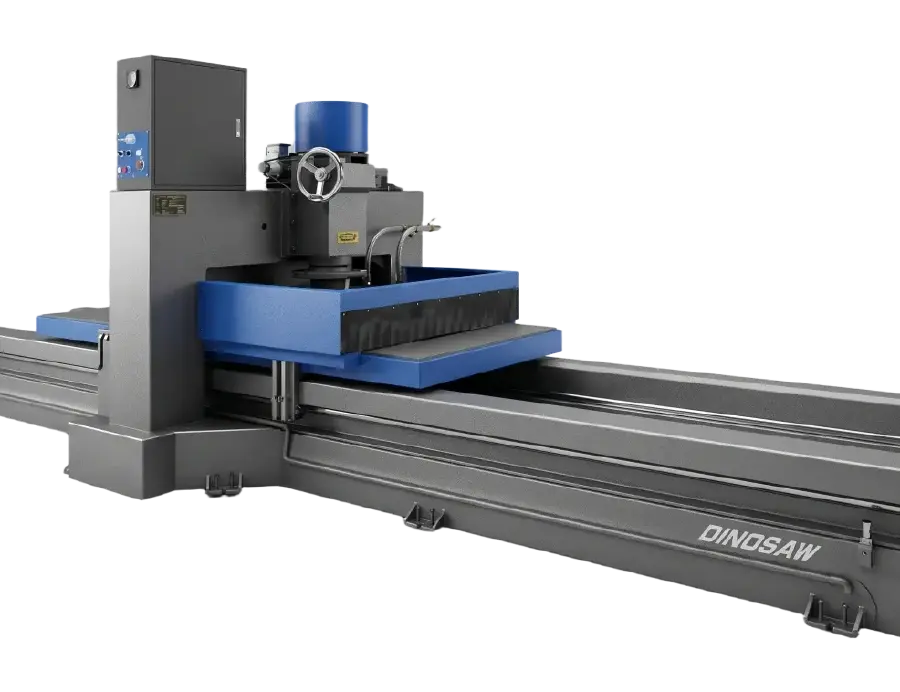
Calibration is the thickness-leveling step between cutting and polishing: slabs that enter the polishing line at uniform thickness leave it at uniform gloss.
Level slab thickness before the polishing line so every head works against a uniform base — the condition for uniform gloss across the slab.
Calibrate tile blanks to tight thickness variation before cutting and finishing, reducing rejections at the sizing stage.
The ZDDH-1200 with its Φ1350 head and 22 kW drive levels hard granite at production rate where smaller machines stall.
Bring engineered stone slabs to uniform thickness before edge work and installation, protecting the tight tolerances these products are sold on.
Standardize thickness across slab stock so downstream cutting programs run at consistent depth and tool life.
The ZDDH continuous calibrating machine levels slab thickness in a single pass before polishing — three grinding head diameters, optional table lengths, and the rigidity to hold depth constant across the whole slab.
Three head diameters scale removal capacity: ZDDH-800 for compact shops, ZDDH-1200 for production-line duty on hard granite.
A 100 mm head lifting stroke covers normal slab thickness variation with controlled, repeatable depth setting.
Main power scales 15 / 18.5 / 22 kW across the series, holding cutting speed through hard granite at the rated removal rate.
Frame mass from 2.7 to 4.1 tonnes absorbs grinding reaction, keeping depth uniform from the first slab of the shift to the last.
Applicable materials: Granite, marble, engineered stone and quartz slabs.
Typical products: Calibrated slabs feeding polishing lines, thickness-standardized tile blanks and dimensioned slab stock for cut-to-size programs.
Actual removal rate and head life vary with stone hardness, target thickness variation and abrasive condition.
Choose the ZDDH by grinding head diameter and table length: ZDDH-800 (Φ880 head, 15 kW) for compact workshops, ZDDH-1000 (Φ1080, 18.5 kW) for mid-volume lines, and ZDDH-1200 (Φ1350, 22 kW) for production-line duty on hard stone. All three share the 100 mm lifting stroke and 2,500 / 3,000 mm optional table lengths.
| Model | ZDDH-800 | ZDDH-1000 | ZDDH-1200 |
| Grinding head diameter (mm) | 880 | 1080 | 1350 |
| Grinding head lifting stroke (mm) | 100 | 100 | 100 |
| Worktable size (optional, mm) | 2500/3000×970 | 2500/3000×1100 | 2500/3000×1250 |
| Water consumption (m³/h) | 7.2 | 7.2 | 7.2 |
| Main motor power (kW) | 15 | 18.5 | 22 |
| Total power (kW) | 16.8 | 20.3 | 23.8 |
| Dimensions L×W×H (mm) | 5800×1700×1800 / 6400×1700×1800 | 6000×2200×2050 / 6700×2200×2050 | 6800×2350×2150 / 7400×2350×2150 |
| Weight (t) | 2.7 | 3.4 | 4.1 |
Four engineering decisions behind the ZDDH calibrating platform. The numbered points on the machine diagram correspond to the systems below.
A calibrating run follows four steps: set the target thickness and head depth, load the slab onto the matching table length, pass the slab through the grinding station at line speed, then verify thickness at several points before the slab feeds to polishing.
Grinding head diameter sets removal capacity: larger heads carry more abrasive and cut a wider path, so the three diameters match the series to shop size and stone hardness instead of forcing one geometry on every line.
Calibration only works if depth holds: the 2.7–4.1 t frame and guided head travel keep the set depth constant across the full slab width, which is what 'calibrated' means on the specification sheet.
Slabs feed through the station in one pass: the line keeps moving, thickness variation leaves the slab progressively, and the polishing line downstream receives material it can finish at uniform gloss.
2,500 and 3,000 mm table options match the slab sizes actually being processed, so oversized slabs are not repositioned mid-pass — repositioning is where thickness steps appear.
The 7.2 m³/h water system cools the head and clears slurry from the grinding zone on all three models: heat and packed slurry are the two failure modes that shorten abrasive life in calibration duty.
Calibration is the first station of the polishing line, not a standalone job: feeding calibrated slabs to the head polisher removes the thickness variation that the polish stage cannot correct.
Why the calibrating step decides what the polishing line can deliver.
DINOSAW is a manufacturer of CNC stone processing machinery, specializing in diamond wire saw machines and CNC stone cutting equipment. With more than 20 years of R&D and manufacturing experience, DINOSAW contributes to industry standards including T/CMES 41001-2025 for CNC wire saw machines, holds 100+ technical patents, and supplies equipment and technical support to customers in 120+ countries and regions. Its manufacturing and management systems are certified to ISO 9001, ISO 14001 and ISO 45001, with CE-compliant machinery for international markets.
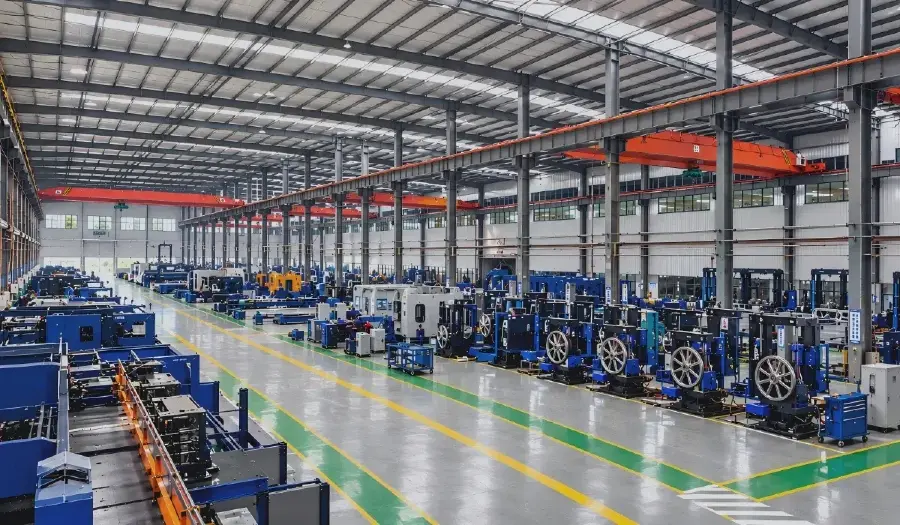
DINOSAW provides installation guidance, operator training, remote diagnosis and spare-parts coordination for every machine.
Length scales with table option; allow slab infeed and outfeed access.
Voltage and frequency confirmed against local standards before shipment.
Grinding cooling and slurry transport; recycling recommended.
How to choose the ZDDH model, where calibration sits in the polishing line, and what to prepare before ordering.
Because polishing removes almost no material: a polishing head refines the surface, it does not level the slab. If thickness varies by 2–3 mm across a slab, the polishing heads load differently at every point — gloss comes out uneven, and low spots never catch up. Calibration removes that variation first, in a controlled grinding pass, so the polishing line works on a uniform base and delivers uniform gloss. Factories that skip calibration and fight gloss variation at the polishing stage usually find the problem was upstream: the calibrating step is where thickness consistency is created, and the ZDDH series is that step in machine form. The ZDDH stations ahead of the head polisher, so every downstream head works against the same base thickness shift after shift. Rejects caught at calibration cost grinding time; rejects caught at polishing cost the whole finishing sequence. That asymmetry is why calibration earns its floor space.
Match the head diameter to your removal duty. The ZDDH-800 (Φ880 head, 15 kW) serves compact workshops and softer stones at moderate volume. The ZDDH-1000 (Φ1080, 18.5 kW) covers mid-volume lines cutting mixed granite and marble. The ZDDH-1200 (Φ1350 head, 22 kW, 4.1 t) is built for production-line duty on hard granite, where removal rate and head loading demand the largest geometry. Then confirm the table length: 2,500 or 3,000 mm options should cover your largest slab without mid-pass repositioning. If your line runs multiple shifts on hard stone, size up — calibration is the wrong place to run a machine at its limit. Table length choice matters as much as head diameter: repositioning mid-pass is where thickness steps appear, so the 3,000 mm option should cover your largest slab without it. Confirm the largest slab in writing so the table option is settled before production starts. The choice is made once and held for years.
Yes — the ZDDH series calibrates granite, marble, engineered stone and quartz on the same platform, with per-material parameters. Granite demands the higher end of the power range and diamond tooling matched to hard, abrasive material; marble runs faster with tooling that protects softer surfaces from scratching. The practical setup for mixed lines: store a parameter set per material, verify thickness on the first slab of each material change, and track abrasive consumption separately per stone class — calibration wear rates differ as much as polishing wear rates do. Single-material factories can optimize deeper; mixed factories should standardize on the model sized for their hardest stone. The ZDDH calibrates engineered stone as readily as natural stone, which matters for shops running mixed programs from the same line. The same program stores per material, so switching classes mid-shift is a recall, not a rebuild. Mixed-program flexibility is a feature, not a compromise.
Four inputs configure the order. Your slab envelope — length, width and the thickness variation you need removed — sets the model and table length: send the largest slab dimensions and the target thickness tolerance. Your stone classes determine the power configuration and tooling recommendation. Your line layout determines where the calibrating station sits relative to cutting and polishing, including slab flow direction and available floor length — the ZDDH runs 5.8 to 7.4 metres depending on model and table option. And your utilities: 7.2 m³/h of process water and the electrical capacity for 16.8–23.8 kW total. With these, DINOSAW returns a configured specification rather than a catalog default. The machine ships in length variants from 5.8 to 7.4 metres, so the line layout drawing should be part of the ordering conversation. Utilities are modest: 7.2 m³/h of water and under 24 kW of total power across the series. Neither is usually the constraint; the table choice is.
Contact Dinosaw
Discuss ZDDH Calibrating Machine ConfigurationAre you looking for the perfect cutting machines or processing solutions for hard and brittle materials?
Facing challenges in stone quarrying, countertop cutting, concrete and underwater pipeline cutting, stainless steel rust removal and grinding, luxury thin slab cutting, agate and gemstone cutting, graphite cutting, or even building demolition?
Leave your inquiry, and you can expect a reply within 12 hours with tailored solutions!


What materials will you be working with? *
Your Name / Company Name? *
Phone Number / Email Address? *
What specific requirements do you have?
Selection guides and related equipment for slab calibration, leveling and polishing-line preparation.

The continuous multi-head line that consumes calibrated slabs - the next station downstream.

The grinding-stage abrasive program for the line heads feeding the calibrating philosophy.
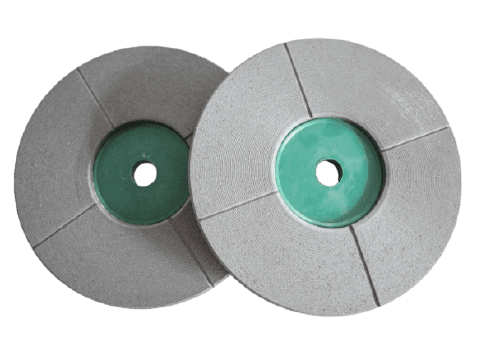
The finishing-stage abrasive ladder that delivers the gloss the calibrated base makes possible.
 English

Get A Easy Solution
Chat Online
Hi, this is Lizzy from Dinosaw ( Not a Robot ). Which Machine ( model ) do you want? Please WhatsApp us now
Hello 👋 How can we help?


 中文
