Metal Bond Diamond Frankfurt Abrasives for Granite Line Grinding
24# / 36# / 46# / 60# / 80# / 120# / 180# / 220#
DINOSAW
DINOSAW metal and resin bond grinding discs are the disc-format grinding program on granite polishing machines. Metal bond discs handle the coarse grinding stage with grits 50#, 10S#, 200# and 400#, delivering high processing efficiency and a long lifespan of polishing. Resin bond discs handle the fine grinding stage with grits 500#, 800#, 1500# and 3000#, refining the slab surface before polishing discs take the final gloss. Both disc types install on automatic continuous polishing machines or single head grinding machines, and both are available in four diameter classes: 4"/100, 5"/150, 6"/200 and 10"/250 mm. Run metal discs first to level the slab, resin discs second to close the scratch pattern, and the polishing stage receives a surface it can finish at full gloss.
24#–220# GritsEight-grit program covering the coarse grinding stage from heavy removal to resin handover on granite lines.
No Segment DropSafe and stable integral sintered technology ensures the strongest bonding strength on aggressive stock removal.
Self-SharpeningQuick diamond exposure, strong self-sharpening level and good sharpness for sustained grinding efficiency.
Applicable Materials
Granite, gabbro, diorite, basalt and similar hard dimension stone processed on automatic polishing lines
Certifications & Credentials
CE Certified · ISO 9001:2015 · Industry Standard Drafting Participant · 120+ Countries & Regions Served
Metal Bond Frankfurt Grinding Applications & Materials
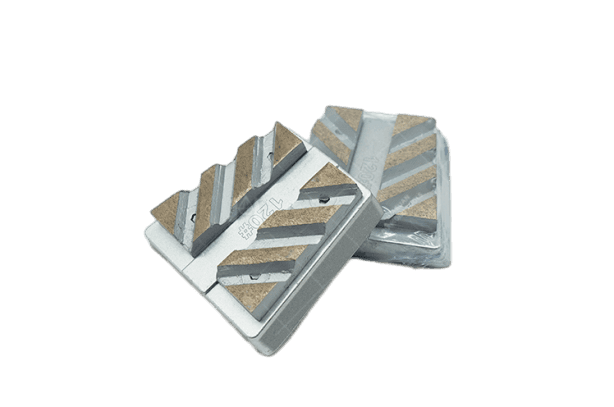
Metal bond diamond Frankfurts work at the grinding stations of automatic polishing lines, where saw-cut granite slabs must be leveled and opened before the resin stage can build gloss.
Coarse Grinding on Automatic Granite Lines
Mount metal bond Frankfurts on the first grinding stations of the polishing line to level saw-cut granite slabs and open an even surface. The integral sintered body survives the heaviest removal passes without dropping segments.
Saw-Mark Removal After Block Cutting
Open at 24# or 36# to erase cutter saw marks and thickness steps before any finish work begins. Quick diamond exposure means fresh abrasives reach full cut within the first slabs instead of a long run-in.
Hard Granite Stock Removal
On coarse-grained and abrasive granites where resin would load and magnesite would crawl, the self-sharpening metal matrix keeps sharpness through the shift. Lines keep rated removal instead of dressing stops.
Surface Preparation Before Resin Polishing
Step down through 60#, 80#, 120# and finer to leave a flat, uniform scratch pattern that resin Frankfurts can refine into gloss. The 180# and 220# metal grits give lines that want a finer handover surface.
Re-Grinding Worn or Reclaimed Slabs
Recondition slabs with damaged or uneven faces by re-running the metal grinding stage before re-polishing. Strong segment retention protects the slab from the scoring damage a dropped segment would cause.
Real Grinding Performance & Key Metrics
The DINOSAW metal bond diamond Frankfurt is the grinding-stage workhorse of granite line polishing: a sintered metal bond holds segments at the highest bonding strength for aggressive stock removal where segment loss is unacceptable, with quick diamond exposure and strong self-sharpening to keep the line moving.
24#–220#
Eight-Grit Program
Grits 24#, 36#, 46#, 60#, 80#, 120#, 180# and 220# let the line step down progressively from heavy saw-mark removal to a uniform handover surface for the resin stage.
Integral Sintered
No Segment Drop
Safe and stable integral sintered technology locks the diamond layer and mounting body into one metal structure, ensuring the strongest bonding strength so no segment drops mid-slab.
Quick Exposure
High Grinding Efficiency
The bond opens new abrasive fast: quick exposure of diamond, a strong self-sharpening level and good sharpness cut run-in time on every fresh set.
Frankfurt Format
Automatic Line Heads
Standard Frankfurt geometry mounts directly on automatic polishing line heads, matching the holders used at the grinding stations of granite slab lines.
Applicable materials: Granite, gabbro, diorite, basalt and similar hard dimension stone processed on automatic polishing lines.
Typical products: Saw-cut granite slabs leveled before resin polishing, granite tiles and cut-to-size panels with flatness requirements, and re-ground slabs being reconditioned for the finish stage.
Actual grinding efficiency, segment life and handover surface vary with stone hardness and abrasiveness, grit selection, head pressure, line speed and water supply.
Metal Bond Frankfurt Abrasive Specifications
Select the grit program by the condition of the surface entering the line: 24#–46# for heavy saw-mark removal, 60#–80# for leveling and transition, 120#–220# for a finer handover to resin. All eight grits share the same integral sintered metal structure and Frankfurt format for automatic polishing line heads.
Item
Specification
Bond type
Metal bond, safe and stable integral sintered technology
Segment retention
Strongest bonding strength, no drop of segments
Grinding behavior
Quick exposure of diamond, strong self-sharpening level, good sharpness
Grits
24#, 36#, 46#, 60#, 80#, 120#, 180#, 220#
Format
Frankfurt, for automatic polishing line heads
Line position
Coarse grinding / stock removal stage of granite line polishing
Core Technology & Abrasive Structure
Six engineering decisions behind the DINOSAW metal bond Frankfurt abrasive program. The numbered points on the diagram correspond to the structural features below.
Metal Frankfurt Grinding Workflow
1 · Assess & select grit: check the incoming slab surface — saw marks, thickness variation, stone hardness — and set the opening grit from the 24#–220# program. 2 · Mount & seat: install the Frankfurts on the line heads, confirm each segment is fully seated and clean the mounting faces. 3 · Grind with water: run the grinding stations at recipe pressure and line speed with continuous water, stepping down grits until the surface is flat and uniform. 4 · Hand over to resin: verify flatness and scratch depth, then pass the slab to the resin Frankfurts of the fine and finish stages.
01
Integral Sintered Segment Body
The segment is formed as one sintered metal body rather than a diamond layer attached to a carrier. This safe and stable integral sintered technology ensures the strongest bonding strength, so segments stay seated under the combined radial, tangential and centrifugal loads of a running polishing line.
02
No-Drop Segment Security
Segment drop on a moving line drives a loose block across the slab, scoring the stone and damaging neighboring abrasives. Metallurgical holding instead of mechanical clamping eliminates this failure mode, which is why the design is specified where segment loss is unacceptable.
03
Quick Diamond Exposure
The metal matrix is formulated to open new diamond fast. Fresh abrasives reach full cut quickly instead of running in for extended passes, so every abrasive change returns the head to production grinding efficiency sooner.
04
Self-Sharpening Metal Matrix
Bond wear is balanced against diamond wear: the matrix erodes in step with the grit to keep new edges presented to the stone. The strong self-sharpening level and good sharpness prevent glazing during long runs on hard granite.
05
Eight-Grit Grinding Ladder
Grits 24#, 36#, 46#, 60#, 80#, 120#, 180# and 220# form a complete coarse-to-medium ladder. The line can step down progressively — each grit erasing the scratch pattern of the one before — until the surface is ready for resin Frankfurts.
06
Frankfurt Format for Line Heads
Standard Frankfurt geometry mounts directly into automatic polishing line heads without adapter changes. Grinding stations keep their setup while the grit program changes, which keeps recipe changes to a head-level decision.
Metal Bond Frankfurt vs. Magnesite Frankfurt
Choose by bond behavior and line type: sintered metal for aggressive, segment-secure grinding on automatic lines; magnesite for traditional grinding-polishing setups.
Metal Bond Frankfurt vs. Magnesite Frankfurt
Magnesite Frankfurt (Traditional)
VS
Metal Bond Diamond Frankfurt
Magnesia bond cast on a felt or resin base
Bond material
✓Integral sintered metal bond, one-piece segment body
Bond sheds gradually as it works; drop risk rises under heavy load
✓Quick diamond exposure, strong self-sharpening, good sharpness
Traditional grinding-polishing sequence on manual or semi-auto machines
Stage role
✓Coarse grinding stage on automatic line heads; resin takes over at fine/finish
Limited ranges depending on supplier
Grit program
✓24#, 36#, 46#, 60#, 80#, 120#, 180#, 220#
Lower upfront cost for traditional low-investment lines
Tooling cost
✓Higher per piece, lower consumption per square metre in heavy removal
Traditional lines, soft-to-medium stone, manual grinding-polishing
Best for
✓Automatic granite lines with aggressive stock removal where segment loss is unacceptable
Note: configurations vary by brand and model; actual performance depends on the specific machine, material and working conditions.
The Manufacturer Behind the DINOSAW Frankfurt Series
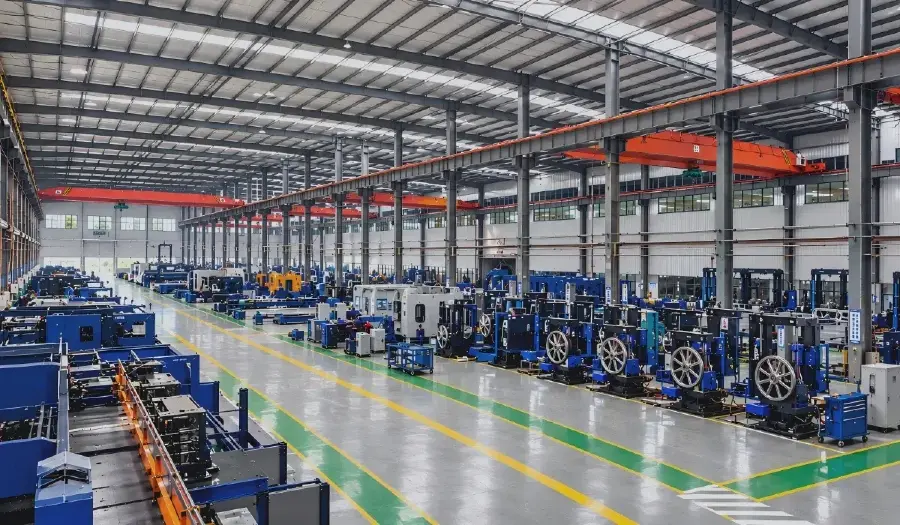
DINOSAW is a manufacturer of CNC stone processing machinery, specializing in diamond wire saw machines and CNC stone cutting equipment. With more than 20 years of R&D and manufacturing experience, DINOSAW contributes to industry standards including T/CMES 41001-2025 for CNC wire saw machines, holds 100+ technical patents, and supplies equipment and technical support to customers in 120+ countries and regions. Its manufacturing and management systems are certified to ISO 9001, ISO 14001 and ISO 45001, with CE-compliant machinery for international markets.
DINOSAW R&D & ManufacturingMechanical Design · CNC Control Development · Assembly · Testing · Commissioning · Global Delivery
Industry Standard Drafting
DINOSAW contributes to industry standards for stone machinery, including T/CMES 41001-2025 for CNC wire saw machines, as well as standards covering multi-wire saws, combined wire saw machines and five-axis bridge cutting equipment. This work reflects the company’s long-term involvement in machine design, manufacturing, testing and quality control.
20+Years of Stone Machinery R&D & Manufacturing Experience
100+Technical Patents — Covering machine structures, CNC control, cutting systems and stone processing technologies
120+Countries & Regions Served — Equipment, installation and technical support worldwide
CE Compliance & ISO Management Systems
CE: Stone cutting machinery assessed against Machinery Directive 2006/42/EC and relevant EN standards. ISO: Management systems certified to ISO 9001, ISO 14001 and ISO 45001.
Installation Requirements & After-Sales Support
DINOSAW provides installation guidance, operator training, remote diagnosis and spare-parts coordination for every machine.
Line CompatibilityFrankfurt format heads
Confirm polishing line brand, head model and holder condition before ordering; the abrasive mounts standard Frankfurt geometry.
Grit Configuration24#–220#, configured per grinding stage
Grit program is set per stone hardness, incoming surface condition and handover point to resin, confirmed per destination line.
Water SupplyContinuous wet grinding
Keep continuous water at the grinding stations to cool the sintered metal bond and clear slurry from the working face.
01 · Pre-Shipment & DeliveryMachine configuration, packaging and transport requirements confirmed before dispatch, with factory inspection and documents verified.
02 · Installation & CommissioningOn-site utilities and foundation check, machine positioning, commissioning and acceptance.
03 · Operator TrainingHands-on training covering routine CNC operation and daily checks of blades, spindles, cooling and lubrication.
04 · After-Sales SupportRemote technical assistance, maintenance support and spare parts coordination throughout the machine's service life.
Metal Bond Diamond Frankfurt Selection, Use & Ordering FAQ
Answers to the main buying questions around where metal bond Frankfurts sit in the line, how to choose against magnesite and resin, grit selection and quotation preparation.
A metal bond diamond Frankfurt is a diamond abrasive in the standard Frankfurt format: a sintered metal matrix formed around diamond grit, mounted on the grinding heads of automatic stone polishing lines. It performs the coarse grinding stage of granite line polishing — removing saw marks and thickness variation left by block cutting, opening the surface evenly, and preparing a flat base that resin Frankfurts of the fine and finish stages can refine into polish. Within the line, the metal steps come first: typically 24# or 36# for heavy removal, then progressive steps through 46#, 60#, 80# and finer grits until the surface is ready for resin around 120# and beyond. The defining feature of the DINOSAW design is safe and stable integral sintered technology: the segment is formed as one sintered metal body, which ensures the strongest bonding strength and no drop of segments. That matters because a segment that drops on a moving line is driven across the slab surface, scoring the stone and damaging neighboring abrasives. Metal bond Frankfurts are therefore the grinding-stage workhorse of granite line polishing — specified wherever aggressive stock removal is combined with the requirement that segment loss is unacceptable, and wherever the line must keep rated removal on hard stone shift after shift.
Choose metal bond Frankfurt when you run automatic polishing line heads on granite and need aggressive stock removal with the highest segment security — that is its exact role. Choose the traditional magnesite Frankfurt when you operate conventional grinding-polishing equipment on softer stone at low tooling investment: magnesite is proven in that setup, but it cuts slower and sheds bond material as it works. Choose resin Frankfurt for the fine and finish stages — resin bonds deliver the surface quality that metal, designed for removal, cannot produce. A common buying mistake is ordering metal bond for a pure re-polishing job: if a slab only needs its gloss renewed, resin and final buffing steps are the right spend, and metal will only add scratch depth the resin must then erase. Also confirm the holder before ordering: lines built around wider fickert holders need the metal fickert, not the Frankfurt format. Do not buy metal bond expecting a mirror finish either — its job ends exactly where the resin stage begins. In short: magnesite owns traditional low-investment setups, metal Frankfurt owns the coarse grinding stage of automatic granite lines, resin owns finishing. Many factories buy all three, because each one owns a stage of the same three-stage story.
Start from the condition of the surface entering the line. Saw-cut slabs carrying deep saw marks and 2–3 mm of thickness variation need coarse openers — 24# or 36# — with several heads per grit until the surface reads flat. Medium-condition material can open at 46# or 60#, and slabs needing only light leveling can begin at 80#. From the opening grit, step down progressively — for example 24# to 36# to 60# to 120# — letting each grit erase the scratch pattern of the previous one instead of skipping grades. Hard, coarse-grained granites hold and expose diamond slowly, so plan one more step than for uniform fine-grained stone; the strong self-sharpening level of the sintered metal bond keeps sharpness through these steps with less dressing. The metal stage normally hands over to resin around 120#–180#, while the 180# and 220# metal grits serve lines that want a finer, more uniform handover surface. For a stable recipe, record stone batch, grit sequence, head pressure and line speed, then hold the recipe fixed per product family and adjust only when the stone changes. All eight grits — 24#, 36#, 46#, 60#, 80#, 120#, 180#, 220# — are available in the same integral sintered structure, so the program scales without changing abrasive type.
Send six items. First, the stone: granite type or a sample, its hardness and abrasiveness, plus photos of the surface entering the line. Second, the machine: polishing line brand, head model and the number of Frankfurt positions per head, because the abrasive must match the holder and head geometry. Third, your current abrasive: brand, grit sequence, pieces consumed per shift and the life you get in square metres — this calibrates the consumption comparison. Fourth, production targets: slab sizes, shifts per day and the surface quality your customers require. Fifth, working conditions: line speed, head pressure and water supply at the grinding stations. Sixth, logistics: destination country and port, quantity per shipment, and whether you want a trial batch before committing to a program order. With these inputs, DINOSAW confirms the grit sequence across the eight available grits, recommends where the metal steps hand over to resin, quotes on a per-piece and consumption-per-square-metre basis, and schedules production around your line. If you are unsure of the machine data, a photo of the head with one abrasive mounted is usually enough to confirm the Frankfurt format fit and start the grit recommendation.
A Frankfurt segment is loaded in three directions at once: radial force from head pressure against the stone, tangential drag during grinding, and centrifugal force at line speed. Bonds that rely only on mechanical clamping or a thin cast layer can let a segment work loose under these combined loads — and when a segment drops on a running line, it is dragged across the slab surface, scoring the stone, wrecking adjacent abrasives and sometimes damaging the head itself. The fix is metallurgical rather than mechanical: safe and stable integral sintered technology forms the segment as a single sintered metal body, locking the diamond layer and the mounting structure into one piece. This ensures the strongest bonding strength and no drop of segments during aggressive stock removal, which is exactly why the design is specified where segment loss is unacceptable. The same sintered matrix also controls wear behavior: it erodes in step with the diamond to maintain quick diamond exposure, a strong self-sharpening level and good sharpness, so the segment keeps cutting instead of glazing over. Practical habits that protect this structure on the line: keep mounting seats clean of slurry residue, stay within recipe head pressure, run continuous water at the grinding stations, and replace segments as a matched set rather than mixing worn and new blocks on one head.
Contact Dinosaw
Discuss Metal Bond Frankfurt Abrasive Pricing, Grit Program & Supply
Are you looking for the perfect cutting machines or processing solutions for hard and brittle materials?
Facing challenges in stone quarrying, countertop cutting, concrete and underwater pipeline cutting, stainless steel rust removal and grinding, luxury thin slab cutting, agate and gemstone cutting, graphite cutting, or even building demolition?
Leave your inquiry, and you can expect a reply within 12 hours with tailored solutions!










 English
 中文