Automatic Kerbstone Cutting Machine | Kerb Stone Cutter
LYFP-1200 & LYQB-1200
DINOSAW
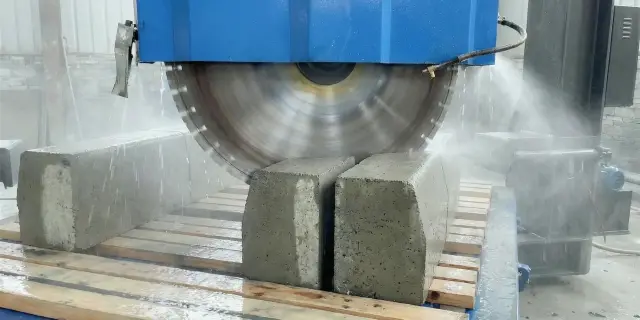
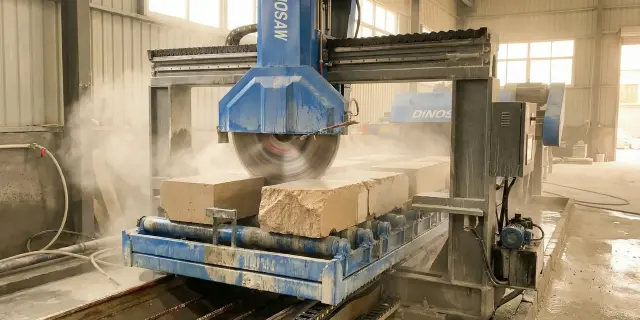
The Dinosaw Automatic Kerbstone Cutting Machine is an industrial-grade, fully integrated kerb stone cutting machine line designed for continuous, high-volume production. It seamlessly combines automatic measurement, multi-blade slicing, and precision edge cutting into one continuous robotic workflow. Engineered to process high-density materials like granite, basalt, and precast concrete, this heavy-duty kerbstone cutter is the ultimate solution for fabricators supplying large-scale municipal tenders, highway construction, and urban infrastructure projects.
Massive 30-35 m³ Daily Output: Powered by a primary unit that supports 10 to 14 diamond blades cutting simultaneously, it multiplies your throughput and easily meets the most aggressive project deadlines.
1 Operator for Total Control: The autonomous processing loop handles complex alignments and material flow. By eliminating manual calibration and heavy lifting crews, a single operator can manage the entire line, drastically slashing labor costs.
±0.5mm Industrial Precision: The hydraulic positioning system ensures every kerbstone meets strict municipal dimension standards, completely eliminating the need for secondary processing or rework.
As a globally trusted wholesale curb stone cutting machine manufacturer, Dinosaw Machinery engineers this line with a native-integrated tempo control system. The smart PLC brain flawlessly synchronizes the material feeding flow with the cutting rhythm, preventing bottlenecks and boosting effective production time by over 20%. Built on a Heavy-Duty Monoblock Foundation and featuring our signature Oil-Immersed Guide Rails, the machine guarantees 24/7 reliability in the harshest, high-dust environments. With flexible 45-75kW power options and strict CE/ISO certifications, Dinosaw delivers a resilient, low-maintenance solution that guarantees the lowest cost per cubic meter in the industry.
12 + 1 Blades12-blade strip slicing plus a dedicated edge-cutting station in one production flow
Straight Kerbstone LineBuilt for standardized roadside, municipal and export kerbstone batches
Advanced Curbstone and Kerbstone Cutting Solutions for Urban Infrastructure
Standard Concrete Curbs: Locking in Margins with the Dinosaw Production Line
In the low-margin concrete market, profitability is a direct contest between labor costs and energy waste. Dinosaw Machinery’s clients have moved beyond the headache of managing large manual crews by installing the Dinosaw Kerbs Production Line . What used to require five workers is now handled by a single operator via the Automatic Curbstone Cutting Machine . By automating the 14-blade slicing and material flow—paired with a 45kW energy-saving setup —this system secures the lowest possible cost per linear meter, ensuring high-volume profitability in competitive tenders.
Artificial Stone Flooring: Export-Grade Quality via Dinosaw Automation
clients in the artificial stone sector, relying on skilled technicians was a significant operational risk. To eliminate human error and technician dependency, they deployed the Dinosaw Automatic Curbstone Cutting Machine . The integrated automation within the Kerbs Production Line handles complex measurement and alignment tasks, ensuring sub-millimeter precision for every tile. This "de-skilled" workflow allows entry-level staff to deliver ±0.5mm accuracy , empowering the factory to consistently meet the most rigorous export standards without the overhead of high-salaried master technicians.
Hard Basalt Boundary Stones: 24/7 Heavy-Duty Performance by Dinosaw
Processing dense basalt is a brutal test of machine longevity. Dinosaw Machinery’s clients handling international highway contracts often faced massive downtime until upgrading to the Dinosaw Kerbs Production Line . The Automatic Curbstone Cutting Machine is engineered to survive abrasive dust and high-torque loads, maintaining a steady 35m³ daily output . By replacing manual lifting with automated material handling , this line enables non-stop, 24/7 schedules, providing the industrial-grade resilience needed to hit aggressive infrastructure targets without accuracy degradation.
Limestone Landscape Curbs: Sustained Precision with Dinosaw Engineering
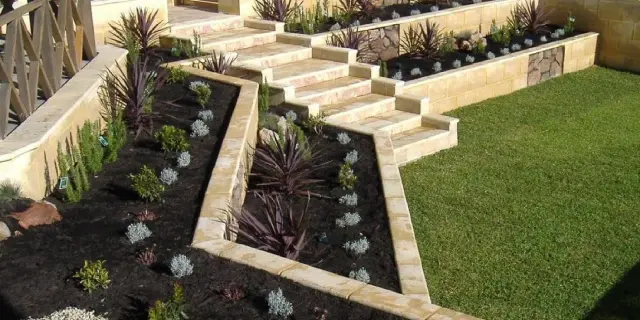
In premium architectural landscaping, surface ripples are a dealbreaker. Dinosaw Machinery clients have abandoned "assembled" equipment in favor of the Dinosaw Automatic Curbstone Cutting Machine to avoid costly reworks caused by dust-induced rail wear. While we focus on the 35m³ daily production volume , it is the underlying stability of the Dinosaw Kerbs Production Line that ensures perfectly vertical slabs year after year. This sustained precision allows manufacturers to dominate high-end tenders, delivering the same sub-millimeter quality on day 1,000 as they did on day 1.
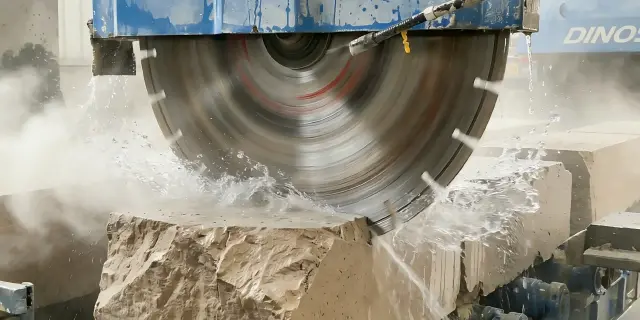
Real Cutting Performance & Key Metrics
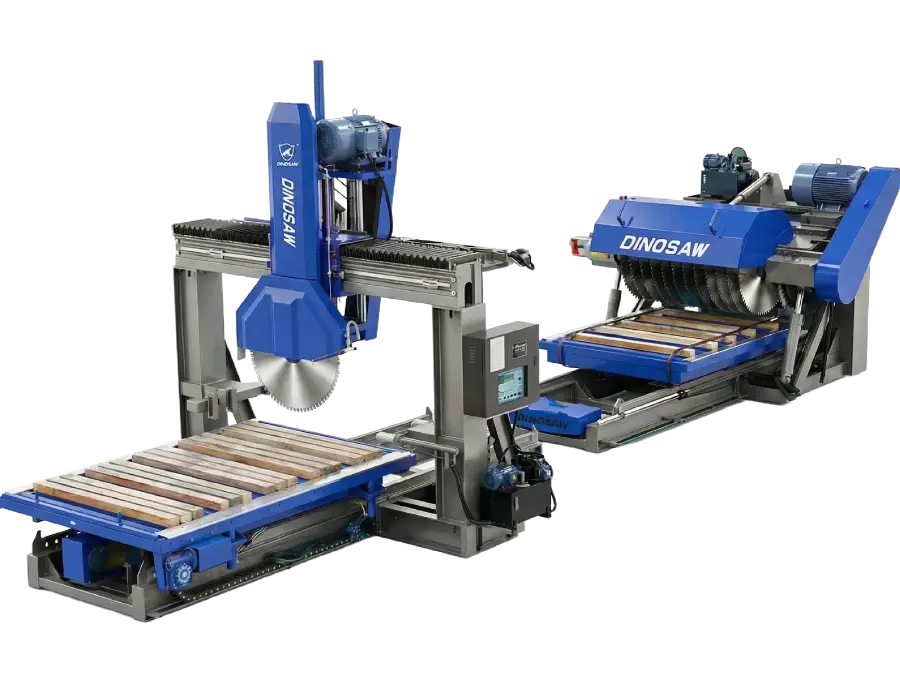
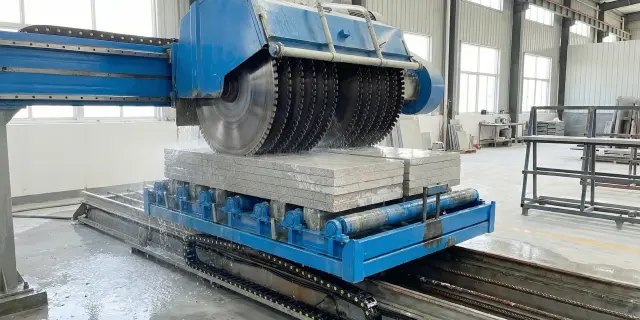
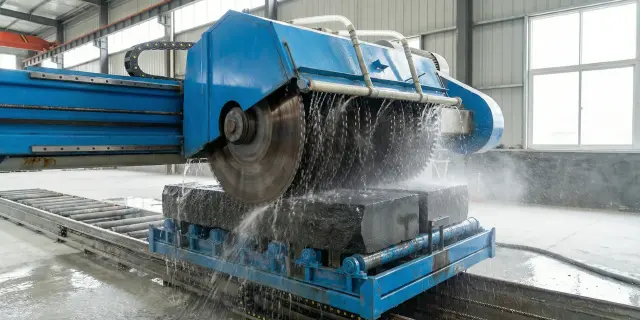
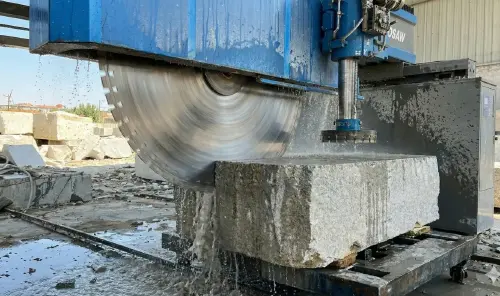
The kerbstone cutting production line pairs the LYFP-1200 multi-blade slicing machine (12 blades, 22 kW) with the LYQB-1200 edge cutting machine (55–75 kW) — a straight kerbstone production system built for standardized roadside, municipal and export batches.
12 Blades
Multi-Blade Slicing
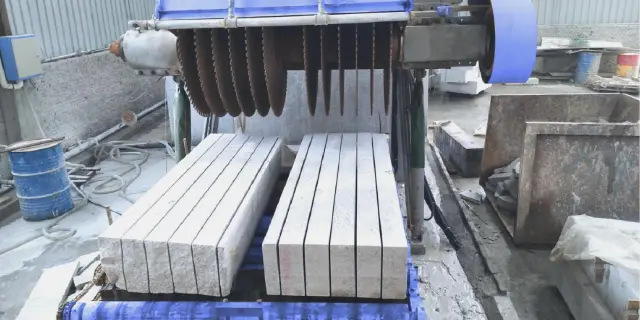
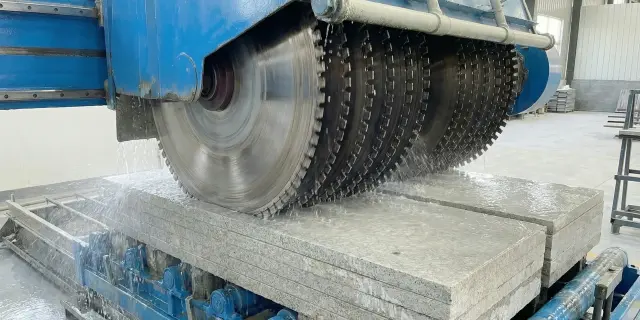
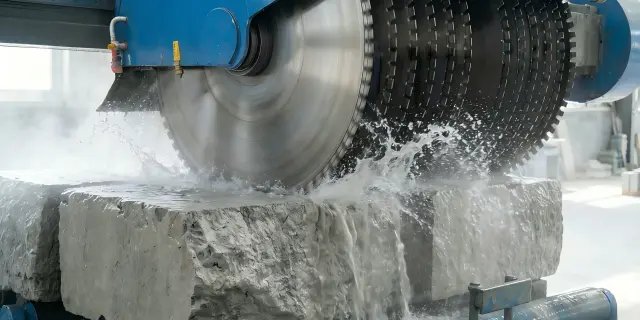
Twelve Ø1200 mm blades divide the block into multiple strips in one cutting cycle instead of repeating one blade pass for every strip.
55–75 kW
Dedicated Edge Cutting
The separate LYQB-1200 uses its own high-power spindle for edge finishing, so edge quality does not consume slicing capacity.
2500 × 1800 × 450 mm
Workpiece Capacity
Both stations cut up to 2500 × 1800 × 450 mm, covering standard and heavy-duty kerbstone sections in one setup.
2 Stations
Integrated Line Logic
Slicing and edge cutting are balanced as one process instead of two unrelated machines competing for the same work.
Applicable materials: Granite, basalt, limestone, artificial stone and concrete.
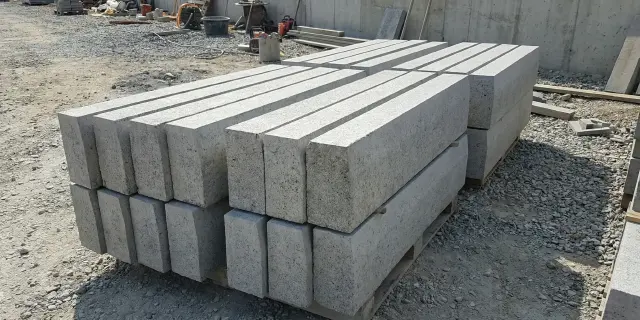
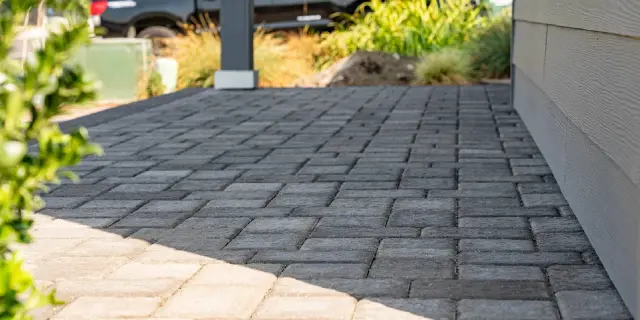
Typical products: Standard concrete curbs, granite and basalt boundary stones, limestone landscape curbs and artificial stone paving elements at batch volume.
Actual line output varies with stone hardness, kerbstone dimensions and shift pattern.
Specs and options
The line combines two engineered stations: the LYFP-1200 slicing machine (5500 × 4000 × 4500 mm, 9 t, 22 kW, twelve 1200 mm blades) cuts blocks into strips on the 2500 × 1800 mm table, and the LYQB-1200 edge cutting machine (5500 × 2300 × 2500 mm, 10 t, 55–75 kW, single 1200 mm blade) finishes the edges. Both handle 2500 × 1800 × 450 mm workpieces.
Machine
Curbstone Slicing Machine
Curbstone Edge Cutting Machine
Model
LYFP - 1200
LYQB - 1200
Dimension
5500×4000×4500mm
5500×2300×2500mm
Diameter of blade
1200mm
1200mm
Number of blades
12pcs
1pcs
Max.cutting size
2500×1800×450mm
2500×1800×450mm
Worktable size
2500×1800mm
2500×1800mm
Weight
9t
10t
Main motor power
22kw
55-75kw
Chamfering Machine Integration: For customers requiring chamfered curbstones, our optional chamfering machine can be integrated into this production line. The chamfering unit connects seamlessly with the existing workflow, adding precision edge beveling capabilities while maintaining the automated material handling throughout the production process.
Core Technology & Machine Structure
Four engineering decisions behind the kerbstone line. The numbered points on the machine diagram correspond to the systems below.
Kerbstone Line Workflow
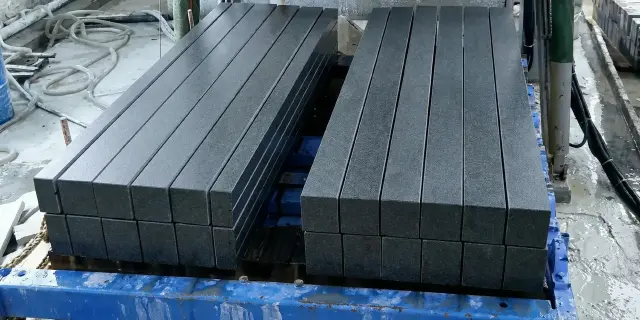
A production run follows four steps: load the prepared block, slice multiple straight strips in one twelve-blade pass, transfer strips to the dedicated edge cutter, then discharge finished straight kerbstones ready for packaging or downstream surface finishing.
01
Multi-Blade Block Slicing
The LYFP-1200 cuts the full strip plan with twelve blades in one cycle, turning block processing from repeated single-blade passes into batch production — the arithmetic that decides kerbstone production cost.
02
Dedicated Edge-Cutting Station
A separate 55–75 kW edge cutter finishes the kerbstone after slicing, allowing the slicing machine to stay optimized for strip output while the second station is optimized for edge quality.
03
Fixed Batch Dimension Logic
A municipal or export order may require thousands of interchangeable kerbstones: fixed blade spacing establishes strip width at the first station, and guided edge finishing completes the final dimension at the second.
04
Heavy-Duty Frames
At 9–10 tonnes per machine, the frames absorb the vibration of twelve-blade slicing and heavy edge cuts through long basalt and granite shifts.
05
Line-Level Material Flow
The two stations are laid out as one material flow, reducing repeated block handling between slicing and edge finishing — the line replaces isolated machines with coordinated stations.
06
Granite & Basalt Duty
The line is built for continuous hard-stone duty: basalt and granite boundary stone programs run through multi-shift production where soft-stone configurations would wear blade and spindle life down.
Straight Kerbstone Line vs. CNC Kerbstone Wire Saw
A product-geometry comparison for kerbstone production buyers.
Straight Kerbstone Line vs. CNC Kerbstone Wire Saw
LYSJ Wire Saw
VS
Kerbstone Line
Curves / radius / custom shapes
Product geometry
✓Straight standardized sections
Flexible programmed orders
Production model
✓High-volume repeated batches
Diamond wire
Cutting tool
✓12 blades + edge blade
Program / file change
Changeover
✓Blade spacing / dimensions
Higher than multi-blade line
Cost per straight piece
✓Lower at volume
No physical mold
Custom curve tooling
✓Not its purpose
Custom & curved products
Best for
✓Municipal / export volume
Note: configurations vary by brand and model; actual performance depends on the specific machine, material and working conditions.
The Manufacturer Behind the Kerbstone Line
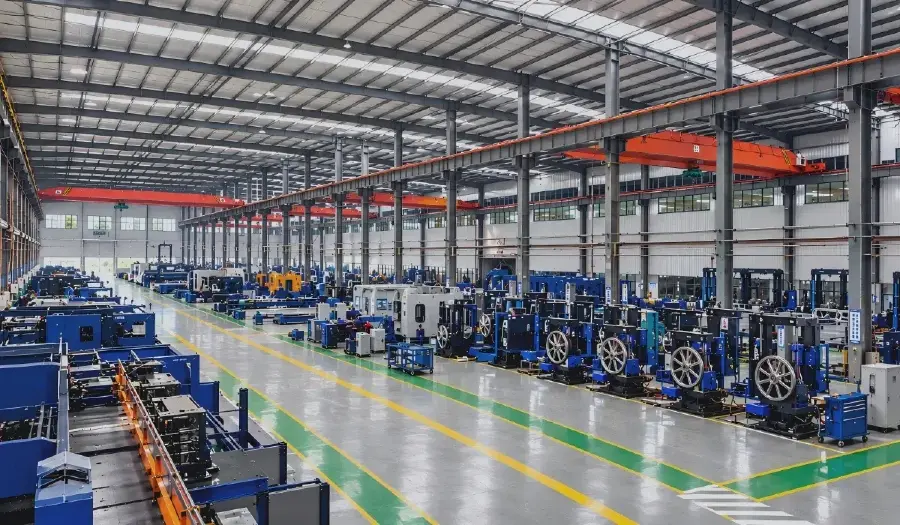
DINOSAW is a manufacturer of CNC stone processing machinery, specializing in diamond wire saw machines and CNC stone cutting equipment. With more than 20 years of R&D and manufacturing experience, DINOSAW contributes to industry standards including T/CMES 41001-2025 for CNC wire saw machines, holds 100+ technical patents, and supplies equipment and technical support to customers in 120+ countries and regions. Its manufacturing and management systems are certified to ISO 9001, ISO 14001 and ISO 45001, with CE-compliant machinery for international markets.
DINOSAW R&D & ManufacturingMechanical Design · CNC Control Development · Assembly · Testing · Commissioning · Global Delivery
Industry Standard Drafting
DINOSAW contributes to industry standards for stone machinery, including T/CMES 41001-2025 for CNC wire saw machines, as well as standards covering multi-wire saws, combined wire saw machines and five-axis bridge cutting equipment. This work reflects the company’s long-term involvement in machine design, manufacturing, testing and quality control.
20+Years of Stone Machinery R&D & Manufacturing Experience
100+Technical Patents — Covering machine structures, CNC control, cutting systems and stone processing technologies
120+Countries & Regions Served — Equipment, installation and technical support worldwide
CE Compliance & ISO Management Systems
CE: Stone cutting machinery assessed against Machinery Directive 2006/42/EC and relevant EN standards. ISO: Management systems certified to ISO 9001, ISO 14001 and ISO 45001.
Installation Requirements & After-Sales Support
DINOSAW provides installation guidance, operator training, remote diagnosis and spare-parts coordination for every line.
FootprintTwo-machine line, ~10 t per station
Layout planning recommended before delivery; allow material flow between stations.
Power Supply22 kW slicing + 55–75 kW edge cutting
Total line power and transformer sizing confirmed per destination.
Water SupplyCutting water, recycling recommended
Blade cooling for both stations; slurry handling per local rules.
01 · Pre-Shipment & DeliveryMachine configuration, packaging and transport requirements confirmed before dispatch, with factory inspection and documents verified.
02 · Installation & CommissioningOn-site utilities and foundation check, machine positioning, commissioning and acceptance.
03 · Operator TrainingHands-on training covering routine CNC operation and daily checks of blades, spindles, cooling and lubrication.
04 · After-Sales SupportRemote technical assistance, maintenance support and spare parts coordination throughout the machine's service life.
Kerbstone Cutting Line Selection, Installation & Operation FAQ
Frequently Asked Questions About Curbs/Kerbs Cutting Machines
This is a fully integrated kerbstone production line, not a single cutting machine.
The line combines:
A multi-blade slicing machine (LYFP-1200) for width cutting
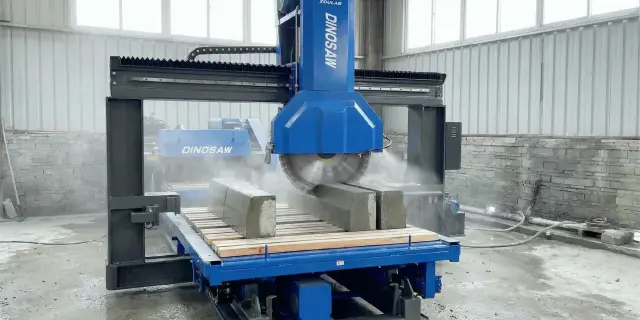
A precision edge cutting machine (LYQB-1200) for length control
Hydraulic roller transport connecting both machines
PLC touch control with real-time cutting feedback
Instead of cutting, moving, measuring, and finishing kerbstones as separate steps, the entire workflow runs continuously. This structure is what allows stable batch production with fewer operators and less manual repositioning compared to standalone machines.
The line is designed for straight, standardized kerbstones used in municipal and infrastructure projects.
Typical products include:
Roadside curb stones
Sidewalk and pavement kerbs
Parking and traffic island curbs
Rectangular kerbstones with consistent width, height, and length
It focuses on uniform, repeatable profiles, not decorative or curved stone products. This makes it suitable for supplying public works, contractors, and large infrastructure projects that require dimensional consistency across large batches.
The line can process granite, marble, sandstone, basalt, limestone, and quartzite, as well as concrete, cement products, and cast stone bricks.
From a structural point of view:
The slicing machine uses 12 × 1200mm blades driven by a 22 kW motor
The edge cutting machine uses a 1200mm blade with 55–75 kW power
This configuration allows stable cutting across both softer stones (sandstone, limestone) and harder materials (granite, quartzite), as well as concrete-based products commonly used for roadside construction.
The multi-blade system improves productivity by cutting multiple kerbstone strips from one block in a single pass.
With 12 blades mounted on the LYFP-1200, one stone block is sliced into multiple kerbstone blanks at once. This reduces:
The number of cutting cycles per block
Idle time between cuts
Manual handling between operations
Compared with single-blade setups that process one piece at a time, this approach creates a continuous rhythm that supports the line’s typical output of 30–35 m³ in 24 hours under stable operation.
Width and length consistency are controlled by two dedicated stages, each designed for one dimension.
Width control is handled during slicing, using fixed blade spacing and laser positioning on the multi-blade slicing machine
Length control is handled during edge cutting, using automated measurement on the LYQB-1200 edge cutting machine
Because blocks move between these stages via hydraulic roller transport, kerbstones are not manually re-positioned between width and length cutting. This reduces cumulative error and keeps batch dimensions stable across long production runs.
The maximum cutting size supported by both machines is 2500 × 1800 × 450 mm, which defines the upper boundary for block and kerbstone dimensions.
This line operates with a high level of process automation, but not blind automation.
From slicing to edge cutting, material transfer is handled by a hydraulic roller conveyor system that automatically connects both machines. Once the block is positioned for slicing, kerbstone blanks move through the line without repeated manual lifting or re-alignment.
The operator mainly:
Loads raw blocks
Sets cutting parameters on the PLC
Monitors operation
There is no need for manual length measurement or repeated repositioning between machines, which is where most inconsistencies occur in semi-automatic setups.
In normal operation, the line can be run by one operator per shift.
Because slicing, transfer, and edge cutting are integrated, the operator does not need to manually handle each kerbstone between steps. This significantly reduces labor compared to traditional workflows where multiple workers are needed to move, measure, and re-cut pieces.
For larger factories or higher throughput targets, additional personnel may be assigned for upstream block handling or downstream stacking, but the cutting line itself is designed for minimal direct labor input.
Installation is fast due to the foundation-free, all-in-one design.
In most cases:
Equipment positioning
Electrical connection
Water and lubrication setup
Basic operator training
can be completed within one working day.
Unlike traditional curb stone lines that require concrete foundations and several days of curing time, this line can be installed, adjusted, and put into production quickly. If the factory layout changes later, the equipment can also be repositioned more easily.
Maintenance requirements are relatively straightforward and focused on routine checks rather than complex servicing.
Typical tasks include:
Daily blade inspection and cleaning
Lubrication and cooling system checks
Periodic hydraulic system inspection
The heavy-duty spindle design and cast-iron structure are intended for continuous operation, reducing unexpected downtime. Operating costs are mainly influenced by blade consumption and electricity, but the single-operator design and continuous workflow help keep overall costs lower than multi-machine, labor-intensive setups.
This production line is best suited for factories that:
Produce large volumes of straight kerbstones
Supply municipal, infrastructure, or public works projects
Require stable dimensions across long production runs
Want to reduce labor dependence and manual handling
It is not intended for decorative stone, curved profiles, or small custom batches. Its strength lies in standardization, throughput, and repeatability, which makes it most valuable for medium to large-scale curb stone producers.
The arithmetic is straightforward: a single-blade machine repeats one pass per kerbstone strip, so a block yielding ten strips needs ten passes plus handling between each. The LYFP-1200's twelve blades cut all strips in one pass — one setup, one cycle, one handling operation. The gain compounds across a shift: fewer passes mean less blade exposure time per block, more consistent strip thickness because all blades share the same cutting conditions, and operator time freed from repeated measuring and repositioning. For volume kerbstone orders, the multi-blade line is the difference between quoting competitively and losing the tender on production cost.
This line produces straight, dimensioned kerbstones — slicing plus edge finishing for standard roadside profiles. Curved kerbstones, radius pieces and shaped roadside elements need a different cutting geometry: the CNC kerbstone wire saw traces programmed curves through the stone without molds, which is the right machine for that product family. Many kerbstone factories run both — the line for volume straight products, the wire saw for curved and custom shapes — sharing block preparation from the same block cutter.
Three factors decide it. Existing equipment first: if you already run a capable edge-cutting station, the LYFP-1200 slicing machine alone upgrades your strip output, and the line logic comes later. Handling second: the complete line pays when material flows directly from slicing to edge finishing — if your current shop moves blocks by crane between unrelated machines anyway, the second station completes the flow your layout is missing. Volume third: below a daily kerbstone count where edge finishing is not the bottleneck, the slicing machine alone may serve; above it, the dedicated edge cutter stops edge work from throttling the whole line. Share your current equipment list and daily target with DINOSAW, and the line-versus-station answer comes from the balance calculation, not preference.
Four data sets configure the line: your raw block dimensions (length, width, height range as they arrive from the quarry or supplier) — they set table capacity and blade height needs; the finished kerbstone cross-sections (width, height, length per product type) — they set blade spacing and the edge-cutting program; your stone classes (granite, basalt, limestone or mixes) — they set blade specification and power sizing; and the daily volume per product — it sets whether the line balance needs both stations at full configuration. Send these with the inquiry, and the quotation comes back with a configured line instead of a generic specification — the same data also lets DINOSAW flag which kerbstone sizes your block yield supports best.
Contact Dinosaw
Discuss Kerbstone Line Configuration & Output
Are you looking for the perfect cutting machines or processing solutions for hard and brittle materials?
Facing challenges in stone quarrying, countertop cutting, concrete and underwater pipeline cutting, stainless steel rust removal and grinding, luxury thin slab cutting, agate and gemstone cutting, graphite cutting, or even building demolition?
Leave your inquiry, and you can expect a reply within 12 hours with tailored solutions!











 English
 中文