


Kerbstone Blank Slitting
Slit slabs into kerbstone blanks at dimension, feeding the edge-cutting stage with sized strips instead of full slabs.


Open Hours:8:30am-20:30pm

WhatsApp: +86 198-5901-3937
Applicable Materials
Marble, granite and dimension stone slabs
Certifications & Credentials
CE Certified · ISO 9001:2015 · Industry Standard Drafting Participant · 120+ Countries & Regions Served
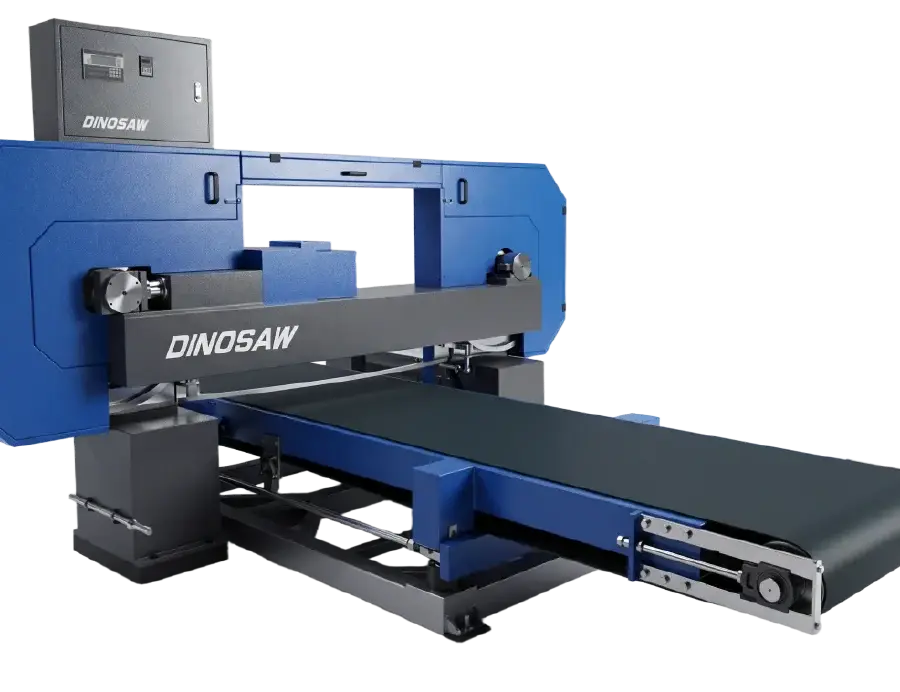
Strip slitting turns full slabs into dimensioned blanks: kerbstones, tile strips and trim pieces that move to edge cutting and finishing as sized products.
Slit slabs into kerbstone blanks at dimension, feeding the edge-cutting stage with sized strips instead of full slabs.
Cut tile strips from marble and granite slabs at controlled speed, ready for sizing and finishing operations.
Produce skirting, trim and molding blanks in narrow widths on the compact DPJ-800/1000 class.
The DPJ-2000/2200 class slits full-width slabs to 2.15 m in guided passes for high-volume strip programs.
Convert slab stock into dimensioned blanks for cut-to-size orders, reducing downstream cutting time and tool wear.
The DPJ series slits marble and granite slabs into strips across eight width classes — from the compact DPJ-800 for narrow trim to the DPJ-2200 for full-width slitting, each model matched to its cutting envelope.
Eight models step from <0.85 m to <2.15 m cutting width: the series covers everything from narrow trim strips to full-width slab slitting.
Thin-slab slitting to 60 mm on the smaller models and 80 mm on the wider classes covers the blank thickness range downstream finishing expects.
Cutting speed from 0–100 mm/min on the compact models and 0–60 mm/min on the wide classes keeps the blade in its working window across widths.
Machine mass scales 2.2 to 6 tonnes across the series — wider cuts need heavier frames to hold blade tracking straight through the pass.
Applicable materials: Marble, granite and dimension stone slabs.
Typical products: Kerbstone blanks, tile strips, skirting and trim pieces, and dimensioned stone blanks for edge cutting and finishing lines.
Actual cutting speed varies with stone hardness, blade specification and on-site conditions.
Choose the DPJ by cutting width: the 800–1400 class (0–100 mm/min, 8.61 kW) covers narrow to mid-width slitting, while the 1600–2200 class (0–60–80 mm/min, 12.11 kW) covers wide slabs at controlled speed. Cutting length runs to 3.2 m on the largest model.
| Model | DPJ-800 | DPJ-1000 | DPJ-1200 | DPJ-1400 | DPJ-1600 | DPJ-1800 | DPJ-2000 | DPJ-2200 |
| Cutting width (m) | <0.85 | <1.05 | <1.25 | <1.45 | <1.65 | <1.8 | <2.05 | <2.15 |
| Cutting length (m) | <1.0 | <1.25 | <2.5 | <2.6 | <3.0 | <3.0 | <3.0 | <3.2 |
| Cutting thickness (mm) | <60 | <60 | <80 | <80 | <80 | <80 | <80 | <80 |
| Cutting speed (mm/min) | 0–100 | 0–100 | 0–100 | 0–100 | 0–80 | 0–60 | 0–60 | 0–60 |
| Main motor power (kW) | 8.61 | 8.61 | 8.61 | 8.61 | 8.61 | 12.11 | 12.11 | 12.11 |
| Weight (t) | 2.2 | 2.5 | 3 | 3.5 | 3.8 | 4.5 | 5.5 | 6 |
Four engineering decisions behind the DPJ slitting platform. The numbered points on the machine diagram correspond to the systems below.
A slitting run follows four steps: load and reference the slab on the machine table, set the strip cutting plan and blade parameters for the stone, run the guided slitting passes at the model's speed range, then unload sized strips to edge cutting or finishing.
Eight models step cutting width in fine increments: factories buy the envelope they actually slit at, instead of overbuying a wide machine and running it underused — or underbuying and repositioning slabs.
The bridge frame guides the blade across the slab on a rigid path: straight, repeatable cuts strip after strip, which is what keeps blank dimensions interchangeable in downstream edge cutting.
Narrow models cut at 0–100 mm/min while the wide classes run 0–60 mm/min: blade loading stays in its working window across the series instead of one compromise speed for every width.
Frame weight scales from 2.2 to 6 tonnes with cutting width: wide passes generate lateral loads that light frames answer with wander, and the DPJ's mass scaling holds the blade on line through the full pass.
The series is built around thin-slab duty — slitting slabs into strips, not chunking blocks: blade selection, speed range and fixturing all serve the strip-blank sizes that kerbstone, tile and trim production actually runs.
Slitting is the sizing stage ahead of edge cutting and finishing: strips leave the DPJ at dimension and move straight into the LYFP-class edge machines or the polishing line, so the factory flow runs slab → strips → finished pieces without re-measuring.
A sizing-method comparison for strip production.
DINOSAW is a manufacturer of CNC stone processing machinery, specializing in diamond wire saw machines and CNC stone cutting equipment. With more than 20 years of R&D and manufacturing experience, DINOSAW contributes to industry standards including T/CMES 41001-2025 for CNC wire saw machines, holds 100+ technical patents, and supplies equipment and technical support to customers in 120+ countries and regions. Its manufacturing and management systems are certified to ISO 9001, ISO 14001 and ISO 45001, with CE-compliant machinery for international markets.
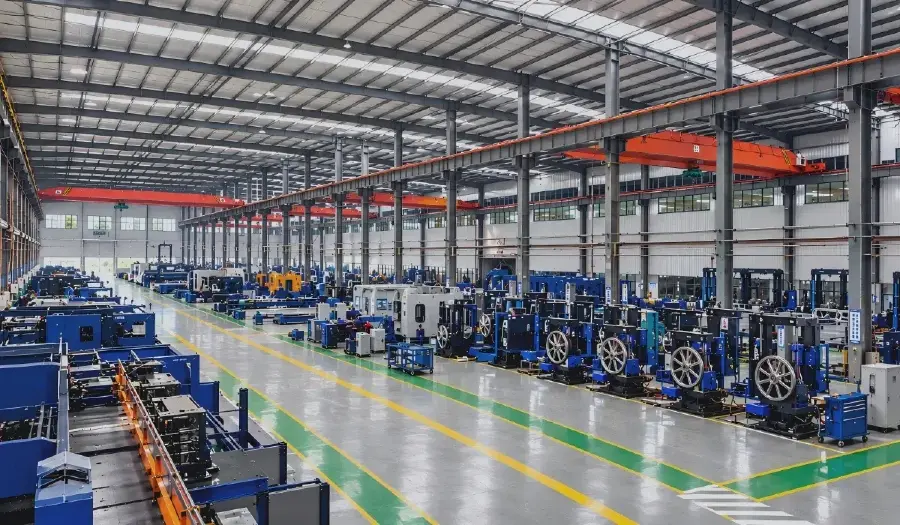
DINOSAW provides installation guidance, operator training, remote diagnosis and spare-parts coordination for every machine.
Length scales with width class; allow slab loading access.
Voltage and frequency confirmed against local standards before shipment.
Blade cooling water; recycling recommended.
Choosing the DPJ width class, thin-slab vs. block cutting, and the slitting-to-finishing workflow.
Match the model to your widest regular strip plan. The series steps cutting width from under 0.85 m (DPJ-800) to under 2.15 m (DPJ-2200) in eight classes, and buying the class above your largest strip wastes capacity while buying below forces double passes and repositioning errors. Check both width and length: the compact 800/1000 class covers short strips to 1.25 m, while programs cutting near 3 m slabs need the 1600-class and above. Then confirm thickness: the 800/1000 class slits to 60 mm, and the wider classes to 80 mm. A kerbstone factory running narrow blanks lives comfortably on the 1200 class; a shop slitting full architectural slabs for cut-to-size works needs the 1800–2200 range. Send your blank dimensions and daily volume for a class recommendation. Length choice follows the same logic: a 3.2 m cutting length only matters if your slabs regularly approach it. The step from 60 to 80 mm thickness capacity comes at the 1200 class and above.
Different machines for different jobs. Block cutting — bridge saws, multi-blade block cutters — sections blocks and thick slabs into pieces, removing large volumes at depth with heavy blades. Thin slab slitting takes already-sawn slabs and cuts them into strips: shallow passes, guided bridge accuracy, and blank dimensions that downstream finishing depends on. Running slitting work on a block cutter wastes the block machine's capacity and rarely holds the dimensional repeatability a strip program needs; running block work on a slitting machine overloads it completely. Factories running both jobs assign each to its machine class — blocks to the bridge and multi-blade saws, strip sizing to the DPJ — and the workflow between them stays slab → strips → finished pieces without re-measuring between stages. The DPJ holds strip repeatability because the slab never re-fixtures between strips — that is the accuracy argument in one sentence. Blade consumption per strip stays predictable because the passes stay guided.
As the sizing stage of a strip-production line. The workflow runs in sequence: slabs arrive from the block-cutting stage, the DPJ slits them to strip blanks at dimension on the guided bridge, and the sized strips feed edge cutting — the LYFP-class kerbstone edge machines for kerb programs or bridge edge cutters for trim work — then finishing. Because the DPJ holds strip dimensions repeatable, downstream machines set up once per program instead of per piece, and the blanks flow through without re-measuring. For volume strip programs, position the DPJ immediately after slab supply with roller or table transfer to the edge machines: handling between sizing and edge work is where dimensions drift, and minimizing it keeps the whole line within tolerance. Layout planning for this flow is part of the configuration review. The water draw is a modest 2 m³/h across the series, so utility planning is rarely the constraint.
Because blade loading, not table speed, sets the limit. The compact class runs 0–100 mm/min on narrow cuts where the blade removes a modest kerf cross-section; the wide classes run 0–60–80 mm/min because a 2-metre pass loads the blade and spindle far more heavily even at the same depth. Pushing a wide cut at narrow-cut speed would wander the blade, overload the motor and mark the strip edges — the speed range is engineered to keep the cut inside the machine's working window at every width. In practice this means wide machines produce more per shift despite the lower number: they cover the full slab in one pass where a narrow machine would need several. Choose the width class first; the right speed range comes with it, and production planning should count square meters slit, not table meters traveled. Plants planning a strip line should request the layout review together with the machine quotation.
Contact Dinosaw
Discuss DPJ Slitting Machine ConfigurationAre you looking for the perfect cutting machines or processing solutions for hard and brittle materials?
Facing challenges in stone quarrying, countertop cutting, concrete and underwater pipeline cutting, stainless steel rust removal and grinding, luxury thin slab cutting, agate and gemstone cutting, graphite cutting, or even building demolition?
Leave your inquiry, and you can expect a reply within 12 hours with tailored solutions!





What materials will you be working with? *
Your Name / Company Name? *
Phone Number / Email Address? *
What specific requirements do you have?
Selection guides and related equipment for slab sizing, slitting and strip production.

The kerbstone line finishes what slitting sizes - strips move from the DPJ to slicing and edge cutting.
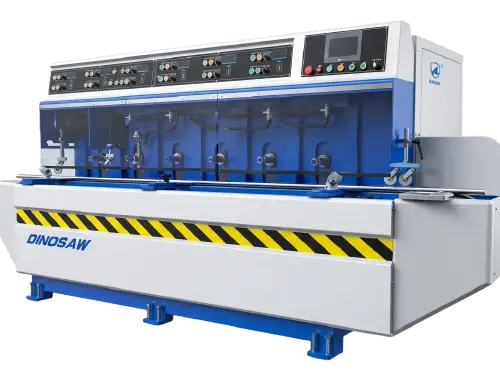
The LXMB-8 bullnose line profiles and polishes strip edges as the final finishing station.

The QSMB bridge profile polisher serves shaped edges beyond the strip program.
 English

Get A Easy Solution
Chat Online
Hi, this is Lizzy from Dinosaw ( Not a Robot ). Which Machine ( model ) do you want? Please WhatsApp us now
Hello 👋 How can we help?


 中文
