Magnesite & Synthetic Frankfurt Abrasives for Hard Granite Polishing
Frankfurt — Magnesite / Synthetic / Oxalic Acid
DINOSAW
Dinosaw Manual Stone Cutter: 0% Electronic Failure Rate and 1/10 Initial Cost—The Indestructible Workhorse In markets where unstable power and limited maintenance can paralyze growth, the Dinosaw Manual Stone Cutting Machine is the ultimate insurance policy。 By stripping away fragile electronics and investing 100% of the cost into Heavy-duty Industrial Architecture, we’ve created a tool that thrives where automation fails, ensuring non-stop cash flow in the most demanding environments。 Dinosaw Manual stone cutting machine provides edge cutting and 45-degree chamfering for stone slabs. Processes granite, marble, limestone, sandstone, ceramic, quartzite, slate, engineered stone, artificial stone and natural stone with efficiency. For kitchen countertops, bathroom vanities, floor tiles, wall panels, tabletops, cabinet panels, curb stones, splash guards and shelving. Industrial Rigidity: Manual Control, Pro-Level Accuracy Technical Point: Unlike lightweight DIY cutters, Dinosaw integrates its signature Heavy-duty Monoblock Frames into our manual series, with a chassis weight over 30% heavier than competitors。 This rigid foundation ensures that even under aggressive manual feeding with a 15kW spindle, vibration is minimized to micron levels, delivering a planarity error of 20%), our manual cutter utilizes a robust induction motor with zero complex controllers, sensors, or PCBs。 It operates with 0% electronic failure risk, ensuring your production never stops because of a flickering power grid or a sudden voltage spike that would otherwise fry an expensive CNC drive and cost thousands in lost downtime。 Maintenance Autonomy: 95% Universal Parts, End the Spare Part Famine Technical Point: We utilize standardized industrial components where 95% of wear parts (bearings, belts, switches) are available in any local hardware market。 Combined with Dinosaw’s signature Oil-Immersed Guide Rails, the maintenance interval is extended by 3x compared to standard machines。 A basic technician with a wrench can complete most repairs in under 30 minutes, freeing you from the dependency on remote factory support and weeks of international shipping。 The Better Alternative to Second-Hand: 1/10 the Cost of Automation Technical Point: While automated CNCs can cost $50,000-$100,000, the Dinosaw Manual Stone Cutter requires less than 1/10 of the initial investment。 For buyers considering used machines, we offer a superior path: for a price close to second-hand equipment, you get a Brand-new High-torque Spindle and a Zero-wear Heavy Frame。 This eliminates the hidden risks of worn-out bearings and loss of precision, empowering your factory with "Big-Plant" stability from day one。
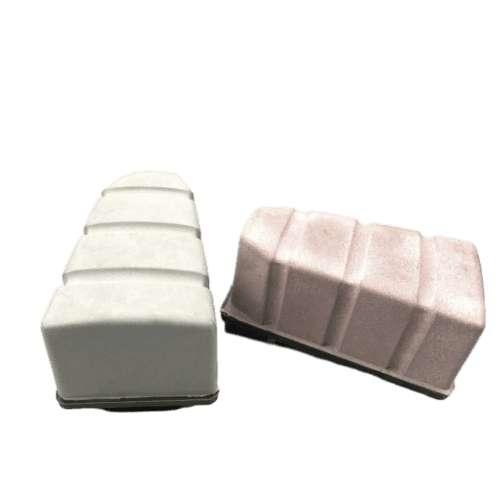
24#–320#Nine magnesite grit steps for the grinding stages of hard granite polishing lines
400#–2000#Seven synthetic grit steps carrying the slab from fine grinding to final polishing
5 / 10 ExtraOxalic acid blocks in 5 Extra and 10 Extra grades for the chemical final gloss pass
Applicable Materials
Hard granite, medium-hard granite, gabbro, quartzite and similar fine-grained igneous stone for slab, tombstone, tile and countertop polishing
Certifications & Credentials
CE Certified · ISO 9001:2015 · Industry Standard Drafting Participant · 120+ Countries & Regions Served
These applications appear wherever hard granite is polished in volume on automatic line machines and the abrasive program — not the machine — decides the gloss and the cost per square meter.
Hard Granite Slab Polishing Lines
Run the full three-stage program — magnesite 24# to 320#, synthetic 400# to 2000#, oxalic 5 or 10 Extra — on multi-head automatic polishing machines producing polished granite slabs in volume. Slab producers choose this program where hard granite makes resin grinding steps uneconomical.
Tombstone & Monument Polishing
Polish monument-grade granite from ground surfaces to a deep final gloss using the same Frankfurt sequence at lower volume. The mature magnesite operating skills transfer directly from slab lines to monument workshops.
Granite Countertop & Vanity Production
Finish countertop and vanity blanks after edge work and calibration, running the synthetic steps and oxalic final polish for the uniform gloss these products are inspected under.
Grinding-Step Cost Reduction on Existing Lines
For factories already running resin or metal tooling at the grinding heads, moving the grinding steps back to magnesite cuts abrasive spend where tool life is being consumed fastest — the most common entry point into the traditional program.
Mixed-Program Workshops
Workshops polishing several stone classes keep magnesite for the hard-granite grinding steps and reserve resin tooling for jobs where longer life justifies its price, running both families in the same Frankfurt head holding.
Real Polishing Performance & Key Metrics
The magnesite + synthetic Frankfurt program is the traditional cost-efficient line for polishing hard granite: magnesite removes and levels through the grinding steps, synthetic refines through fine polishing, and oxalic acid closes with a chemical final gloss — one Frankfurt head holding for the whole sequence.
24#–320#
Magnesite Grinding Range
Nine magnesite grit steps cover the grinding stages on hard granite. Magnesite is the most historical material in this role, with mature operating skills, and still occupies a large proportion and volume in the field.
400#–2000#
Synthetic Fine Polishing Range
Seven synthetic grit steps continue after magnesite, refining the ground surface through fine polishing toward the gloss level the slab is sold at.
5 / 10 Extra
Oxalic Acid Final Polish
5 Extra and 10 Extra oxalic acid blocks act as the chemical auxiliary of the final polish, closing the sequence with the final gloss pass on automatic polishing machines.
3 Stages
One Frankfurt Format
Grinding, fine polishing and final gloss all run in the Frankfurt block format, so the head holding and machine setup stay unchanged across the whole program.
Applicable materials: Hard and medium-hard granite, gabbro, quartzite and similar fine-grained igneous stone.
Typical products: Polished granite slabs, tombstones and monuments, countertops, vanity tops, tiles and cut-to-size architectural panels polished on automatic line machines.
Actual gloss level, abrasive consumption per square meter and block life vary with stone hardness and mineral content, grit sequence, head pressure, line speed, water condition and operator settings.
Frankfurt Abrasive Program Specifications
Build the program in three stages. Select the magnesite grit steps from 24# to 320# for the grinding stages, then the synthetic steps from 400# to 2000# for fine polishing, and close with 5 Extra or 10 Extra oxalic acid for the final gloss pass. All three families share the Frankfurt block format and run on the same head holding.
Item
Magnesite Frankfurt
Synthetic Frankfurt
Oxalic Acid Frankfurt
Block format
Frankfurt
Frankfurt
Frankfurt
Available grits / grades
24#, 36#, 46#, 60#, 80#, 120#, 180#, 240#, 320#
400#, 600#, 800#, 1000#, 1200#, 1500#, 2000#
5 Extra, 10 Extra
Stage in the line program
Grinding steps
Fine polishing steps
Final polish, chemical auxiliary
Typical line position
Early heads of the automatic polishing machine
Middle and late heads before final polish
Final polishing heads
Core Technology & Abrasive Structure
Four engineering decisions behind the magnesite and synthetic Frankfurt program. Each decision targets one variable on the automatic polishing line: cutting behavior, gloss development, chemical final polish and cost per square meter.
Three-Stage Frankfurt Polishing Workflow
1 · Grind with magnesite: load the early heads with magnesite from 24# to 320# and remove saw and calibration marks in stepped grits. 2 · Fine-polish with synthetic: continue through the 400# to 2000# synthetic steps, erasing each previous scratch pattern. 3 · Final-polish with oxalic acid: close with 5 Extra or 10 Extra oxalic acid blocks for the chemical final gloss pass. 4 · Verify and reset: check gloss and plan block rotation per head based on measured consumption.
01
Magnesite Bond for Grinding Steps
Magnesite is the most historical grinding and polishing material for hard granite, and the bond is still widely used because the operating skills around it are mature: line operators know exactly how it behaves at 24# through 320# on hard stone. It keeps occupying a large share of grinding-step volume in the field because the cost per removed volume stays low.
02
Nine-Step Magnesite Grit Ladder
The 24#, 36#, 46#, 60#, 80#, 120#, 180#, 240# and 320# steps let the line remove saw and calibration marks first, then progressively close the scratch pattern before synthetic takes over. Skipping grit steps to save tooling shows up later as residual scratches the fine polish cannot hide.
03
Synthetic Bond for Fine Polishing
The 400# to 2000# synthetic steps are formulated for refinement rather than removal: each step erases the previous scratch pattern and builds the uniform surface the gloss meter reads. This is where the slab's final appearance is actually created on a traditional line.
04
Oxalic Acid Chemical Final Polish
5 Extra and 10 Extra oxalic acid blocks work as a chemical auxiliary on the final heads: the acid phase reacts with the granite surface during the last passes to draw out the final gloss, which is why the grade choice — 5 Extra or 10 Extra — is confirmed against the target gloss and stone color.
05
Shared Frankfurt Block Geometry
All three families mount in the same Frankfurt block format, so head holding, adapter and machine setup stay unchanged from the first grinding head to the last oxalic head. The operator changes abrasive family and grit, not hardware, which keeps changeover time low on multi-head automatic machines.
06
Line-Program Cost Structure
The program puts the cheap, fast-wearing magnesite where removal matters and the finer, costlier synthetic only where refinement matters. Factories running hard granite in volume use this split to hold cost per square meter down instead of paying resin-bond prices at every grinding head.
Magnesite + Synthetic Program vs. All-Resin Polishing Program
A cost-versus-life comparison for hard-granite line polishing: the traditional magnesite program minimizes cost per square meter, while an all-resin program trades higher unit price for longer tool life.
Magnesite + Synthetic Program vs. All-Resin Polishing Program
All-Resin Polishing Program
VS
Magnesite + Synthetic Program
Resin bond at every grinding head, higher unit price
Grinding-step material
✓Magnesite blocks, the low-cost traditional grinding material
Longer life per block, slower cutting at coarse steps
Behavior on hard granite
✓Mature cutting behavior on hard granite, well-known operating skills
Same resin family continues to final polish
Fine polishing
✓Synthetic 400#–2000# continues to a uniform fine polish
High-gloss resin finish
Final gloss
✓Oxalic acid 5 Extra / 10 Extra chemical final polish
Fewer changes thanks to longer block life
Tool change frequency
✓More frequent changes at grinding heads, offset by far lower block cost
Higher abrasive spend, lower labor for changeovers
Cost structure
✓Lowest cost per polished square meter on hard granite
Buyers minimizing head changes and inventory variety
Best for
✓Cost-efficient traditional line polishing of hard granite at volume
Note: configurations vary by brand and model; actual performance depends on the specific machine, material and working conditions.
The Manufacturer Behind the DINOSAW Abrasive Program
DINOSAW is a manufacturer of CNC stone processing machinery, specializing in diamond wire saw machines and CNC stone cutting equipment. With more than 20 years of R&D and manufacturing experience, DINOSAW contributes to industry standards including T/CMES 41001-2025 for CNC wire saw machines, holds 100+ technical patents, and supplies equipment and technical support to customers in 120+ countries and regions. Its manufacturing and management systems are certified to ISO 9001, ISO 14001 and ISO 45001, with CE-compliant machinery for international markets.
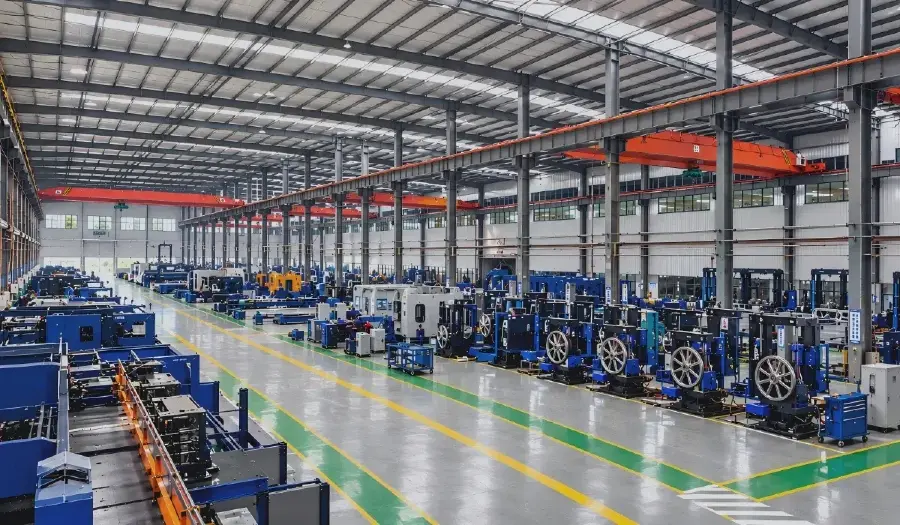
DINOSAW R&D & ManufacturingMechanical Design · CNC Control Development · Assembly · Testing · Commissioning · Global Delivery
Industry Standard Drafting
DINOSAW contributes to industry standards for stone machinery, including T/CMES 41001-2025 for CNC wire saw machines, as well as standards covering multi-wire saws, combined wire saw machines and five-axis bridge cutting equipment. This work reflects the company’s long-term involvement in machine design, manufacturing, testing and quality control.
20+Years of Stone Machinery R&D & Manufacturing Experience
100+Technical Patents — Covering machine structures, CNC control, cutting systems and stone processing technologies
120+Countries & Regions Served — Equipment, installation and technical support worldwide
CE Compliance & ISO Management Systems
CE: Stone cutting machinery assessed against Machinery Directive 2006/42/EC and relevant EN standards. ISO: Management systems certified to ISO 9001, ISO 14001 and ISO 45001.
Program Selection & Supply Support
DINOSAW provides program selection guidance, grit-sequence confirmation, consumption planning and reorder coordination for every Frankfurt abrasive supply.
Grit Sequence24#–320# + 400#–2000# + 5/10 Extra
The three-stage sequence is configured around your stone hardness and target gloss, with step counts adjusted per line.
Head CompatibilityFrankfurt block format
Confirm the Frankfurt holding and adapter on your automatic polishing machine before the first order.
Supply PlanningConsumption-based reorder
Share monthly slab output and consumption figures so DINOSAW plans production slots and packing for your program.
01 · Pre-Shipment & DeliveryMachine configuration, packaging and transport requirements confirmed before dispatch, with factory inspection and documents verified.
02 · Installation & CommissioningOn-site utilities and foundation check, machine positioning, commissioning and acceptance.
03 · Operator TrainingHands-on training covering routine CNC operation and daily checks of blades, spindles, cooling and lubrication.
04 · After-Sales SupportRemote technical assistance, maintenance support and spare parts coordination throughout the machine's service life.
Answers to the main buying questions around the traditional magnesite line program: how to choose it against metal and resin options, how the grit sequence works, and what to send before ordering.
Choose the magnesite + synthetic program when you polish hard granite in volume and cost per square meter is the deciding number. Magnesite blocks are inexpensive and wear fast, which is exactly the right trade at the grinding steps, where removal — not tool life — is the job. Look at the neighbors instead when: you need a sintered metal Frankfurt that holds shape with no grit shedding for aggressive stock removal on very hard stone; you need a resin Frankfurt with long life for fine polishing steps where changeovers are the real cost; or you run fickert-type heads, where a resin fickert covers wide slabs efficiently and this Frankfurt program does not fit the head at all. Rule of thumb: traditional magnesite line for cost-efficient hard-granite volume; metal for heavy removal duty; resin for long-life fine polish; fickert for wide-slab machines. If your line already runs resin everywhere and spend is under control, there is no reason to switch — this program earns its place where grinding-step consumption is high and margins are thin.
The program assigns each abrasive family one job, in order. Stage one is grinding with magnesite: the early heads carry 24# through 320# in steps, removing saw and calibration marks and closing the scratch pattern gradually. Line operators start coarse and only move to the next grit when the previous pattern is gone, because a skipped step resurfaces later as scratches the fine polish cannot hide. Stage two is fine polishing with synthetic: heads carry 400# through 2000#, each step erasing the previous scratch pattern until the surface is uniform enough to take a gloss reading. Stage three is the final polish with oxalic acid blocks in 5 Extra or 10 Extra grade, which act as a chemical auxiliary: during the last passes the acid phase works the granite surface to draw out the final gloss. Practical checkpoints: verify gloss on the first slab of each grit change, keep water steady at every head, and track consumption per head so reorder quantities follow the program instead of guesswork.
You rarely need all sixteen steps — the sequence is trimmed to the stone and the target gloss. For hard granite, a typical line uses four to six magnesite steps from the 24#, 36#, 46#, 60#, 80#, 120#, 180#, 240# and 320# range — starting near 24#–46# when saw marks are deep, or near 80#–120# when slabs arrive well calibrated — then three to five synthetic steps from the 400#, 600#, 800#, 1000#, 1200#, 1500# and 2000# range, and finally 5 Extra or 10 Extra oxalic acid. How to trim: harder, more abrasive granite consumes blocks faster and usually justifies more magnesite steps with smaller grit jumps; softer stone lets you skip grits and move to synthetic earlier. Dark granites chasing a mirror finish run deeper into the 1500#–2000# synthetic range, while commercial slab grades often stop near 1200#–1500#. What to confirm before fixing the sequence: incoming slab flatness, target gloss specification, machine head count and the water condition, since slurry behavior shifts effective cutting at every step.
Send five items first: stone type, machine model and head count, current grit sequence, monthly polished area and target gloss. Stone type or a sample photo determines the magnesite-to-synthetic split and the step count. Machine model and Frankfurt head holding confirm format compatibility and how many heads are available for each stage. Your current grit sequence — or a photo of the blocks you run today — lets DINOSAW map your existing program onto the 24#–320# magnesite, 400#–2000# synthetic and 5/10 Extra oxalic ranges without re-engineering from zero. Monthly polished area converts directly into block quantities per grit for a realistic first order and a reorder plan. Target gloss sets whether the synthetic range stops near 1200# or runs to 2000#, and whether 5 Extra or 10 Extra oxalic acid is recommended. Also useful: destination country for packing and logistics, photos of polished slabs showing any current defects, and your consumption records if you already track them — with these, the quotation comes back as a complete per-head consumption table rather than a unit price list.
Because at the grinding steps, the cheap fast-wearing block is often the economically correct answer. Magnesite is the most historical grinding and polishing material for granite: the operating skills around it are mature, every line operator knows its behavior at each grit, and it still occupies a large proportion and volume in hard-granite polishing for one structural reason — removal duty destroys abrasive quickly, so paying a long-life resin price at a grinding head spends money on durability the process immediately consumes. The traditional program resolves this by division of labor: magnesite does the grinding from 24# to 320# where cost per removed volume rules, synthetic does the fine polishing from 400# to 2000# where surface quality rules, and oxalic acid closes the final gloss. Resin and metal tools keep their place — metal for shape-stable heavy removal, resin for long-life fine polish — but a factory polishing hard granite slabs in volume will typically spend far less per square meter with the magnesite program at the grinding heads, accepting more frequent block changes in exchange.
Contact Dinosaw
Discuss Magnesite & Synthetic Frankfurt Abrasive Pricing & Grit Program
Are you looking for the perfect cutting machines or processing solutions for hard and brittle materials?
Facing challenges in stone quarrying, countertop cutting, concrete and underwater pipeline cutting, stainless steel rust removal and grinding, luxury thin slab cutting, agate and gemstone cutting, graphite cutting, or even building demolition?
Leave your inquiry, and you can expect a reply within 12 hours with tailored solutions!














 English
 中文