


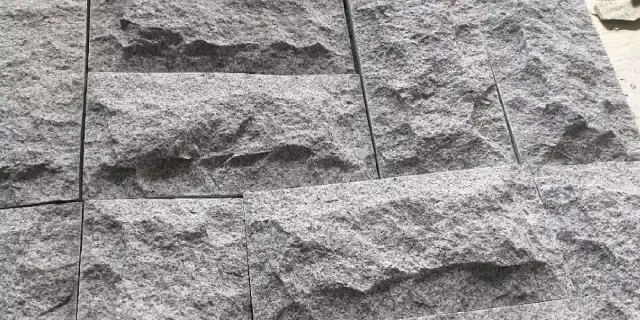
Granite ❯ Cultural Stone Veneer
This splitting technique achieves authentic natural textures 4X faster than traditional quarrying while reducing material costs by 35%.


Open Hours:8:30am-20:30pm

WhatsApp: +86 198-5901-3937
Applicable Materials
Granite, marble, limestone, sandstone, concrete and recycled stone blocks
Certifications & Credentials
CE Certified · ISO 9001:2015 · Industry Standard Drafting Participant · 120+ Countries & Regions Served
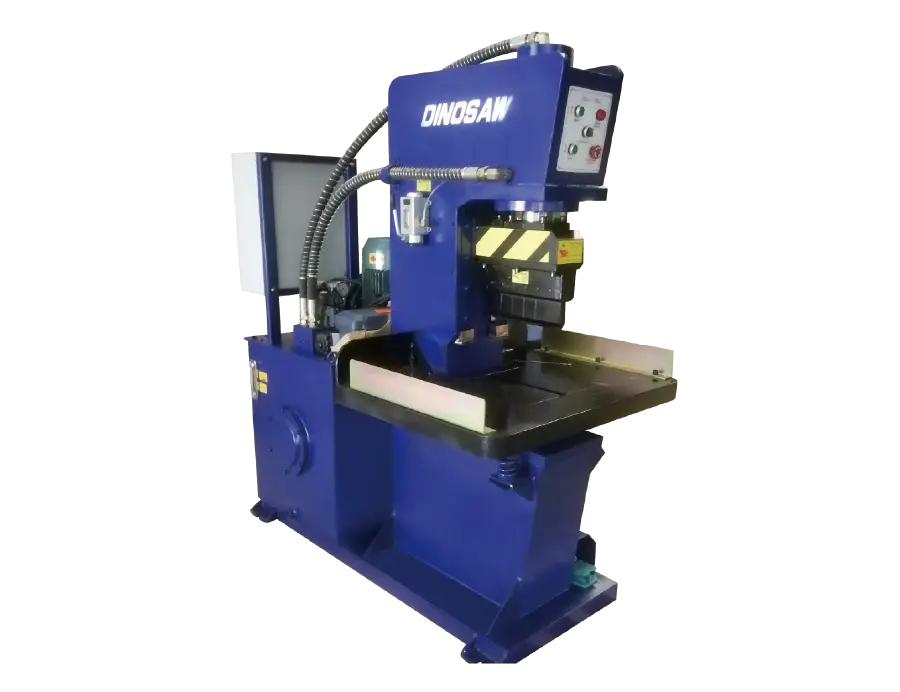
Hydraulic splitting of natural split-face products: veneer, wall stone, pavers, curbstones and retaining wall blocks.
This splitting technique achieves authentic natural textures 4X faster than traditional quarrying while reducing material costs by 35%.
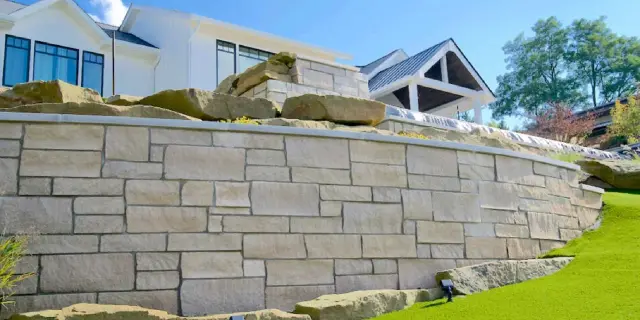
Our hydraulic stone cropper produces uniform retaining wall blocks through controlled fracturing along limestone's natural bedding planes, creating slip-resistant surfaces ideal for garden landscaping and erosion control. The automated splitting process delivers consistent block dimensions while maintaining natural weathering characteristics for long-lasting outdoor performance.
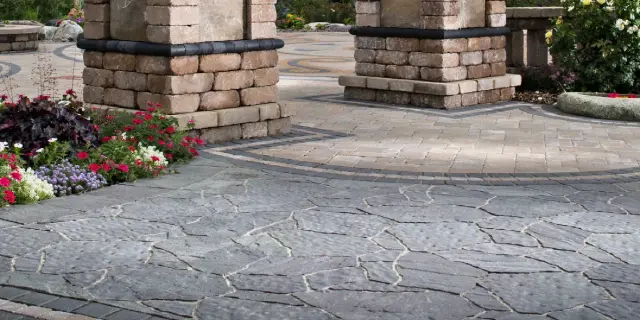
Urban landscaping projects demand durable concrete paving stones with consistent dimensions. DINOSAW stone cropper transforms recycled concrete blocks into uniform pavers through precision hydraulic splitting, creating textured surfaces ideal for pedestrian areas and driveways. This automated splitting process produces 12,000 eco-friendly pavers monthly while reducing landfill waste by 65%, delivering sustainable construction solutions with superior load-bearing capacity.
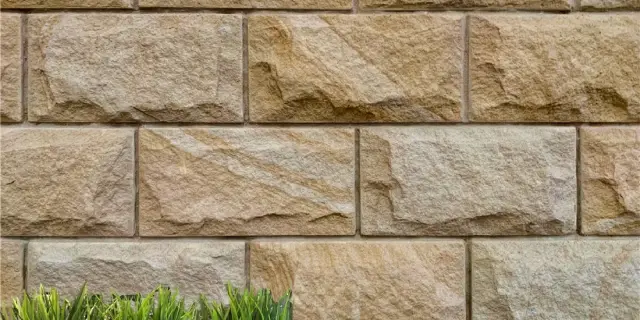
The controlled splitting preserves sandstone's weathering characteristics while ensuring consistent thickness for easier installation and improved thermal insulation properties in residential and commercial buildings.
The PSJ hydraulic stone cropper converts stone blocks and slabs into natural split-face products with five force classes from 20 to 320 tons — clean fractures, no saw kerf, and a quick-change blade system that returns to production in minutes.
PSJ-20T to PSJ-320T covers splitting widths from 160 mm to 1200 mm and heights from 180 mm to 800 mm — one platform, five production scales.
Stone fractures along its grain instead of being sawn, so material is not lost as blade kerf.
Variable-speed pumps and pressure optimization cut power consumption by about 25% against constant-pressure hydraulic designs.
The quick-change system replaces splitting blades tool-free in about five minutes, minimizing downtime between product changes.
Applicable materials: Granite, marble, limestone, sandstone, concrete and recycled stone blocks.
Typical products: Cultural stone veneer, wall cladding, retaining wall blocks, paving stones, curbstones and natural split-face elements.
Actual splitting capacity varies with stone hardness, grain structure and on-site conditions.
Five PSJ models scale by splitting force: the PSJ-20T (7.5 kW, 160 mm width) for thin veneer and small products, up to the PSJ-320T (22 kW, 1200 mm width, 800 mm height) for full-size blocks. Blade adaptation ranges from 10 × 7 mm to 36 × 20 mm, and an optional conveyor automates material flow into continuous production.
| Model no. | PSJ - 20T | PSJ - 40T | PSJ - 70T | PSJ - 160T | PSJ - 320T |
|---|---|---|---|---|---|
| Splitting Pressure | 20T | 40T | 70T | 160T | 320t |
| Max Splitting Width | 160mm | 240mm | 400mm | 500mm | 1200mm |
| Max Splitting Height | 180mm | 320mm | 350mm | 550mm | 800mm |
| Blade Adaptation | 10*7mm | 15*10mm | 20*10mm | 30*15mm | 36*20mm |
| Rated Power | 7.5KW | 11KW | 11KW | 15KW | 22KW |
| Rated Voltage | 380V/50Hz | 380V/50Hz | 380V/50Hz | 380V/50Hz | 380V/50Hz |
| Electric Current | 15A | 22.6A | 22.6A | 30A | 42.5A |
| Main Cylinder Data | Φ110/Φ80 - 200 | Φ160/Φ110 - 340 | Φ200/Φ140 - 360 | Φ280/Φ200 - 600 | Φ400/Φ280 - 850 |
| Oil Advance Speed | 96mm/s | 167mm/s | 108mm/s | 76.6mm/s | 40mm/s |
| Overall Size (L×W×H/mm) | 1145×1000×2030 | 1260×1000×2300 | 1500×1200×2520 | 1970×1200×3300 | 2370×1500×3840 |
| Weight | 2300KG | 2900KG | 3200KG | 5300KG | 8000KG |
Four engineering decisions behind the hydraulic splitting platform. The numbered points on the machine diagram correspond to the systems below.
A splitting cycle follows four steps: position the stone against the blade, set pressure for the material and product size, run the hydraulic cycle until fracture, then discharge — with the conveyor option, cycles repeat in continuous flow without manual repositioning.
A hardened splitting blade concentrates hydraulic force into the stone until it separates along its natural grain — the result is a genuine split-face texture with no saw kerf and no need to artificially texture a sawn surface afterward.
The 20, 40, 70, 160 and 320-ton classes match product cross-section and stone hardness instead of oversizing the hydraulic system for every job — thin veneer runs on the PSJ-20T, full-size blocks on the PSJ-320T.
The quick-change system replaces splitting blades tool-free in about five minutes, minimizing downtime between product sizes — no wrenches or fixtures required.
Variable-speed hydraulic pumps deliver pressure only when splitting force is required, reducing power consumption by about 25% compared with constant-pressure systems.
Optional infeed and discharge conveyors turn the standalone cropper into a continuous splitting cell, reducing manual repositioning between cycles — the configuration volume producers of pavers and veneer choose.
Emergency stops, safety guards and remote operation protect workers during the splitting cycle — hydraulic force demands engineered safety, not operator vigilance.
A process comparison for factories producing split-face stone products.
DINOSAW is a manufacturer of CNC stone processing machinery, specializing in diamond wire saw machines and CNC stone cutting equipment. With more than 20 years of R&D and manufacturing experience, DINOSAW contributes to industry standards including T/CMES 41001-2025 for CNC wire saw machines, holds 100+ technical patents, and supplies equipment and technical support to customers in 120+ countries and regions. Its manufacturing and management systems are certified to ISO 9001, ISO 14001 and ISO 45001, with CE-compliant machinery for international markets.
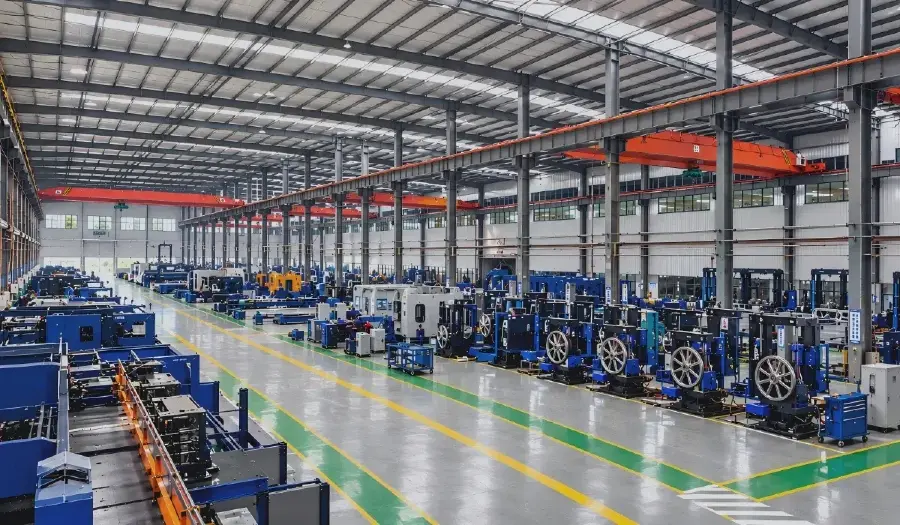
DINOSAW provides installation guidance, operator training, remote diagnosis and spare-parts coordination for every machine.
Compact layout from the PSJ-20T (1145 mm) to the PSJ-320T (2370 mm).
380V/50Hz standard; other voltages configured per destination.
Dry process — no cutting water needed; dust extraction recommended.
Common Questions About DINOSAW Stone Cropper
Two reasons: material yield and surface authenticity. Sawing removes a kerf on every cut — on a 160 mm veneer strip that kerf is pure loss per piece. Splitting fractures the stone along its natural grain with zero kerf, so yield per block rises immediately. Second, the fracture surface carries the authentic split texture that saws cannot reproduce; architectural specifications for cultural stone, cladding and retaining walls call for exactly that face. For kerbstones and dimensioned products where a sawn face is acceptable, a saw stays the right tool — but for natural-face products, splitting is both cheaper per square metre and closer to the specification.
Size the machine by your largest product cross-section and hardest material, not by your average job. Width capacity runs from 160 mm (PSJ-20T) to 1200 mm (PSJ-320T), and height from 180 mm to 800 mm. Granite demands more force than limestone or sandstone for the same section, so a factory splitting granite veneer should size up one class versus a limestone operation with identical products. DINOSAW can evaluate your block sizes and product list to match the force class — and if daily volume grows, the quick-change blade system adapts the machine to new product sizes without new equipment.
Yes. The optional conveyor system automates material handling into a continuous flow — blocks feed to the splitting station and products discharge without manual repositioning between cycles. Combined with remote operation and the roughly five-minute blade change, a PSJ line suits volume producers of paving stones, veneer and cladding who need consistent output without adding operators per shift.
Yes — the same platform covers both, but the parameters differ. Limestone splits at low pressure with a narrow blade, granite needs the full force class and a wider blade geometry matched to its grain. In practice the operator sets pressure per material and the blade adaptation (10 × 7 mm up to 36 × 20 mm by model) is chosen per product — so a factory splitting both materials sizes the machine for the granite and runs limestone within the same force class at reduced pressure. That is also why choosing the force class by hardest material, as covered above, keeps one machine sufficient for mixed production.
Contact Dinosaw
Discuss PSJ Pricing, Configuration & ApplicationAre you looking for the perfect cutting machines or processing solutions for hard and brittle materials?
Facing challenges in stone quarrying, countertop cutting, concrete and underwater pipeline cutting, stainless steel rust removal and grinding, luxury thin slab cutting, agate and gemstone cutting, graphite cutting, or even building demolition?
Leave your inquiry, and you can expect a reply within 12 hours with tailored solutions!






What materials will you be working with? *
Your Name / Company Name? *
Phone Number / Email Address? *
What specific requirements do you have?
Selection guides and related equipment for stone splitting, cropping and natural split-face production.
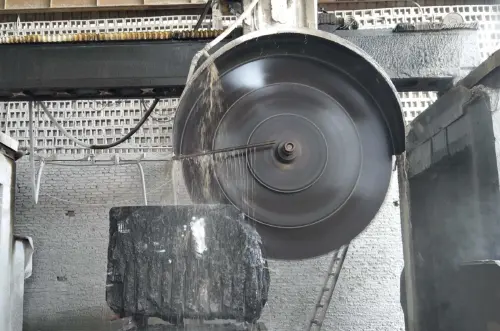
Maximize stone yield with advanced rock cutting technology. As a co-drafter of industry standards, Dinosaw analyzes wire saws and chainsaws for quarries and factories. Get technical insights on efficiency and waste reduction.

Confused by all the options? Here's the truth about choosing granite cutting machines that actually make money. From bridge saws to CNC routers, we'll help you avoid the expensive mistakes most fabricators make.

Professional rock cutting machine selection guide. Technical specifications, OSHA safety compliance, CNC systems, and B2B procurement for industrial stone processing.

Belt-driven dual blade system extracts precise stone blocks from quarries with minimal waste. Four enclosed guide pillars ensure stability for heavy-duty cutting. Chrome-plated components withstand harsh quarry environments perfectly.

Diamond wire technology precisely cuts quarried blocks to optimal sizes for stone cropper feeding. Edge trimming and dimensional adjustment prepare materials perfectly for efficient splitting operations with minimal waste generation.
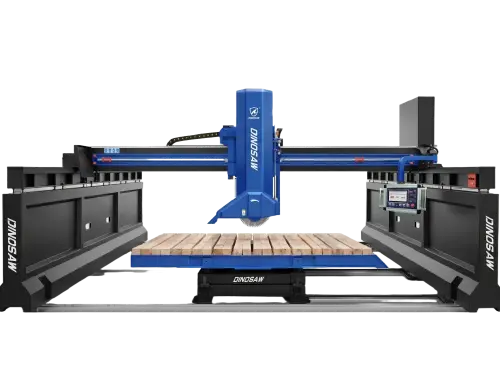
High-speed bridge cutting prepares small wall cladding stones. Compact design handles limited-size materials efficiently before stone cropper splitting. Ideal for rapid processing of exterior stone veneer projects.
 English

Get A Easy Solution
Chat Online
Hi, this is Lizzy from Dinosaw ( Not a Robot ). Which Machine ( model ) do you want? Please WhatsApp us now
Hello 👋 How can we help?


 中文
