






 中文


Ms.Lizzy
Hi, this is Lizzy from Dinosaw ( Not a Robot ). Which Machine ( model ) do you want? Please WhatsApp us now


Open Hours:8:30am-20:30pm

WhatsApp: +86 198-5901-3937

 Nov 12, 20267 MIN READ
 Nov 12, 20267 MIN READ
A complete breakdown of marble cutting solutions: Compare gang saws, wire saws, and bridge saws on slab yield and cost per square meter. Learn why traditional saws underperform in premium marble fabrication and how to achieve high-output, low-waste production.
The best machines for marble block cutting match the product you sell. For full-size marble slabs, compare a gang saw with a suitable multi-wire saw. For thin, high-value panels, consider wire cutting with a narrow kerf, the gap removed from the stone. For strips and tiles, consider a circular-blade block cutter. Choose between them by saleable slab yield and cost per accepted square meter.
This guide is for marble slab producers comparing equipment or reviewing an existing line. It covers cutting quarried blocks into slabs; quarry extraction and countertop fabrication require different machine comparisons. DINOSAW manufactures thin multi-wire equipment, and this guide explains where that equipment fits alongside other cutting systems.
Quick decision: Keep a gang saw in consideration when it already delivers the required thickness, quality, and daily output. Prioritize a thin multi-wire evaluation when cutting loss consumes expensive stone or your next product requires thinner slabs. A smaller cutting gap is valuable only when the additional slabs survive finishing and meet the customer's specification.
In this guide: machine selection, slab yield, cutting cost, surface quality, and common questions.
| Your production priority | Strong starting point | The deciding comparison |
|---|---|---|
| Continue producing established slab sizes on an effective existing line | Retain and benchmark the marble gang saw | Would replacement produce enough additional accepted area or operating savings to justify the installed investment? |
| Recover more slab area from high-value blocks | Evaluate a thin multi-wire saw against the current process | Actual kerf, sawn thickness, rejected area, and extra finishing cost |
| Add thin decorative panels to the product range | Shortlist a thin-wire model demonstrated at the required thickness | Finished-panel acceptance, handling and reinforcement requirements, and output per shift |
| Make strips or tiles directly from blocks | Evaluate a circular-blade block cutter | Obtainable strip sizes, trimming waste, and the complete finishing route |
The comparison is therefore more specific than “old machine versus new machine.” A factory with a productive gang saw and limited demand for additional slabs faces a different investment decision from a factory processing scarce, expensive marble into thin architectural panels.
Inqury DINOSAW for a thin multi-wire saw machine now
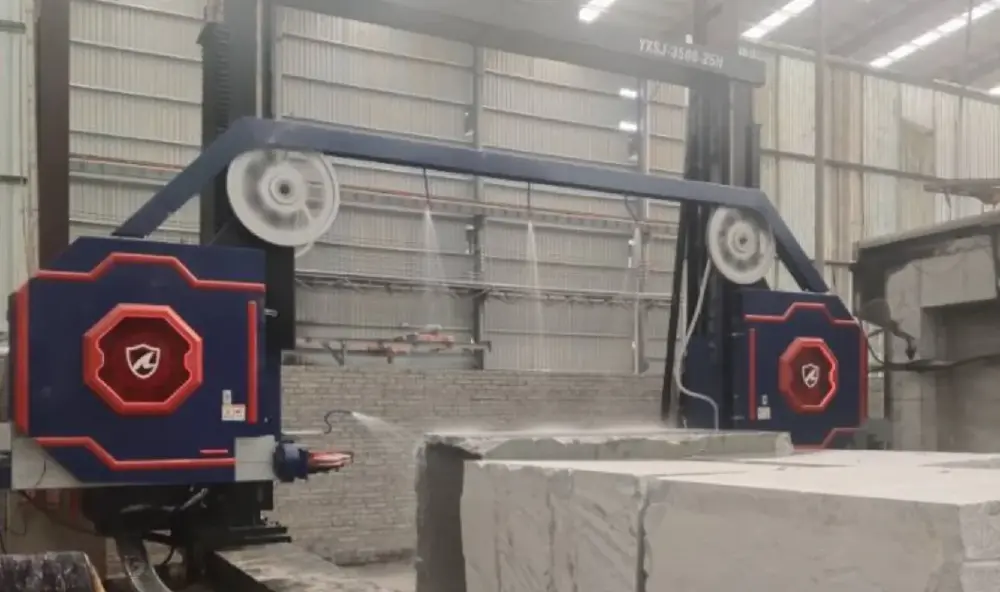
A marble gang saw cuts several slabs simultaneously using parallel diamond-segmented blades in a reciprocating frame. Blade spacing establishes the cutting layout. In Pedrini's GS131 design, the blade-holder frame moves back and forth at a fixed height while a platform raises the block into the blades. Other designs should be checked individually.
For marble gangsaw selection, examine the useful cutting envelope, blade arrangement, and thickness settings alongside actual output. Do not assume that every gang saw is restricted to one slab thickness per block: Pedrini explicitly lists simultaneous cutting of different thicknesses for the GS131. Its arrangement is a model-specific example, rather than a rule for every machine.
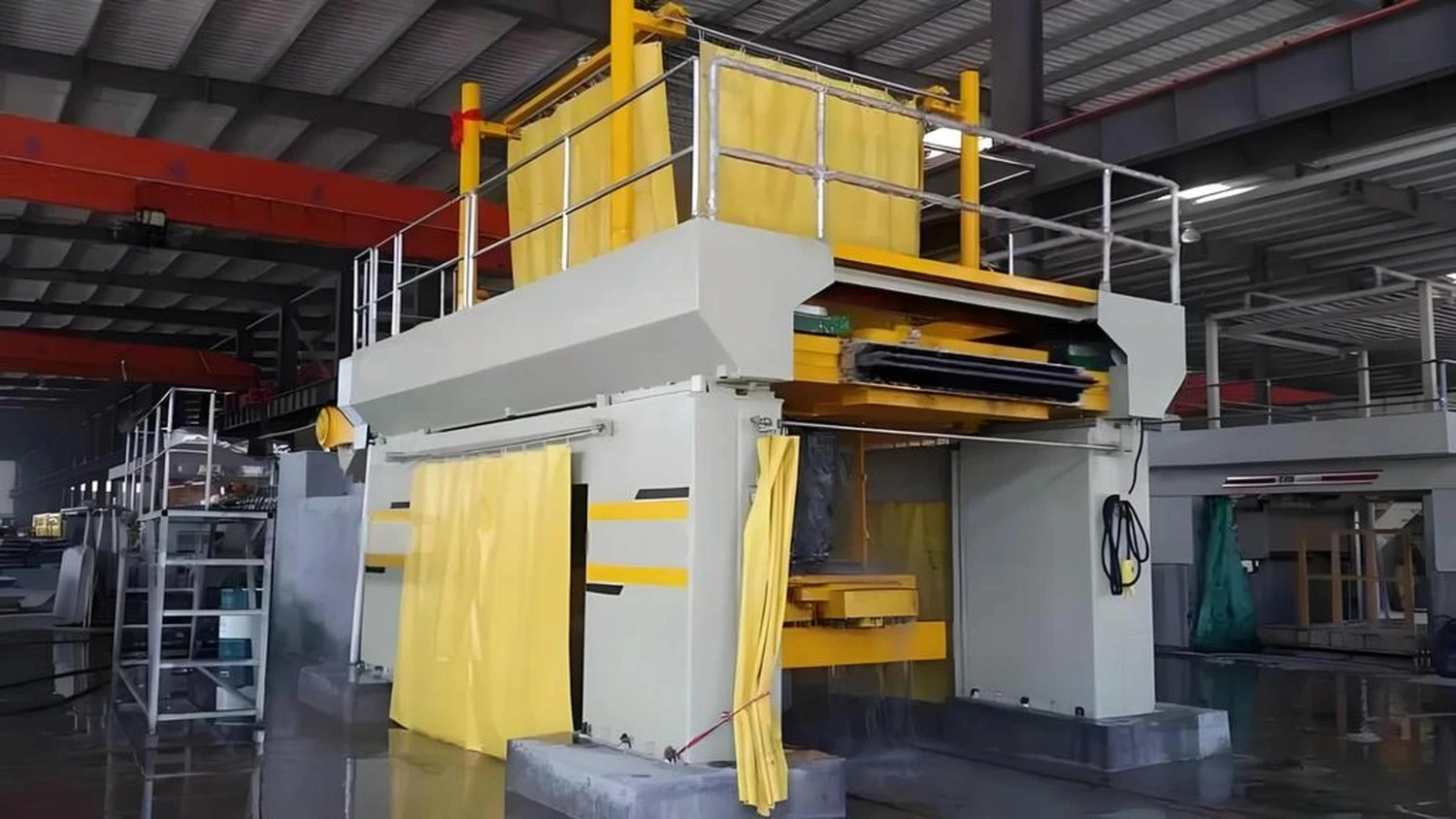
A multi-wire saw uses multiple diamond cutting wires to slice a block into slabs. The important distinction is the cutting system: conventional diamond-beaded wire and fine diamond-coated wire are different configurations. Their wire dimensions, cutting gaps, and suitable production programs must be compared by model.
Breton's Paragon family, for example, lists wire diameters of 5.3–7.3 mm and slab thicknesses of 20 mm, 30 mm, or more. Those figures describe that family, not all multi-wire saw machines.
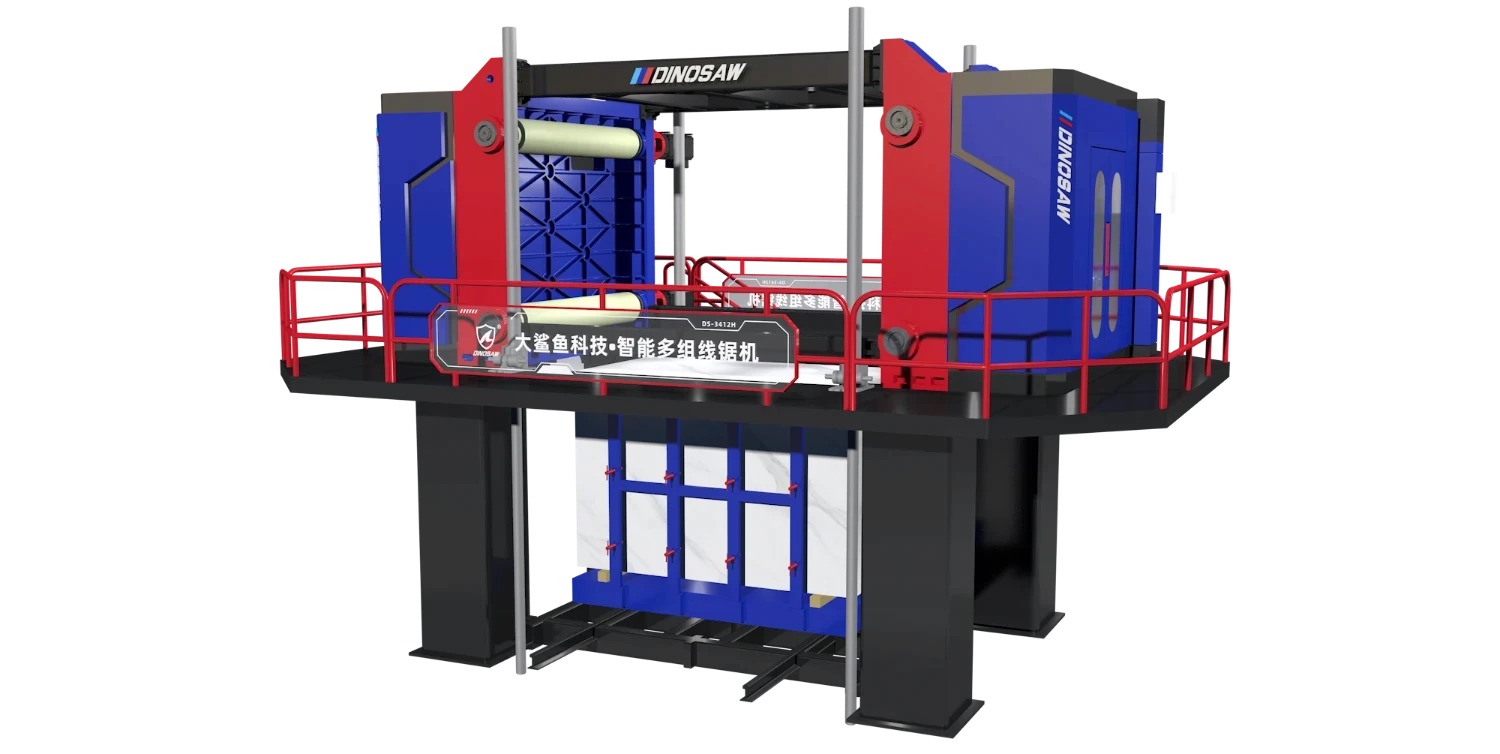
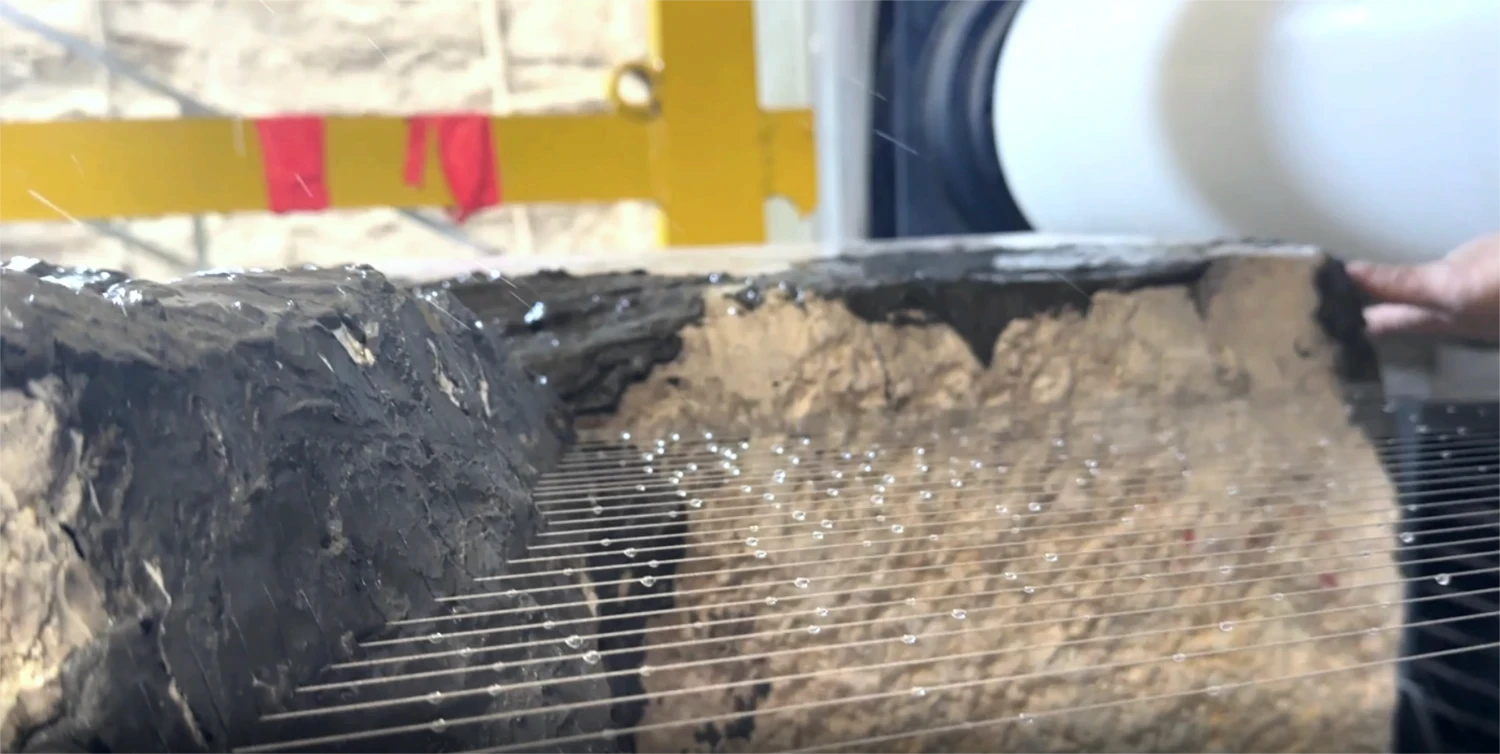
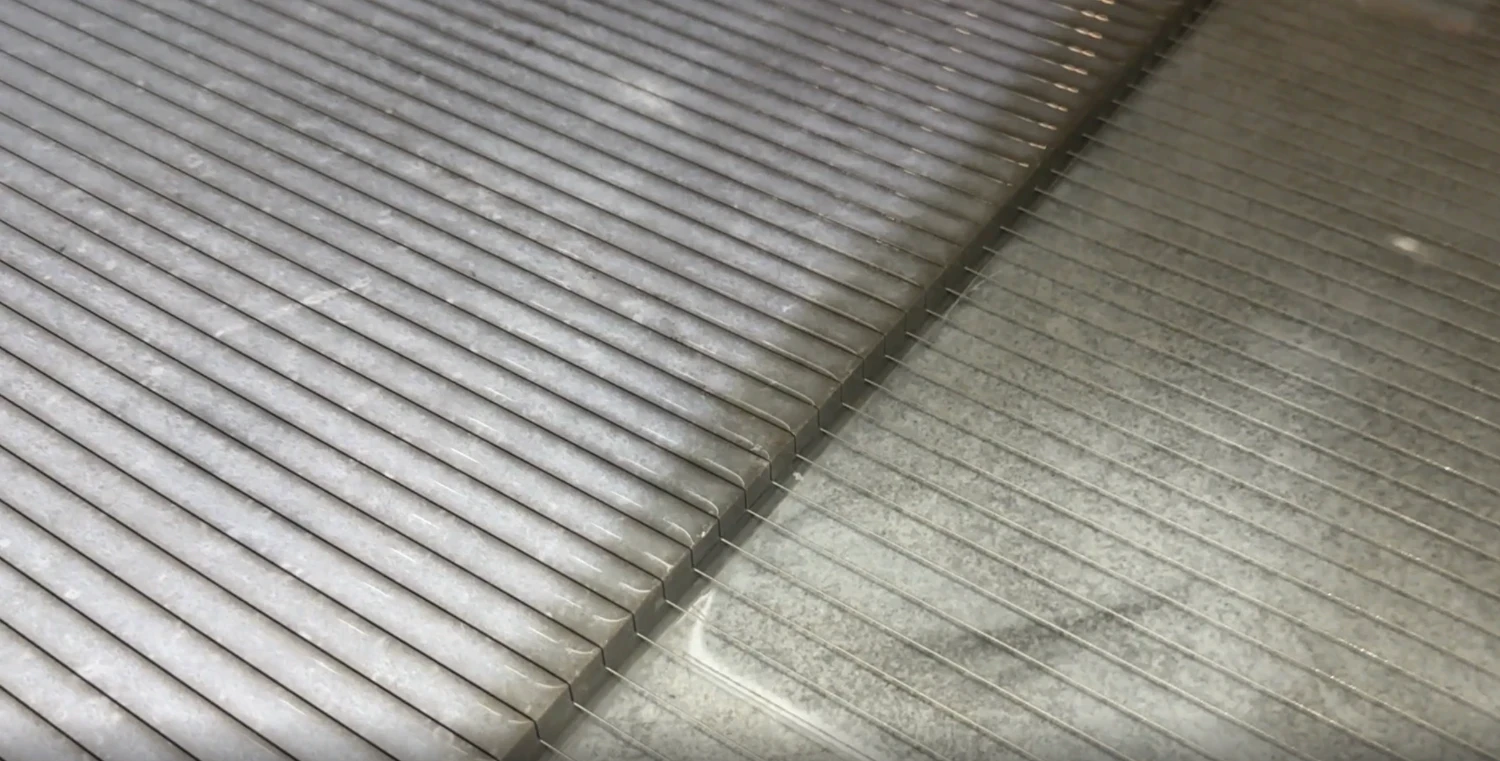
DINOSAW's thin multi-wire saw machine targets a different proposition: fine-wire slicing for marble and other high-value stone. Its product page lists 0.35 mm wire and a 0.5 mm kerf. Treat these as published product figures to confirm for the quoted configuration; they are not interchangeable measurements or a guarantee for every stone. The purchasing question is how that configuration performs at your required slab thickness and daily output.
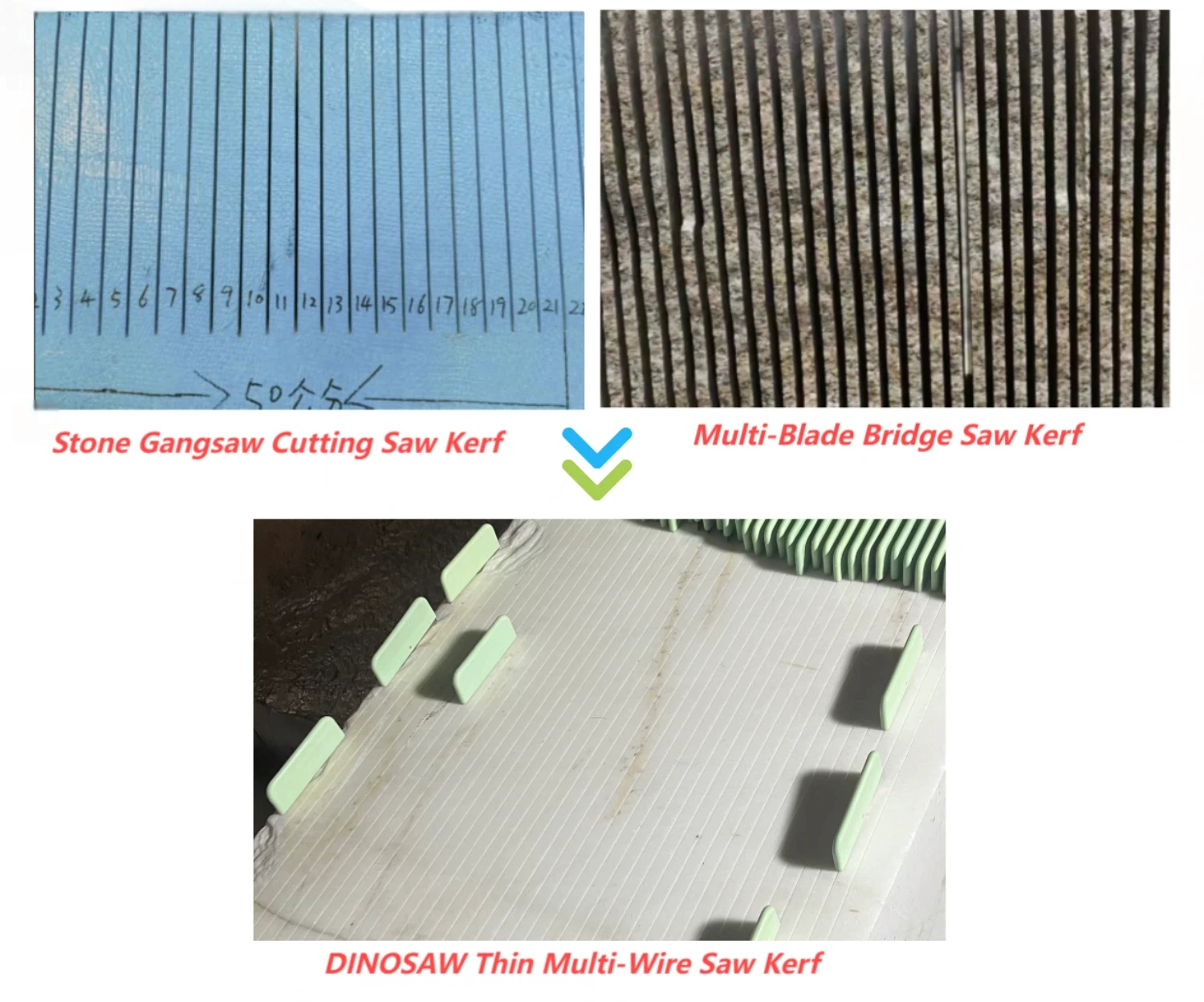
Kerf is the width of stone removed by a cut. It differs from wire diameter, blade-body thickness, and finished slab thickness. A narrower kerf can increase the number of slabs recovered from a block, but the relative gain becomes larger as the target sawn thickness becomes smaller.
For a regular block, a simplified geometric estimate is:
Theoretical sawn area (m²/m³) ≈ 1,000 ÷ [sawn slab thickness (mm) + actual kerf (mm)].
The following calculations use hypothetical kerfs of 1.8 mm and 0.5 mm to show the effect of thickness. They do not represent a measured gang-saw-versus-DINOSAW trial.
| Assumed sawn thickness | At 1.8 mm kerf | At 0.5 mm kerf | Theoretical area increase |
|---|---|---|---|
| 20 mm | 45.87 m²/m³ | 48.78 m²/m³ | 6.3% |
| 10 mm | 84.75 m²/m³ | 95.24 m²/m³ | 12.4% |
This is why a single claim such as “20% more yield” cannot describe every cutting program. The table isolates cutting-gap geometry; it excludes finite slab counts, end pieces, block shape, trimming, calibration allowance, breakage, and rejected slabs.
For a commercial comparison, measure accepted area after the same finishing stage, not just the number of slices leaving the saw. Specify sawn and finished thickness separately. A thin slice that needs excessive calibration, breaks during handling, or fails the finished-panel requirement does not create the same value as a saleable slab.
Use two cost views. The first compares recurring operating costs. The second includes raw stone and the investment needed to deliver the finished output.
Operating cost per accepted m² = included operating costs for the period ÷ accepted slab area for that period.
| Cost component | Record for each machine |
|---|---|
| Cutting tools | Blades, segments or wire consumed, replacement cost, and accepted area produced |
| Utilities | Metered electricity in kWh, water and treatment costs over the same production boundary |
| Labor and maintenance | Setup, tool changes, routine maintenance, and operator time |
| Material and finishing | Block cost, trimming and rejected area, reinforcement, calibration, and subsequent finishing |
| Installed investment | Machine, foundations, handling equipment, installation, and commissioning |
Rated motor power does not establish electricity cost per slab. Similarly, faster cutting alone does not establish higher daily output: loading, unloading, tool changes, downtime, and finishing can limit the line. Compare the total production cycle and report energy as kWh per accepted m² for the same stone and specification.
Recovering more accepted area from the same block spreads its purchase cost across more saleable material. The investment still needs to account for wire consumption, finishing cost, additional processing capacity, and demand for that extra output. Treat additional slabs as a production opportunity, rather than automatic net profit.
Contact DINOSAW now to get a customized marble block cutting machine or marble cutting solution.
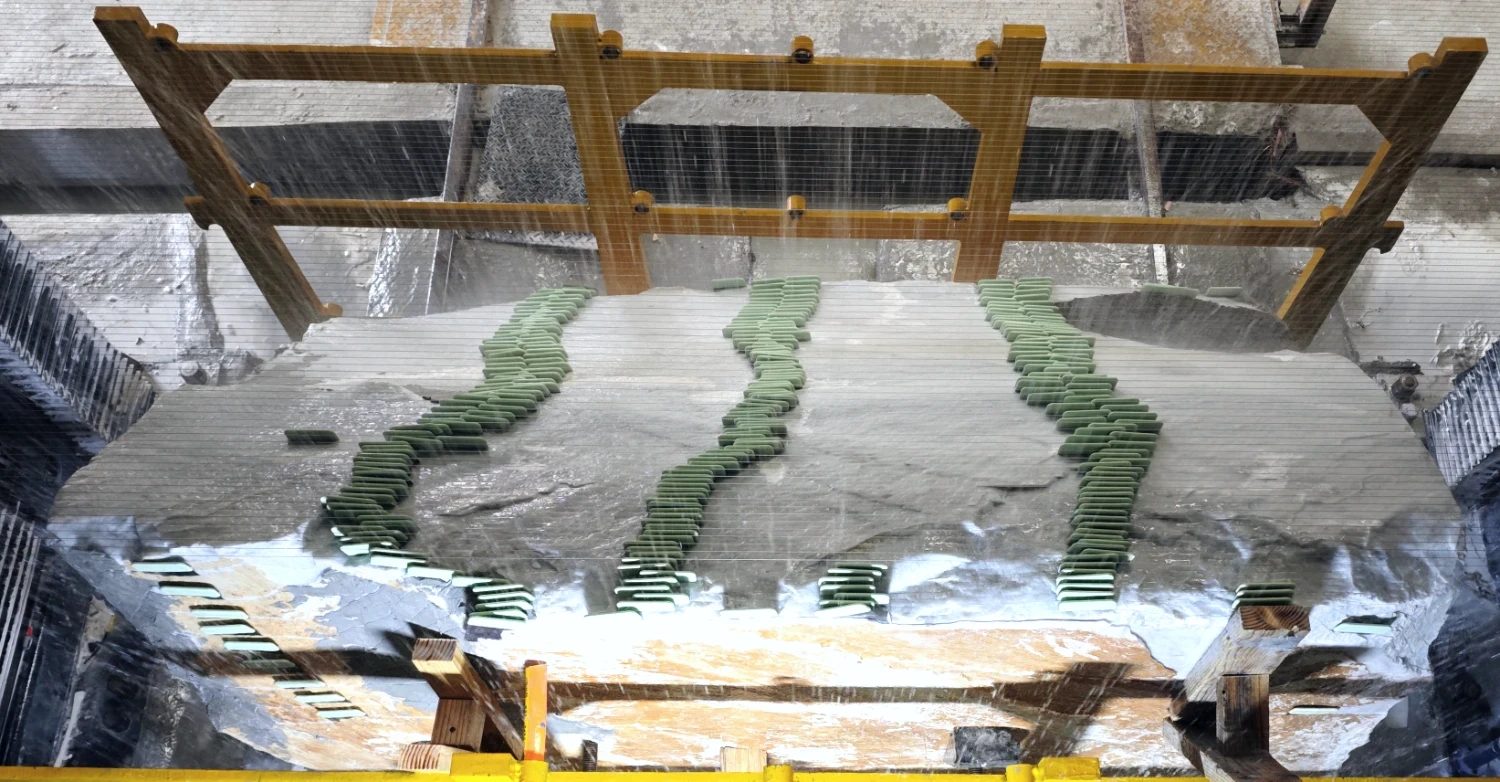
For thin marble, cutting is only part of the production route. Establish how slabs will be supported during unloading, moved through reinforcement if required, and accepted after finishing. Record thickness variation, flatness, surface condition, and breakage separately; one good-looking cut surface does not answer all four questions.
Two exceptions matter. First, fissured or otherwise fragile stone can make handling and reinforcement more important than the theoretical kerf advantage. Second, a finished-thickness target may require extra sawn thickness for subsequent processing. Calculate yield from the actual sawn thickness, then compare the accepted finished product.
Published research also needs a configuration check. A 2026 study by Özdogan and colleagues compared five stone types at 20 mm slab thickness using a 75-blade system and a 76-wire system with 6.3 mm diamond beads. That is a different test from DINOSAW fine-wire slicing; its performance figures should not be transferred to this machine family. Study and test conditions
Consider a circular-blade block cutter when the production route calls for strips or tiles and its cutting envelope suits those products. Compare the resulting dimensions and trimming waste with the intended order. A machine can be well suited to that route without being the best choice for full-size slabs.
Use the stone block cutting machine to evaluate that equipment route separately. A CNC bridge saw cutting countertops, sink openings, or miters from existing slabs belongs to a later fabrication stage. It should not be treated as a direct substitute for every block-to-slab system.
No. A gang saw can remain a sound choice when an existing line meets its output and quality targets. A thin multi-wire system becomes more attractive when recovered stone or a new thin-slab product supports the investment. Compare accepted area, complete operating cost, and installed investment for the same production program.
No. Wire diameter measures the cutting tool; kerf measures the gap left in the stone. Use the actual kerf when calculating material loss. For blade systems, distinguish blade-body thickness from cutting-segment width as well. Record the tool, stone, and cutting conditions with the measurement so the comparison can be repeated.
No. Slab thickness changes the proportion of each block consumed by the cutting gap. In the hypothetical calculation above, reducing kerf from 1.8 mm to 0.5 mm gives about 6.3% more theoretical area at 20 mm sawn thickness and 12.4% at 10 mm. Saleable yield also includes finishing and rejection losses.
For a gang saw vs multi-wire saw decision, start with your product specification and compare the accepted output. Thin-wire cutting is particularly worth evaluating when valuable stone is being lost in each cut or thinner panels are part of your production plan.
Send DINOSAW your marble variety, typical block dimensions, sawn and finished slab thicknesses, required slab size, and accepted output per shift. Include the current process if you are replacing equipment. We can then discuss a thin multi-wire saw configuration and a cutting trial with agreed output and quality criteria.
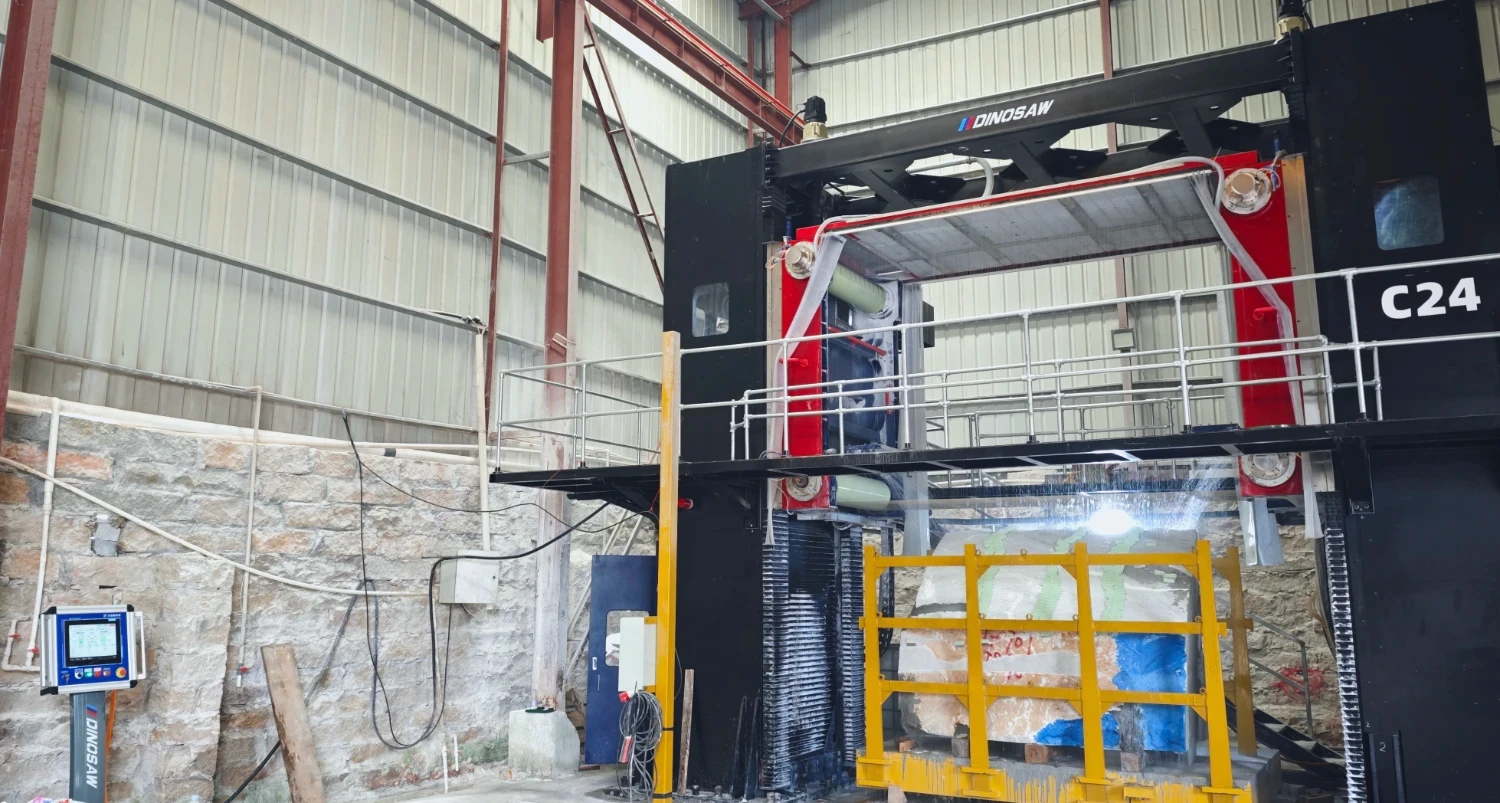
🚩 Explore more marble processing machines designed to transform your stone fabrication operations.
 English

Get A Easy Solution
Chat Online
Hi, this is Lizzy from Dinosaw ( Not a Robot ). Which Machine ( model ) do you want? Please WhatsApp us now
Hello 👋 How can we help?