


 中文
中文 한국어
한국어


Ms.Lizzy
Hi, this is Lizzy from Dinosaw ( Not a Robot ). Which Machine ( model ) do you want? Please WhatsApp us now


Open Hours:8:30am-20:30pm

WhatsApp: +86 198-5901-3937

 May 31, 20265 MIN READ
 May 31, 20265 MIN READ
See this cathode carbon block machining line case and how Dinosaw Machine linked alignment, trimming, slot cutting, bottom release cutting, and existing-line connection.
The customer was a carbon producer with an established manufacturing site. They were not starting from scratch: the workshop was already operating, with existing production lines, fixed columns, and marked passages that could not be moved. The expansion target was to add a complete cathode carbon block machining line — covering loading, hydraulic alignment, inspection, edge trimming, slot cutting, wire-saw bottom release cutting, and discharge — and to connect that new line into the existing production flow without disrupting what was already running.
They came to Dinosaw Machine because previous experience with piecemeal equipment purchasing had shown them the cost of mismatched hand-offs: each time trimming, slot cutting, and transfer were handled by different suppliers, positioning error accumulated at every joint and the downstream stations spent more time correcting it than cutting. What they needed was a single line design responsibility, not a collection of machines from different vendors that would only integrate on paper.
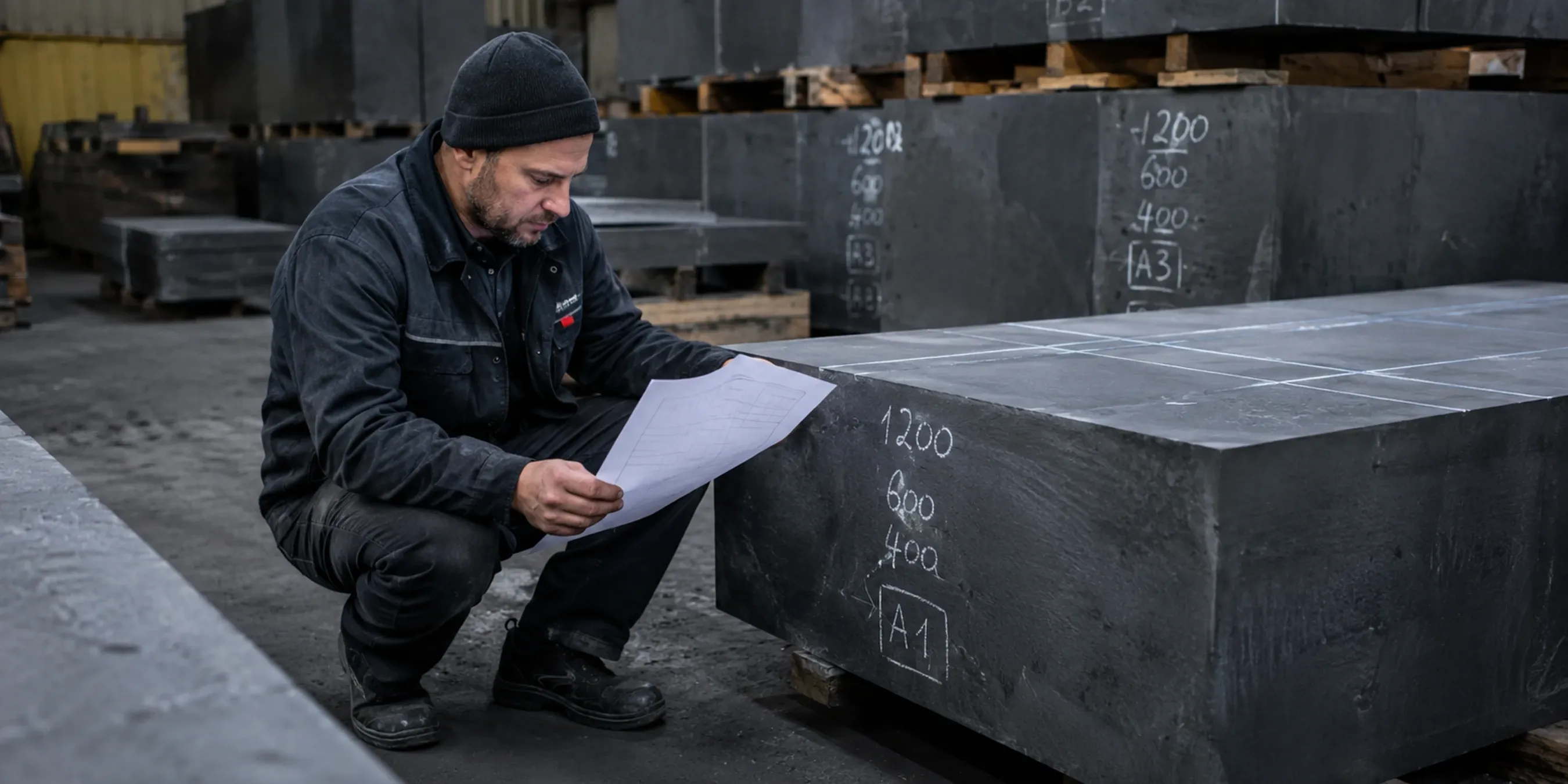
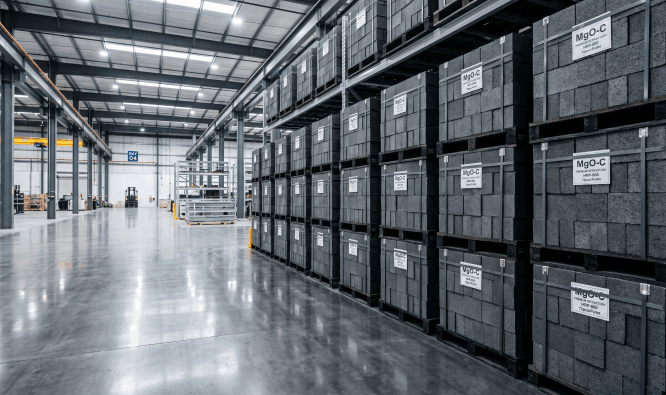
Incoming cathode carbon blocks could not all enter the same trimming and groove route without early identification and sorting.
When transfer, edge trimming, and groove machining were treated as separate purchases, each hand-off could introduce new positioning error or local damage.
The plant already had marked passages, columns, and maintenance space, so the line had to fit the workshop instead of assuming a clean new building.
Once several stations were linked together, small variation at the front of the line could repeat itself later as groove inconsistency, waiting time, or manual correction.
The first priority was to stabilize the block before deeper cutting started. Without reliable alignment and early-stage inspection, any variation in the incoming block's position would carry through every downstream station — trimming tolerances would drift, slot positions would shift, and the wire saw would be compensating for upstream error rather than running its own clean path. Loading, alignment, and inspection were therefore arranged as a committed front-end sequence, not optional steps that could be skipped on a fast shift.
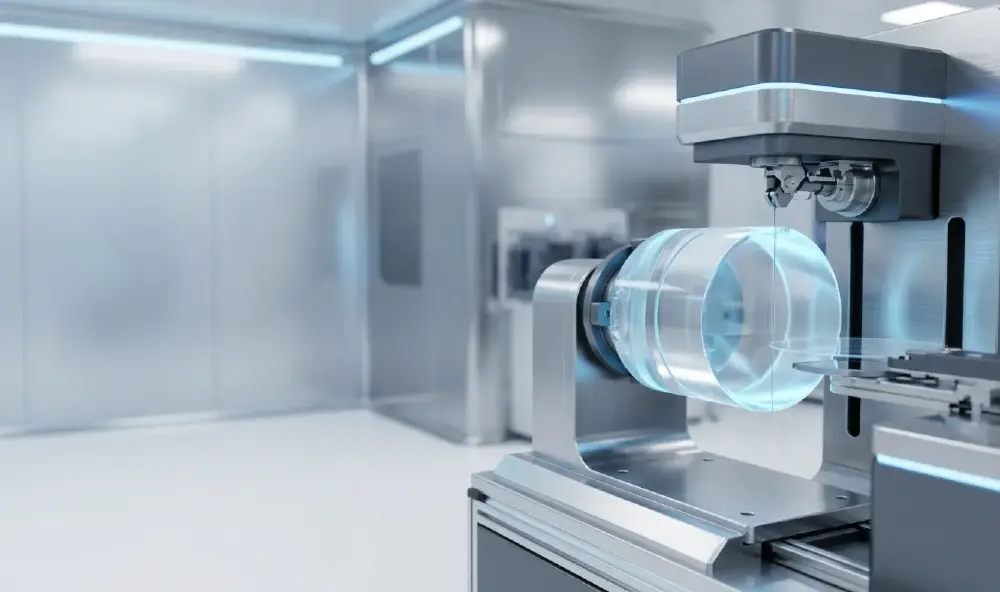
From there, each station had a specific role. Edge trimming cleaned the two sides. Turning and transfer rotated the block into the next cutting direction. The multi-blade station formed the slot pattern efficiently. The wire saw station handled the bottom release cut where path control mattered most. After that came discharge, collection, and the final link to the existing line. Every hand-off was designed to preserve position rather than introduce a new correction point — because once a correction point enters a linked line, it does not stay isolated.
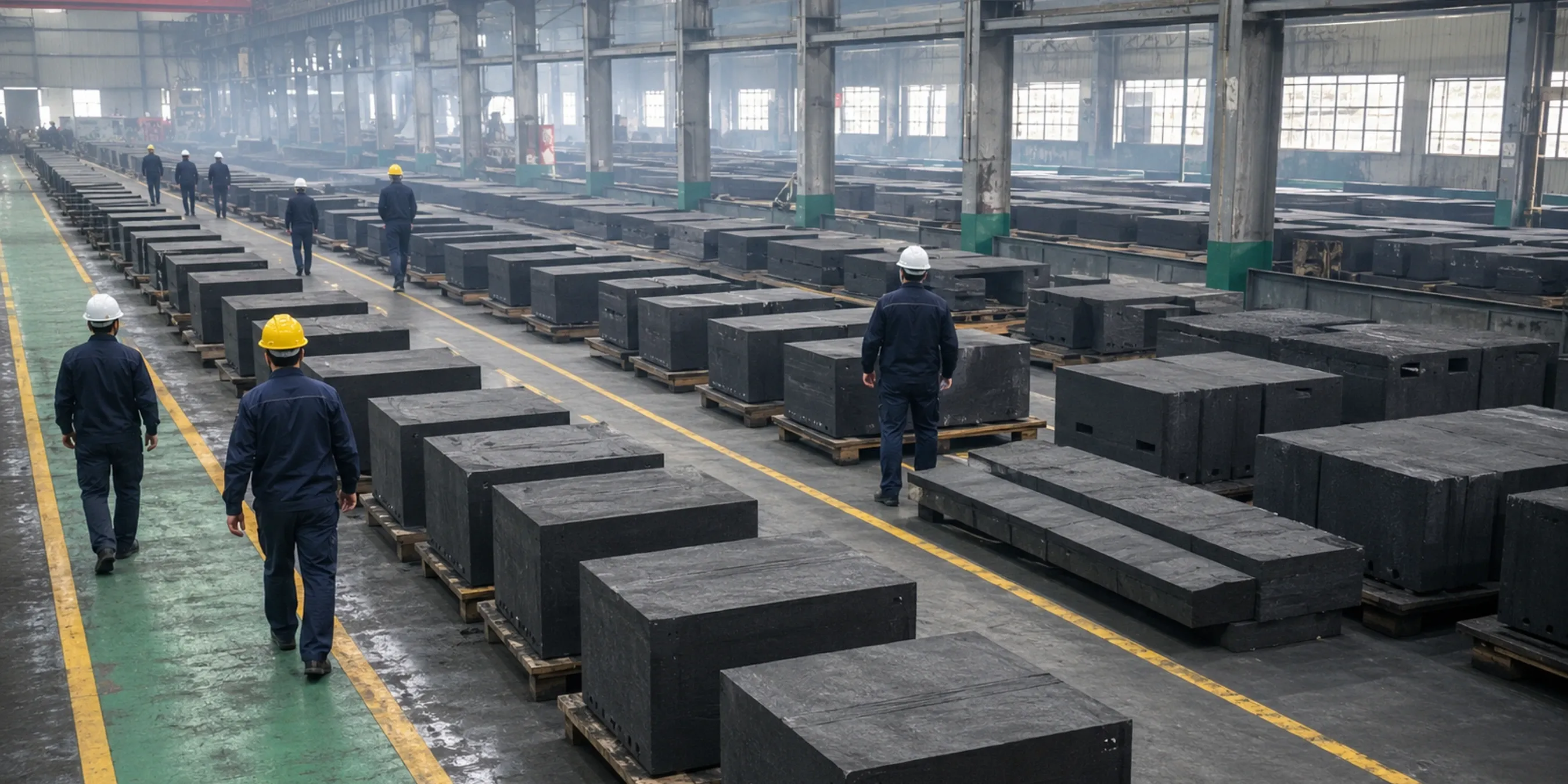
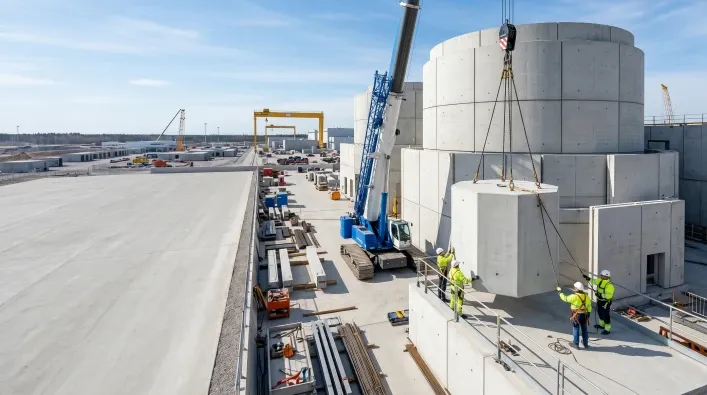
Designing around a live workshop meant the line layout could not follow an ideal configuration. The drawing already showed reserved passages, structural columns, separate infeed and discharge areas, and the maintenance space that had to remain open. Trying to fit one oversized machine body into that footprint would have blocked at least one passage and made routine maintenance inaccessible. That is why the line was built modular: each function occupied its own defined footprint, the transfer paths between stations followed the available floor space, and the connection point to the existing line was fixed first, then worked backward.
Front-end detection, intelligent sorting, and visible process data were part of the same logic. Once trimming, slot cutting, and wire-saw bottom cutting were linked into a single flow, the team needed to see where blocks were queuing, where cycle time was drifting, and which station was triggering repeated stops — before those issues compounded into a production stoppage. A line you can read is much easier to manage than one where variation only becomes visible at the far end.
The first station to stabilize was the front-end alignment and inspection sequence. Once that settled, the trimming station stopped seeing the position variation that had been causing repeated manual adjustment during the early commissioning runs. Slot cutting followed: with cleaner block entry, the multi-blade station ran more consistent groove geometry without the between-shift correction that had been eating into usable production time.
By the time the line reached steady operation, the pattern of improvement was consistent: fewer manual interventions between stations, less variation passed forward from trimming into slot cutting, and the wire saw bottom cut running on a more predictable cycle. The customer's measure of delivery was not throughput in isolation — it was whether the installed line could run, be read, and be managed without requiring a specialist at every station to absorb the variation the previous station created. On that measure, the line delivered.
 English
Get A Easy Solution
Chat Online
Hi, this is Lizzy from Dinosaw ( Not a Robot ). Which Machine ( model ) do you want? Please WhatsApp us now
Hello 👋 How can we help?