Diamond wire saw slicing of sapphire crystals for LED substrate and optical component production — anisotropic material cutting, chip-free surfaces, circular profile cutting for optical windows.
Sapphire: One Material, Multiple Production Applications
Sapphire — single-crystal aluminium oxide (Al₂O₃) — occupies an unusual position in the semiconductor materials landscape. It is not a semiconductor itself, but it is the substrate on which the most commercially significant compound semiconductor — gallium nitride — is grown for LED and power device fabrication. It is also an optical material with properties that make it preferred over glass or quartz for demanding applications: high transmission from UV through near-infrared, extreme hardness, and thermal stability that allows use in high-power laser systems, aerospace optics, and high-temperature sensor windows.
These two application areas — LED substrate production and precision optical component manufacturing — have different production profiles but share a common cutting requirement. Both need a slicing method that produces surfaces without the micro-fracture and edge damage that abrasive disc cutting introduces on a hard, brittle, anisotropic material. And both applications place value on material utilisation: sapphire boules, like SiC, are expensive, and kerf loss matters.
This project covered slicing operations across both application areas — flat substrate slicing for LED production and circular profile cutting for optical windows — using the same wire saw platform configured differently for each geometry.
Why Sapphire Is More Complex Than Its Hardness Suggests
Sapphire is harder than silicon and most optical glasses, but that is not the primary challenge in slicing it. The primary challenge is that sapphire is anisotropic — its mechanical properties vary with crystallographic direction — and most sapphire production requires cuts at specific crystallographic orientations.
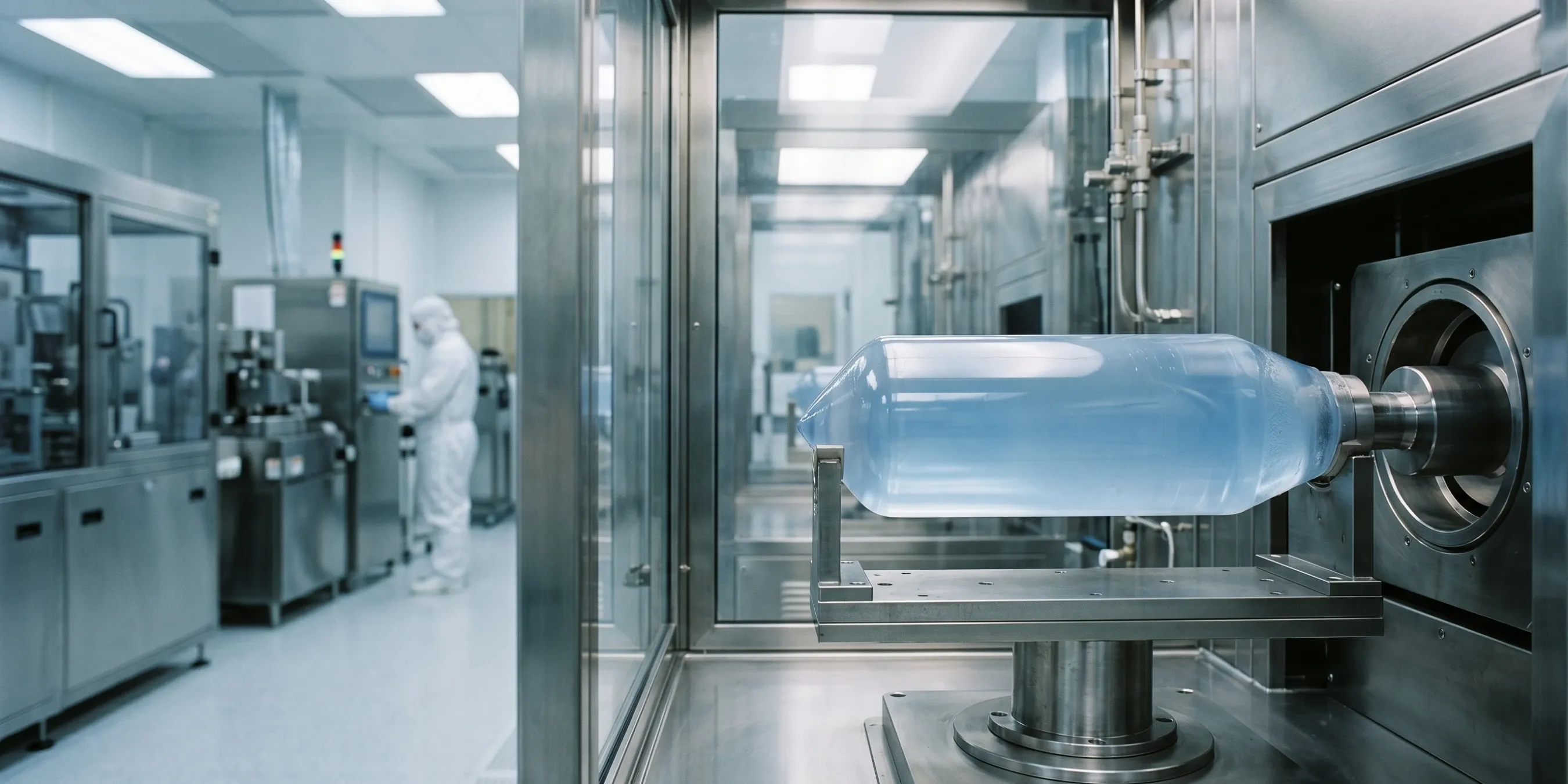
Anisotropy and Crystallographic Orientation
LED substrates are cut from sapphire at the c-plane (0001) orientation — cutting perpendicular to the optical axis of the crystal. Power electronics applications often use a-plane (11-20) or r-plane (1-102) orientations. The mechanical response of sapphire to cutting forces is different at different orientations: cleavage planes that run parallel to one cut direction create no problem, while the same cut in a perpendicular direction will propagate cracks along those cleavage planes if the cutting force application is not controlled. Wire saw cutting, with its distributed force along the wire contact length, manages this better than methods that apply concentrated or impact loading.
Surface Quality for Epitaxial Growth
For LED applications, the sapphire substrate is the growth surface for the GaN epitaxial layer. The quality of the substrate surface after slicing — specifically the depth and distribution of subsurface damage — affects how the GaN layer grows and therefore the optical and electrical performance of the LED devices fabricated on it. A substrate with deep subsurface fractures from the slicing process requires more material to be removed in lapping and polishing before the surface is suitable for epitaxy. This adds process steps and cost, and reduces the final substrate thickness available for device fabrication.
Circular Profiles for Optical Windows
Optical window and dome applications require sapphire in circular or curved forms — discs, windows with defined edge geometry, and curved optical elements. These geometries cannot be produced by straight slicing alone. The ring abrasive wire system, which cuts circular cross-sections from cylindrical workpieces, is the appropriate tool for these geometries. The same surface quality requirements apply: minimal edge chipping, controlled subsurface damage, and the absence of micro-fracture that would scatter transmitted light in optical applications.
Cutting Approach: Flat Substrate Slicing and Circular Profile Cutting
The two cutting operations in this project used different system configurations for the same underlying reason: each geometry required a different wire path, but both required the same controlled, low-stress abrasive cutting action.
For the flat LED substrate slicing, the CNC wire saw was used with parameters selected for the c-plane orientation of the specific crystal batch. Wire diameter, tension, and feed rate were set to balance cutting rate against subsurface damage depth — the specification being that the damage layer had to be within the downstream lapping and polishing stock removal allowance for this substrate type. Cut orientation relative to the crystal was verified before the production run began; any deviation in mounting that would have introduced a tilt between the cut plane and the target crystallographic plane was corrected before cutting started.
The circular profile cutting for optical windows used the ring abrasive wire system in the circular cutting configuration. The workpiece — a sapphire cylinder of the required diameter — was mounted on the rotary table, and the ring wire cut the disc-form sections by traversing across the rotating cylinder. This produces a circular disc with clean edges and a cut face that does not have the edge fracture that a straight saw cutting through a round workpiece would produce at the entry and exit points.
In both operations, cutting fluid formulation was adjusted for sapphire — the fluid role in managing swarf clearance and wire cooling is different for sapphire than for silicon, and the same fluid that works well on silicon will not necessarily optimise surface quality on sapphire.
Surface Quality and Production Outcomes
Both operations completed within the production scope. A few specifics worth noting:
The flat substrate slices for LED applications showed no visible edge chipping on the c-plane cut faces. Subsurface damage depth, assessed on sample sections, was within the specification for the downstream polishing process. The crystal orientation verification step at setup — confirming that the cut plane was aligned to within the angular tolerance for c-plane LED substrate use — was correct across the batch; no orientation rejects were recorded.
The circular discs for optical window applications had clean edges across the full disc circumference. The ring wire cutting method avoided the entry and exit fracture that straight sawing of a cylindrical sapphire workpiece would have produced at the points where the saw blade enters and exits the circular cross-section. This is a consistent advantage of the circular cutting method on round or cylindrical sapphire workpieces.
On the kerf loss point: the wire diameter and parameter combination used produced kerf widths at the lower end of what is practically achievable on sapphire with this class of system. On a boule where each substrate has significant value, the material recovery difference between optimised and unoptimised kerf parameters is worth quantifying at programme start — it typically pays for the optimisation time across a modest production volume.
Sapphire Slicing for Your Application
Sapphire cutting is not a uniform process across applications. The orientation required for LED use is different from optical use; the surface quality specification for epitaxy is different from the requirements for an optical window; and the geometry of a circular disc is different from a flat substrate. The right cutting configuration for each application requires a discussion of the specific requirements — not the application of a standard sapphire cutting recipe.
We do not publish client, project, or crystal source details. If you are producing sapphire substrates for LED or power device applications, or cutting sapphire for optical components, Dinosaw Machinery can discuss the specific cutting requirements for your geometry, orientation, and surface quality targets.
Contact us with your substrate or component specification.





 中文
中文 한국어
한국어


 Apr 29, 20264 MIN READ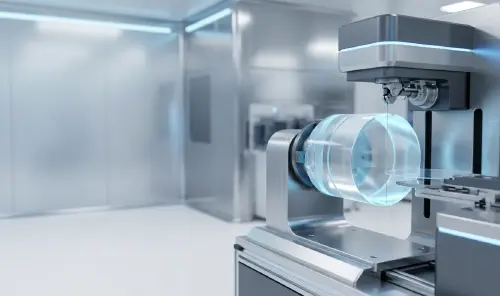
 English