How dry diamond wire saw cutting was applied to reinforced concrete segmentation in an active nuclear decommissioning programme — no liquid secondary waste, remote operation, controlled particulate.
Why Reinforced Concrete Is a Particular Problem in Nuclear Decommissioning
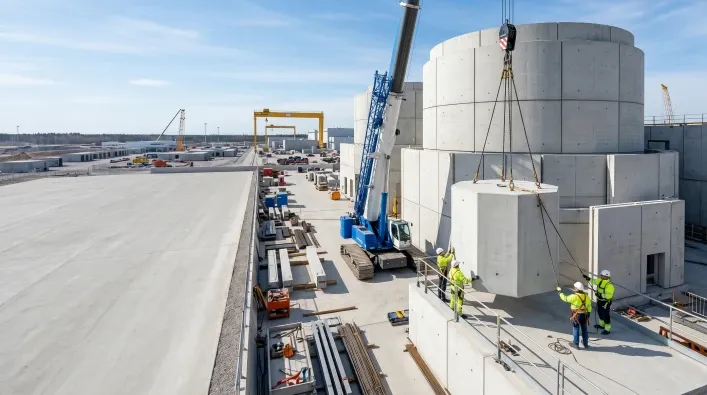
Most of the reinforced concrete that ends up in a nuclear decommissioning scope was never designed to be removed. Biological shield walls, containment structures, basemat slabs — these were engineered for permanence, built to attenuate radiation over decades, and reinforced to a density that reflects structural priorities rather than eventual dismantlement. When the time comes to cut them, you are working against the grain of every design decision that went into them.
The material itself is not unusual. Reinforced concrete gets cut in civil demolition all the time. What changes in a nuclear context is everything around it: the environment the cutting has to happen in, the waste streams it must not generate, and the constraints on how people can be near the work.
The Constraints That Shaped Method Selection
This project involved the segmentation of reinforced concrete structures within an active nuclear decommissioning programme. The scope covered sections of substantial cross-sectional area with dense rebar configurations, worked in a controlled radiological environment. Wet cutting was not on the table.
Secondary Liquid Waste: The Constraint That Rules Out Wet Cutting
Every litre of water introduced into a controlled radiological area has to be accounted for as potential liquid radioactive waste. Collection, characterisation, storage, licensed treatment, disposal — the logistics and cost of managing a secondary liquid stream are substantial. On some sites, it is actively prohibited. This was the primary constraint shaping our method selection: whatever we used had to run dry.
Dose Management: Why Hands-On Operation Was Not an Option
Radiation dose limits determine how long people can work in proximity to activated and contaminated structures. On this project, direct manual operation throughout the cutting sequence was not acceptable — accumulated dose over a multi-structure programme would have exceeded limits before the scope was halfway done. We needed equipment that could be programmed, positioned, and left to run. Remote intervention for setup and adjustment, not continuous manual presence.
Particulate Control in a Radiological Environment
Concrete cutting produces dust. That is not a problem specific to nuclear environments — but the consequences of uncontrolled airborne particulate are categorically different when the material is radiologically contaminated. The cutting method and any associated extraction had to demonstrate effective particulate capture throughout the operation, not just at steady state.
Geometry Variability: No Two Cuts Were the Same
The structures in scope were not geometrically uniform. Rebar density and layout varied between sections. Access configurations differed at each work location. Any approach that assumed standard conditions was going to fail somewhere in the programme. The cutting system needed to adapt to what was there, not require the site to adapt to the cutting system.
Diamond Wire Saw Cutting: Why Mechanical Dry Cutting Fit All Four Constraints
Diamond wire saw cutting is not an unusual technology in heavy civil or industrial demolition. What made it the right fit here was the combination of properties it brought to a set of constraints that individually might have been satisfied by several methods, but together narrowed the field considerably.
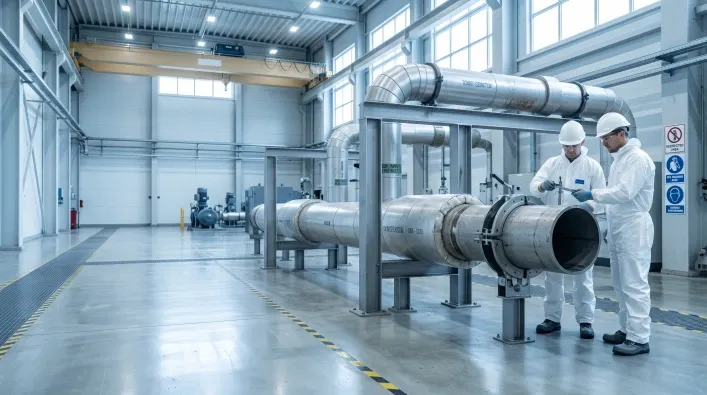
The cutting action is mechanical, not thermal. There is no heat at the cut face, no fume from the material, no aerosol generation — and critically, no water required. The wire runs dry, temperature-managed through the dust collection and vortex cooling circuit, and the particulate it generates stays in the extraction system rather than the atmosphere of the work area.
CNC control meant we could pre-plan cut sequences, position the system, and execute remotely. Operators monitored from outside the immediate work zone and made adjustments without re-entering for routine changes. That directly addressed the dose management requirement.
The gantry configuration gave us the reach and repositionability to handle the geometric variability across different structures without significant re-engineering between locations. Wire parameters — tension, feed rate — were adjusted for each section based on the rebar density encountered. Nothing about the method required uniform conditions.
What the Cutting Operations Produced
Cutting ran across multiple structure types and locations within the programme scope. A few observations worth recording:
The rebar did not require separate treatment. Diamond wire cut through both the concrete matrix and embedded steel in a single pass. Programmes that use methods requiring separate rebar cutting generate additional setups, additional waste handling steps, and additional time in the controlled area. That did not apply here.
No liquid was introduced at any stage of the cutting operations. The secondary liquid waste stream that wet cutting would have created simply did not exist. Waste from the cutting phase was solid particulate, collected and containerised directly from the extraction units.
Cut sections came out to planned dimensions. Downstream handling — rigging, waste classification, containerisation — proceeded without secondary trimming. That matters in a programme where every additional operation in a controlled area has a dose cost.
Personnel dose during cutting operations was managed within programme limits through the remote operation setup. The combination of pre-programmed sequences and remote monitoring kept the time operators spent in the immediate work zone to what was necessary for setup and inspection.
A Note on Project Confidentiality and What We Can Share
Nuclear decommissioning projects are sensitive by nature — contractually, operationally, and sometimes politically. We do not publish client names, site locations, or programme-specific parameters. What we have described here is the cutting challenge and the technical approach; the details that would identify any particular project are not in this article, and that is intentional.
If you are working on a decommissioning programme with reinforced concrete in scope, the most useful thing we can offer is a direct conversation — about your specific structures, your waste management constraints, and whether a dry wire saw approach is worth evaluating for your situation. Dinosaw Machinery provides dry-cutting diamond wire saw solutions configured to the specific conditions of each project.
Contact us to discuss your project requirements.



 中文
中文 한국어
한국어


 Apr 27, 20265 MIN READ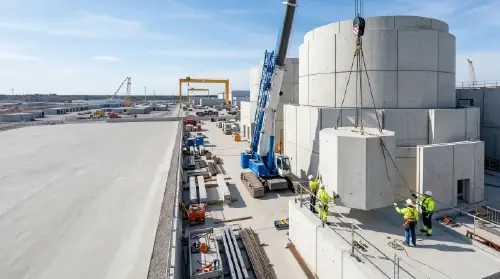
 English