TL;DR:Buying Decision at a Glance
Assess Three Core Factors:Your decision should be driven by the size of the stone blocks you process, your desired production efficiency (throughput), and your budget constraints.
Compare Solutions Wisely:The gantry cutter excels in versatility and cost-effectiveness, while multi-blade bridge saws are built for standardized mass production, and wire saws handle special shapes or oversized blocks. Consider Total Cost of Ownership:Look beyond the initial investment to evaluate long-term costs, including consumables (blades), maintenance, power consumption, and operator training.
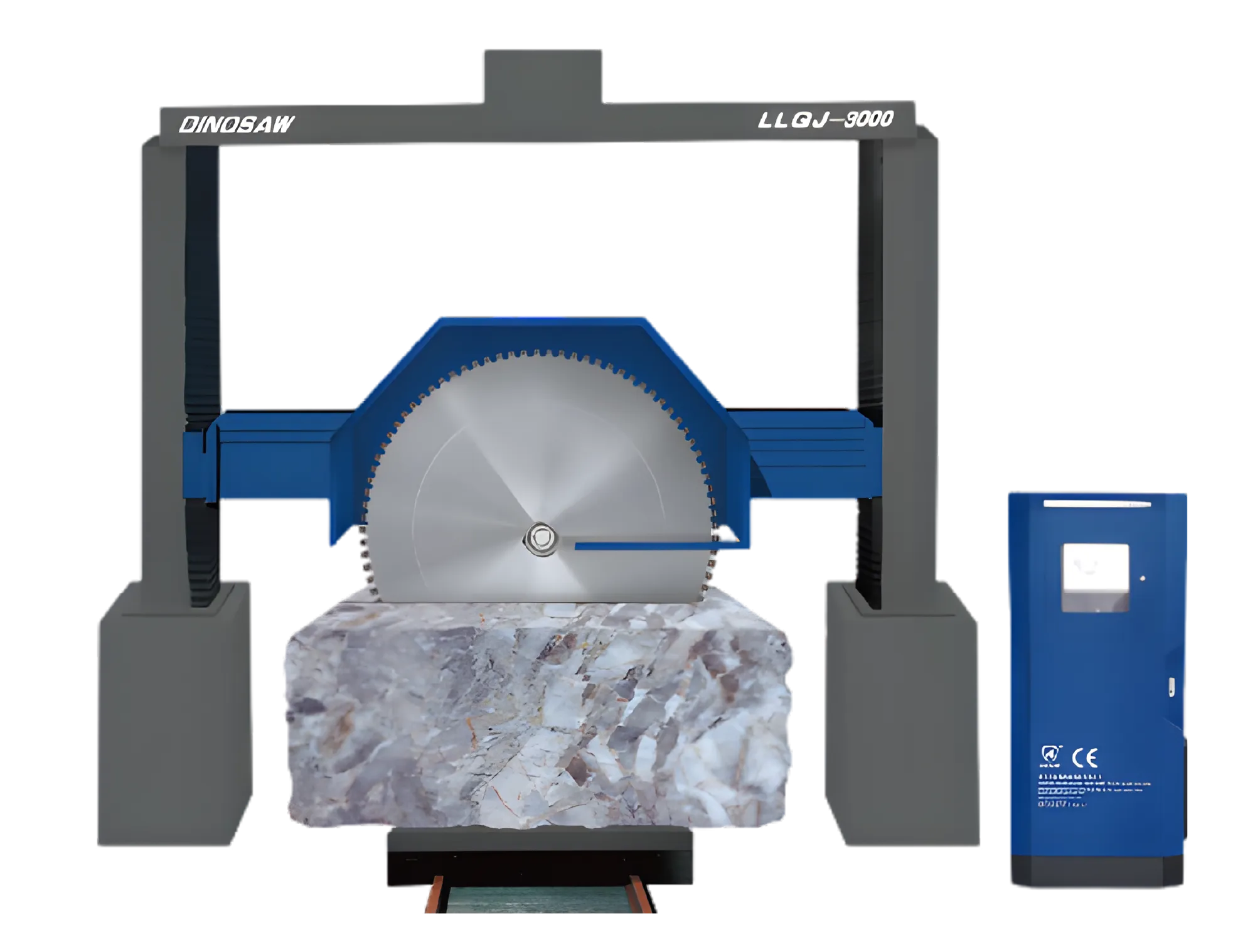
Core Purchase Decision Guide for a Gantry Stone Block Cutter
To select the right machine, you must first quantify your operational needs. This involves a thorough evaluation of five key metrics that directly influence which model and configuration will be most profitable for your stone fabrication business.
Block Dimensions:This is the primary constraint. Measure the maximum length, width, and height of the blocks you typically process. Our models, like the LLQJ-2200, LLQJ-2500, and LLQJ-3000, offer maximum cutting heights from 950 mm (37.4 in) to 1350 mm (53.1 in) to match different block sizes.
Target Throughput:Define your required output in terms of slabs per day or tons per hour (T/h). The single-blade gantry offers precision and versatility, while a dedicated multi-blade machine is needed for mass-production throughput. Your choice here directly impacts labor costs and project turnaround times.
Power Consumption:The main motor power, ranging from 30 kW to 37 kW, determines the machine's ability to cut hard stone efficiently. While a more powerful motor can handle materials like dense granite with ease, it also has higher energy costs. Your facility must have the electrical infrastructure to support your chosen motor.
Facility Space:A gantry cutter is a large piece of industrial machinery. You must account for the machine’s footprint, plus additional clearance for loading blocks, unloading slabs, and performing maintenance. A key advantage of our gantry cutters is that there is no foundation required, which simplifies installation.
Total Cost of Ownership - TCO:Think beyond the initial purchase price. TCO includes the cost of consumables (diamond blades), electricity, water, routine maintenance, spare parts, and operator wages. A highly automated machine may have a higher upfront cost but can offer a lower TCO over its lifespan due to reduced labor and material waste.
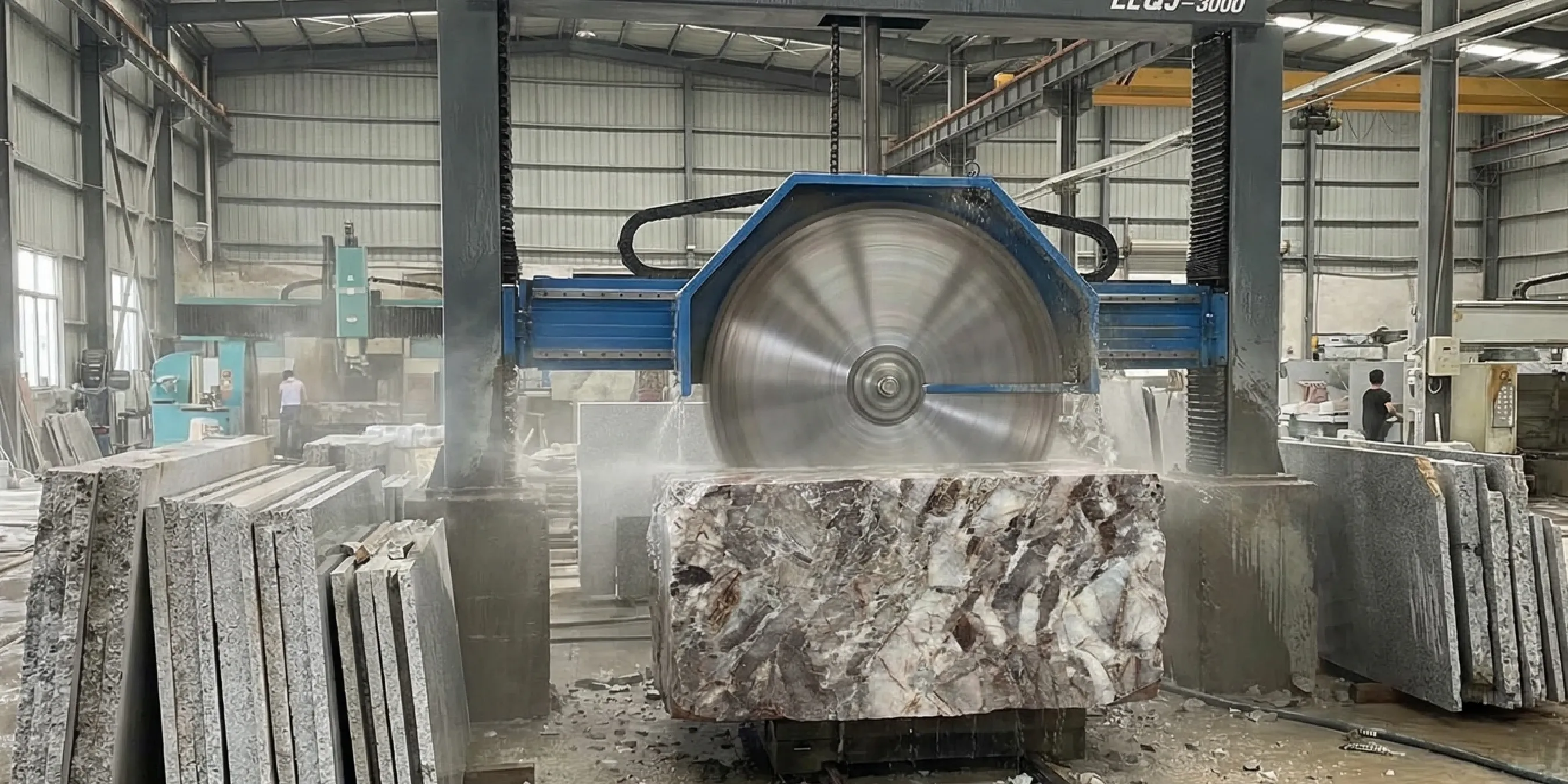
Neutral Comparison: Gantry Stone Cutter vs. Alternatives
Choosing the right block processing technology depends entirely on your specific application. Here is a neutral comparison of the three primary methods for primary stone block cutting.
Gantry Cutter
Pros:Excellent versatility for a wide range of stone types and sizes. Lower initial investment and installation costs, as no foundation is required.
Cons:Lower throughput than a dedicated multi-blade bridge saw for mass production of standard slabs.
Best for:Small to medium-sized shops needing flexibility for varied projects, or as a supplementary machine in a large factory for non-standard blocks.
Stone Block Multi-Blade Cutting Machine
Pros:Unmatched throughput. With the ability to mount many blades simultaneously, the dedicated Stone Block Multi‑Blade Cutting Machine is the ultimate solution for mass-producing standard-thickness slabs. Cons:Less flexible for varied jobs; adjusting for different slab thicknesses is more complex. Typically requires a higher initial investment and a robust concrete foundation.
Best for:Large quarries and wholesalers focused on producing one or two standard slab thicknesses in very high volumes.
Diamond Wire Saw
Pros:Capable of cutting extremely large or irregularly shaped blocks. Offers a thinner kerf (cut width), resulting in less material waste, especially on very hard or difficult materials.
Cons:Cutting speed is generally slower than circular blades. The diamond wire is a consumable item and can be expensive to replace.
Best for:Quarrying operations (for extracting blocks from the mountainside) and specialty shops processing unique sculptural or architectural projects.
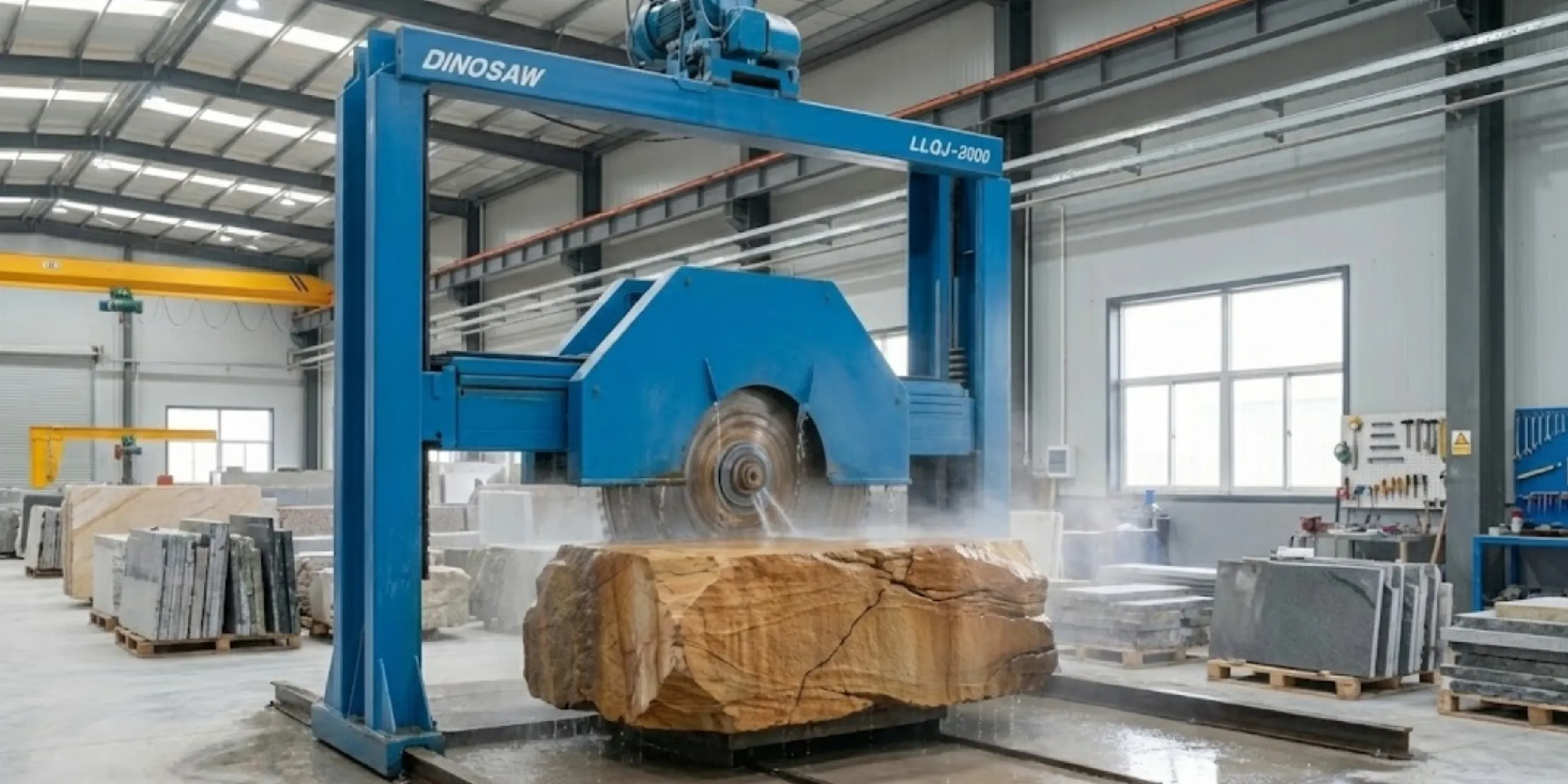
Making the Right Choice: An If-Then Decision Tree for Gantry Cutter Selection
Use this simple decision tree to narrow down your options based on your specific operational context.
IFyour blocks are consistently smaller than 950 mm in height and your budget is a primary concern,THEN the LLQJ-2200 model with a single or dual-blade setup is your most cost-effective entry point into automated block processing.
IFyou primarily process hard granite for monuments and require maximum cutting power,THEN prioritize a model with the upgraded 37 kW main motor to ensure efficient cutting and prevent motor strain.
IFyour facility has significant space constraints but you want to automate slab production,THEN the gantry cutter is an ideal choice because it requires no special foundation, unlike many larger bridge saws.
IFyou plan to integrate the cutter into a fully automated production line,THEN discuss your PLC communication protocol needs with our engineers to ensure seamless data exchange with your downstream equipment, like a Stone Slab Continuous Polishing Line. IFyour business handles a wide variety of materials from soft limestone to hard quartzite,THEN the gantry cutter's flexibility, combined with a frequency converter for adjustable speeds, makes it a more versatile investment than a fixed-speed, single-purpose machine.
IFyour downstream process involves precision work on a CNC Bridge Saw ,THEN using a gantry cutter for primary slabbing is a highly efficient strategy. It frees up your more expensive CNC machine for the complex, high-value cuts it was designed for.
Essential Procurement Topics for Stone Block Cutting Gantry Projects
A successful purchase involves more than just the machine itself. Consider these crucial topics during your negotiations and planning.
Spare Parts and Consumables:Clarify the availability and cost of critical spare parts and consumables, especially diamond blades. Inquire about recommended inventory levels to minimize potential downtime.
In-House Blade Supply:We operate an in-house diamond tools factory and can supply matching diamond blades for this machine. Tell us your cutting material and requirements; we will recommend and provide suitable blades.
Maintenance Window and Requirements:Understand the daily, weekly, and monthly maintenance tasks. A machine that is easy to service will have higher uptime. Our company designs machines for durability and ease of maintenance. Operator Training:Comprehensive training is non-negotiable. Ensure that the purchase price includes on-site installation and training for your operators on both machine operation and safety procedures.
Warranty Terms:Clearly understand what is covered under the warranty, for how long, and the process for making a claim. This is your primary protection against unforeseen defects.
Certifications:Verify that the machine complies with relevant international standards. CE certification is mandatory for the European market, while ISO certification (e.g., ISO 9001) indicates the manufacturer adheres to quality management system standards.
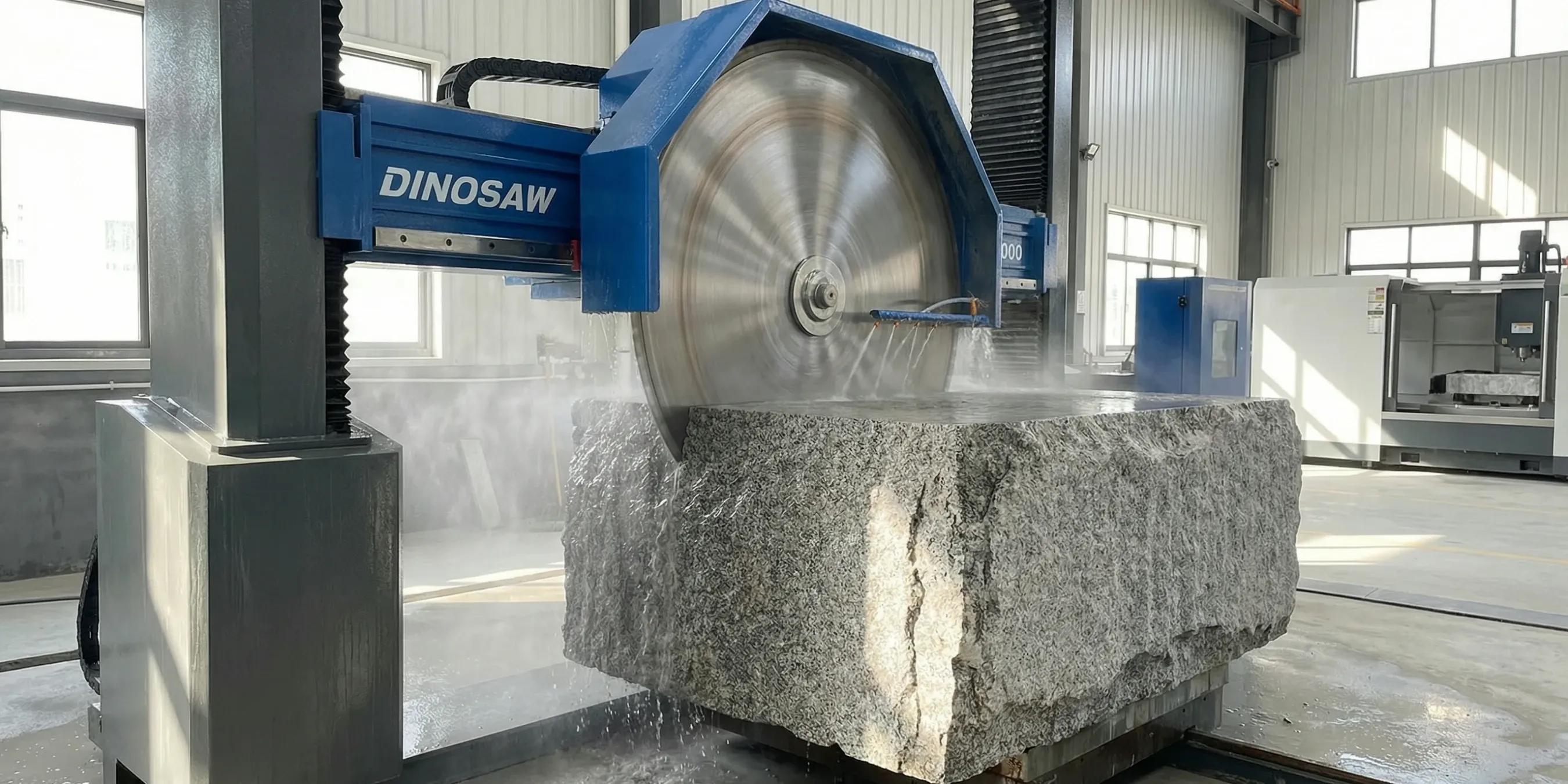
Scenario Recommendations for Industrial Stone Gantry Cutter Use Cases
Preferred Scenario
The medium-sized, multi-purpose stone fabrication shop.If you need one machine that can flexibly handle diverse orders, from granite tombstones to limestone slabs, the gantry cutter is the ideal primary machine. Its versatility allows you to serve multiple markets without investing in specialized equipment for every task.
Alternative Scenario
As a supplementary machine in a large, standardized slab factory.If your main operation revolves around mass slab production with a large multi-blade saw, but you occasionally get orders for non-standard block sizes or thicknesses, a gantry cutter is the perfect supplementary machine. It can handle these special tasks without disrupting your main production flow.
Not Recommended Scenario
For a lab or showroom that only needs to cut small samples.The gantry cutter is designed for a production environment. For applications where you only need to cut small samples or make occasional demonstration cuts, a smaller tabletop saw or manual tools would be a far more cost-effective choice.
Procurement FAQ
Does a gantry stone block cutter require a foundation?
No, one of the key advantages of our gantry stone cutting machine is that it does not require a special concrete foundation for installation.
Context:The machine is designed with a heavy, self-supporting steel frame that rests directly on a level and solid factory floor. This design simplifies the installation process significantly.
Risk:While a foundation is not required, the floor must be level and capable of supporting the machine's weight (approximately 10-15 tons depending on the model). An uneven floor can affect cutting accuracy.
Next Step:Before installation, confirm your factory floor is sufficiently level and rated for the load. A simple site inspection by a qualified engineer is recommended.
What is the delivery time?
The standard delivery time is 15–45 working days from order confirmation, varying by customization and current production schedule.
Context:Our machines are built to order. This lead time covers manufacturing, quality control testing, and shipment preparation.
Risk:The final lead time can fluctuate based on production capacity and customization complexity.
Do you provide installation and training services?
Yes, comprehensive on-site installation and operator training are included with the purchase of our machines.
Context:Our certified technicians will travel to your facility to assemble the machine, ensure it is calibrated correctly, and conduct hands-on training with your team. This covers machine operation, safety procedures, and daily maintenance.
Risk:Skipping professional training can lead to improper use of the machine, resulting in poor performance, accelerated wear, and potential safety incidents.
Next Step:Before our technicians arrive, identify the key operators who will be responsible for the machine and ensure they are available for the full duration of the training schedule.
What are the machine's total weight and dimensions?
The weight and dimensions vary by model. For example, the LLQJ-2200 has a total weight of approximately 10 tons, while the larger LLQJ-3000 can weigh up to 15 tons.
Context:The machine's footprint for the main structure is detailed in the technical specifications sheet. You must also account for the length of the guide rails and clearance for operation.
Risk:Failing to allocate sufficient space can lead to a cramped and unsafe work environment, making it difficult to load material and perform maintenance.
Next Step:Request the detailed technical drawing for your selected model. Use this to create a floor plan of your workshop to ensure a proper fit and safe workflow.
What warranty do you offer?
We offer a standard one-year warranty on all main components of the machine, covering defects in materials and workmanship.
Context:This warranty ensures that if a key part like the main motor or hydraulic station fails due to a manufacturing fault, we will provide a replacement part free of charge.
Risk:The warranty does not cover consumables like diamond blades or damage caused by improper operation or lack of maintenance. It is crucial to follow the recommended operational procedures.
Next Step:Review the full warranty document before signing the purchase agreement. If you require an extended warranty, discuss this option with our sales team.
Are CE or ISO certifications available?
Yes, our machines can be supplied with CE certification to meet European Union safety, health, and environmental protection requirements. Our manufacturing process also follows ISO 9001 quality management standards.
Context:CE certification is a mark of compliance and is essential for legal import and operation within the EU. ISO 9001 demonstrates our commitment to quality and consistency in our production.
Risk:Importing a machine without the required certifications for your region can result in it being held by customs, or you may face legal penalties for operating non-compliant equipment.
Next Step:Specify your certification requirements during the quotation phase to ensure the machine is built and documented accordingly. Visit our About Us page to learn more about our commitment to quality.
How should I budget for consumables?
The primary consumable is the diamond blade. Its lifespan depends heavily on the type of stone you cut and the operational parameters used.
Context:A blade cutting soft limestone may last significantly longer than one cutting hard, abrasive granite. Proper operation, including using the correct feed rate and sufficient water cooling, will maximize blade life.
Risk:Underestimating consumable costs can significantly impact your profitability. Running a blade past its effective lifespan leads to poor cut quality and risks damaging the stone.
Next Step:Based on the primary materials you will be processing, our team can provide an estimated blade life (in square meters cut) to help you build a more accurate TCO model.
What else do I need to invest in besides the machine itself?
Beyond the gantry cutter, you will need material handling equipment to load blocks and unload slabs, and a water recycling system is highly recommended.
Context:Equipment like an overhead crane or a heavy-duty forklift is necessary for safely moving stone blocks. A water recycling system reduces water consumption and helps manage slurry waste, lowering operational costs and environmental impact.
Risk:Without proper material handling equipment, you create a significant safety hazard for your employees. Inefficient water management can lead to high utility bills and potential environmental compliance issues.
Next Step:Factor the cost of this supporting infrastructure into your overall project budget. We can provide recommendations on the required capacity for cranes and forklifts based on your chosen machine model.
Do you supply matching diamond blades for this gantry machine?
Yes. We operate an in-house diamond tools factory and can provide diamond saw blades matched to your materials and cutting requirements.
Context:Share your material type (granite, marble, limestone, etc.), target slab thickness, and feed rate preferences.
Risk:Using an unsuitable blade reduces cut quality and increases wear.
Next Step:Contact our sales team with your material and cutting specs to receive a blade recommendation and quote.





 中文
中文


 Nov 29, 20258 MIN READ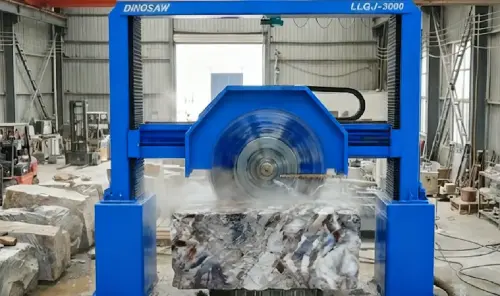
 English