Investing in a Stone Cutter? An Executive's Guide to Purchase & ROI | Dinosaw
lizzy·Dec 1, 2025·6 MIN READ
lizzy·Dec 1, 2025·6 MIN READ
This guide, designed for decision-makers, covers the entire process from requirement definition and model comparison to ROI analysis. Make the best equipment investment for your factory.
TL;DR:30-Second Executive Overview
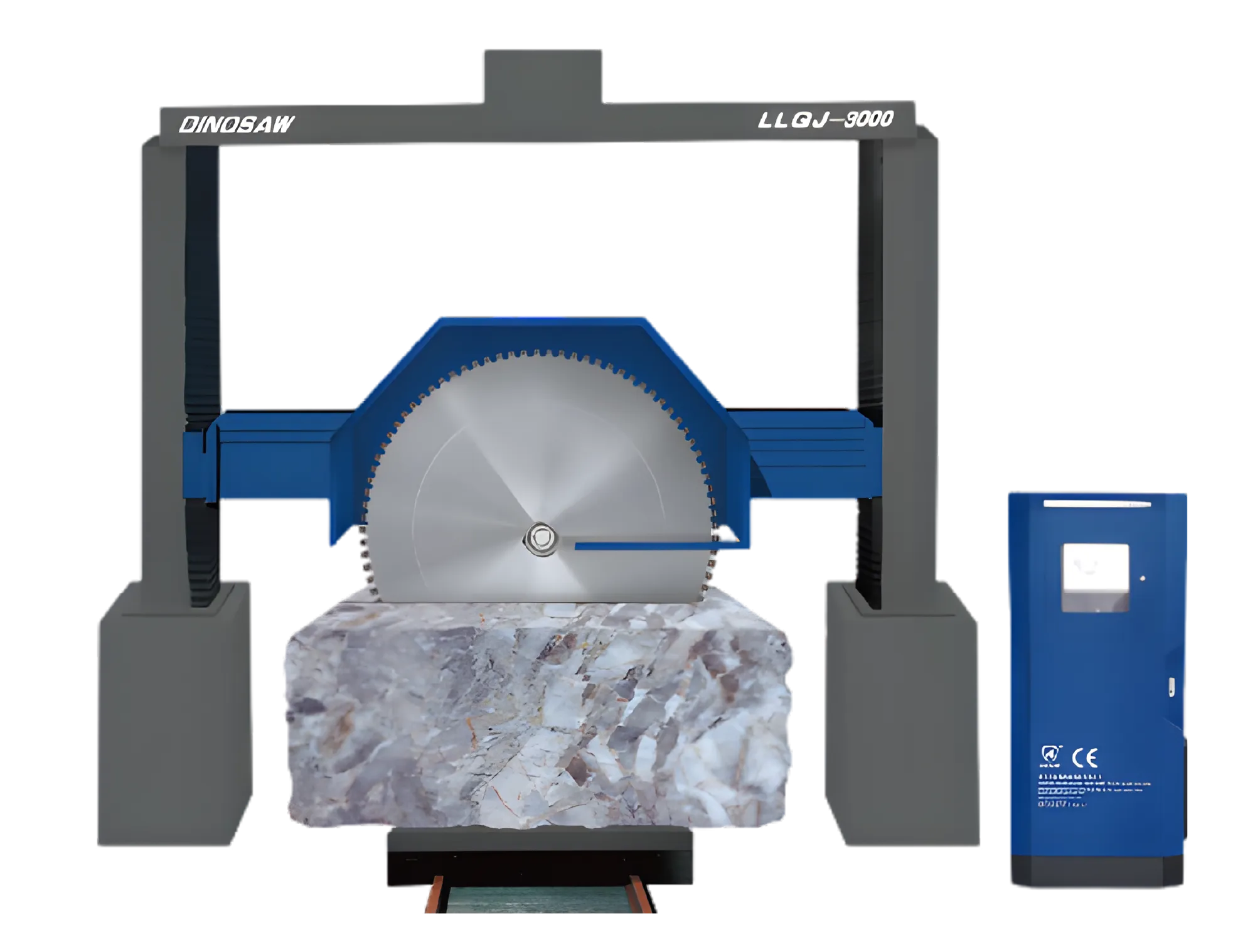
What It Is: A gantry cutter is a precision system for primary stone block processing, integrating heavy mechanics with PLC automation.
What It Does For You: It boosts throughput, cuts material waste by up to 15%, and reduces reliance on highly skilled labor, directly increasing your Return on Investment (ROI).
Where It Fits/Doesn't: It's ideal for mid-sized factories needing flexibility with various stones, but not for labs cutting small samples or mass-production factories seeking maximum standardized throughput.
What to Do Next: Use the checklist in this guide to define your specific needs, then evaluate the best machine configuration with our expert team.
Quick Q&A for the Full Gantry Block Slabbing Machine Investment Journey
Stage 1: Awareness & Initial Exploration
What are the primary business drivers for investing in a gantry cutter?
The main drivers are increased throughput, reduced material waste, lower labor costs, and the strategic ability to enter new markets by processing a wider variety of stone.
Context: Manual or semi-automated methods are inefficient, with material waste rates as high as 20%. Automated cutting can reduce this figure to under 5% while freeing up skilled labor for higher-value tasks.
Risk: Without investment, your business risks being outcompeted on production cost and lead time, especially against competitors who have already automated.
Next Step: Analyze your current production bottlenecks. Calculate how a 10% reduction in material waste or a 30% increase in throughput would impact your bottom line as a preliminary ROI estimate.
How does this machine impact my Total Cost of Ownership (TCO)?
Although the initial gantry cutting machine price is a key factor, its lower operational costs in labor, materials, and rework often result in a lower TCO over its lifespan compared to less efficient methods.
Context: TCO includes the initial purchase price, installation, training, electricity, consumables (like blades), maintenance, and labor. Automation significantly reduces labor and material waste, two major variable costs.
Risk: Focusing solely on the initial purchase price while ignoring TCO can lead to selecting a machine with high operational costs that ultimately reduces overall profitability.
Next Step: Request a TCO model from the vendor that includes estimated consumable life and maintenance intervals. Compare this against your current operational costs to make a data-driven decision.
Stage 2: Evaluation & Selection
Should I choose a gantry cutter, a multi-blade bridge saw, or a wire saw?
Your choice depends on your primary business need: flexibility (gantry), mass production (bridge saw), or special applications (wire saw).
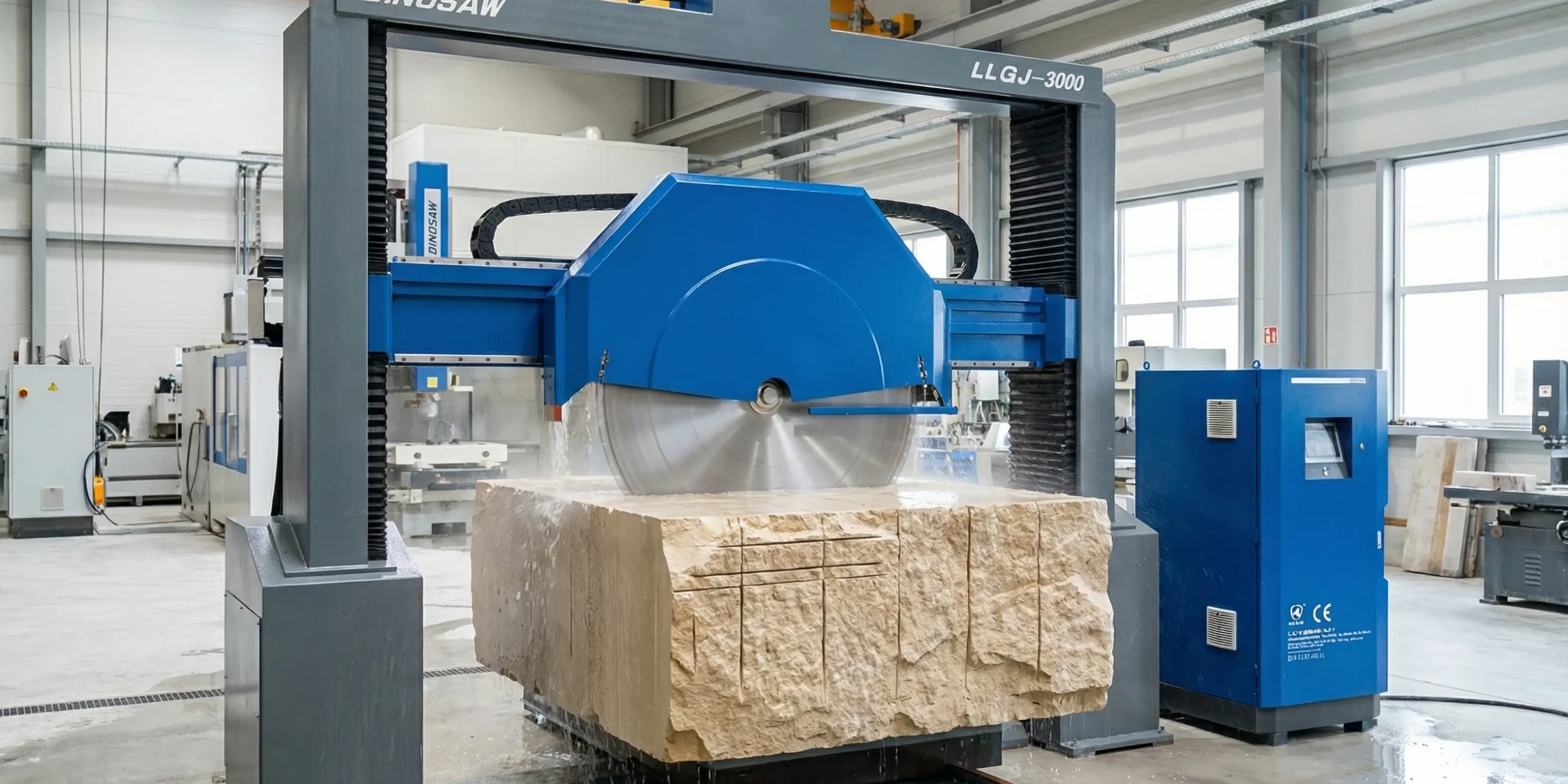
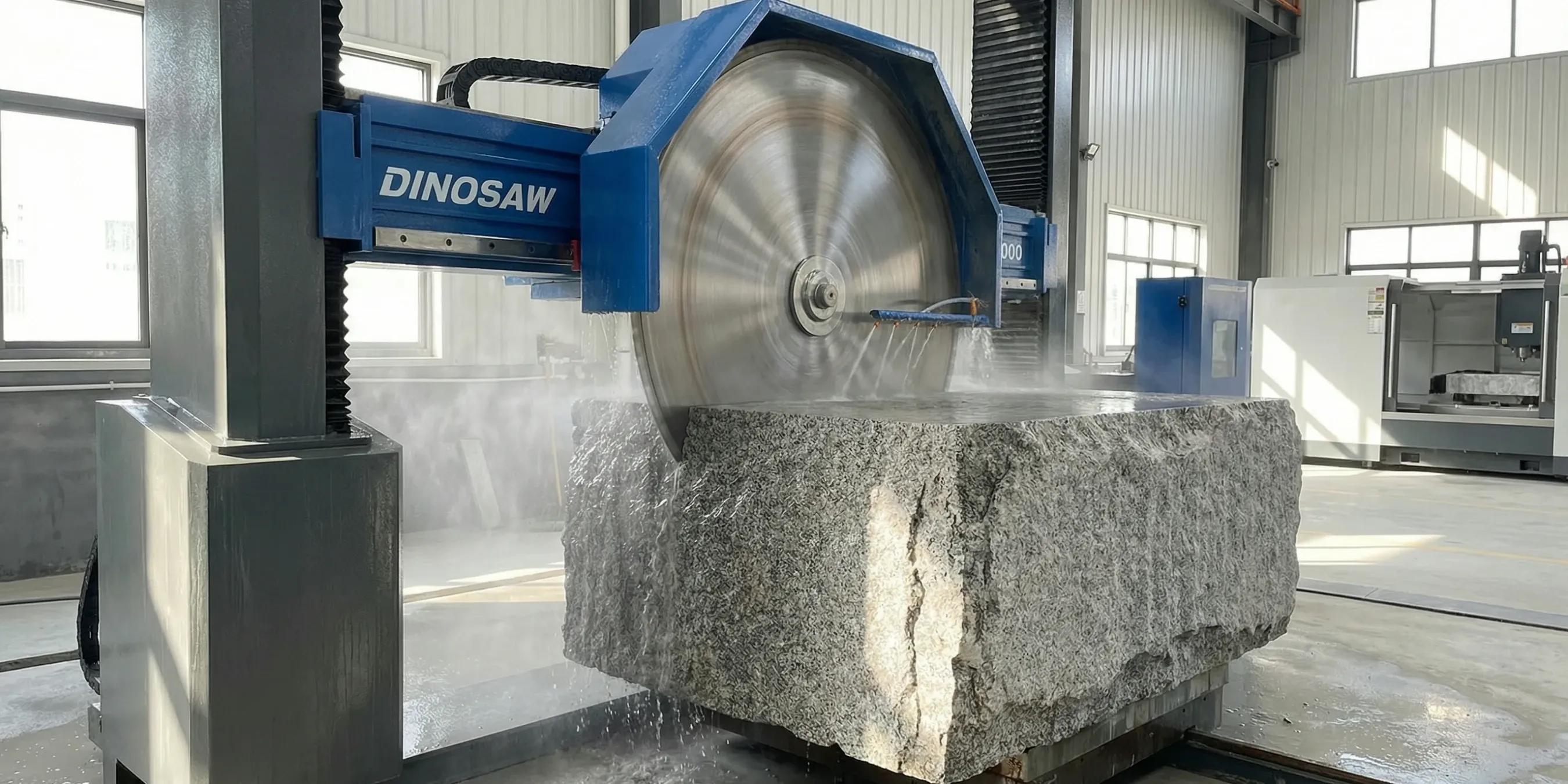
Context:A gantry cutter is a versatile all-rounder for varied stone sizes and types using a single blade. A dedicated Stone Block Multi‑Blade Cutting Machine is the champion of efficiency for standardized slabs. A wire saw is for extremely large or irregularly shaped blocks.
Risk: Choosing the wrong machine for the wrong application will lead to an underperforming investment. For instance, chasing maximum throughput with a gantry or handling small custom jobs with a bridge saw is inefficient.
Next Step: Analyze your order mix from the last 12 months. If 80% is standard-sized slabs, consider a bridge saw; if your orders are diverse, the gantry cutter is the safer bet.
Why is "no foundation required" important for my business?
"No foundation required" significantly reduces installation time, cost, and complexity, allowing for a faster path to production and a lower upfront investment.
Context: Traditional heavy machinery often requires excavating and pouring a dedicated reinforced concrete foundation, which can take weeks and incur significant extra costs. Our gantry cutters are designed to be self-supporting on a level factory floor.
Risk: Underestimating the time and cost of foundation work can severely delay your project budget and production start date.
Next Step: When evaluating quotes, factor in "no foundation required" as a significant cost-saving item. Confirm your factory floor can support the machine's weight (approx. 10-15 tons).
Stage 3: Sign-Off & Contract
How should I evaluate different stone cutting machine manufacturers?
Beyond price, evaluate manufacturers on their engineering reputation, after-sales support, availability of spare parts, and proof of compliance with international standards like ISO and CE.
Context: A machine's value lies in its long-term, reliable operation. A reputable manufacturer with strong after-sales support, like ourcompany, ensures you are supported for years to come.
Risk: Choosing a low-cost supplier with weak support can leave you vulnerable to long downtimes and expensive repairs in the future.
Next Step: Ask for customer references and case studies. Inquire about their standard warranty terms and Service Level Agreements (SLAs).
What key clauses must be in the contract?
Your contract must clearly define the delivery timeline (e.g., 15–45 working days, please confirm with our sales team before ordering), acceptance criteria, warranty terms, scope of installation and training, and payment schedule.
Context: A clear contract protects both parties and sets clear expectations for a successful project. Acceptance criteria are particularly vital, quantifying the performance metrics the machine must meet (e.g., slab thickness tolerance of ±0.5mm).
Risk: An ambiguous contract can lead to disputes over delivery, performance, or warranty, causing project delays and extra legal costs.
Next Step: Have your legal team review the contract before signing. Ensure all verbal agreements are documented in writing and that a dispute resolution mechanism is defined.
Stage 4: Implementation & Post-Sales
What is the biggest challenge during implementation?
The biggest challenges are typically logistical: ensuring the site is ready, coordinating delivery and installation, and scheduling uninterrupted time for operator training.
Context: A successful implementation requires a cross-functional project team, including your facility manager, production supervisor, and our company's technicians.
Risk: Poor preparation can delay the installation, pushing back your production start date and ROI.
Next Step: Immediately after signing the contract, form an internal project team and work with our team to create a detailed implementation timeline.
How do I ensure my operators can use the machine safely and efficiently?
Comprehensive, hands-on operator training provided by the manufacturer is non-negotiable. This should be combined with establishing your own internal safety protocols.
Context: Our standard installation package includes on-site training for your team, covering machine operation, the daily maintenance schedule, and all safety interlock features. According to bodies likeOSHA, training is a key part of ensuring workplace safety.
Risk: Insufficient training is a leading cause of operator error, equipment damage, and workplace injuries.
Next Step: Designate 2-3 key operators to attend the full training session. After the training, make them responsible for creating internal Standard Operating Procedures (SOPs) and training other team members.
Your Requirements Definition Checklist for Gantry Cutter Projects
Before engaging with any vendor, use this checklist to create a clear definition of your needs. This will enable you to have a productive, data-driven conversation.
Category
Your Requirement
Notes
Materials
We will primarily cut: ______ (Granite / Marble / Limestone / Sandstone / Bluestone / Travertine / Quartzite)
Material hardness impacts main motor power and blade selection.
Geometry
Typical raw block size: ______ (L) x ______ (W) x ______ (H) mm
Matches LLQJ model (max cutting height 950–1350 mm).
Floor leveling, clearance, lifting equipment, power/water on.
Acceptance Criteria
Pilot thresholds (thickness, waste %, throughput %)
Formal sign‑off metrics post‑installation.
Pilot and Acceptance Plan Framework for Your New Gantry Stone Cutter
To de-risk your investment, treat the first 90 days post-installation as a pilot program. Use this 5-step framework to measure success objectively.
Define the Pilot Scenario:Select 1-2 of your most common stone types and sizes for the pilot.
Collect Baseline Data:Before installation, document your current process's throughput, material waste rate, and labor cost per unit.
Set Success Thresholds:Define quantitative acceptance criteria. For example:
Slab thickness tolerance must be consistently within ±0.5mm.
Material waste must be reduced by at least 10% compared to baseline.
Throughput must increase by at least 25%.
Define the Timeline:Set the pilot for 90 days, with formal performance reviews at the 30, 60, and 90-day marks.
Review and Decide:At the end of 90 days, compare results against your success thresholds. If met, formally accept and scale up. If not, work with us on adjustments or execute the relevant contract clauses.
Final Checks and Taking Action
Before giving the final green light, ensure all stakeholders—technical, financial, and legal—have signed off. Your contract should be finalized, your site prepared, and your implementation team ready.
Our commitment to you extends beyond the sale. We provide comprehensive post-sales support, including readily available spare parts, a clear service level agreement (SLA), and a dedicated technical support team you can always contact. This ensures yourGantry Stone Block Cutting Machine remains a productive asset for its entire lifecycle.






 中文
中文


 Dec 1, 20256 MIN READ
 English